Author: lpenney (Page 2 of 9)

Using Our Senses

During our first class, we read the book Bud Finds Her Gift, it is about observations. Our instructor put us into groups of 3 using our tree cookies. We then got a piece of chart paper on which we wrote numbers 1-6 on the left-hand side. She then handed out a box that was labeled with a number (ranging 1-6) and we could not see what the object was. As a group, we had to use our senses (sound, weight, touch) to come up with an answer on what we thought was in the box. At this point, we had to write our answer down beside the number that was on the piece of chart paper. We then passed the box to a different group and repeated this six times so we were able to guess for all six boxes.

Here is what the boxes looked like:
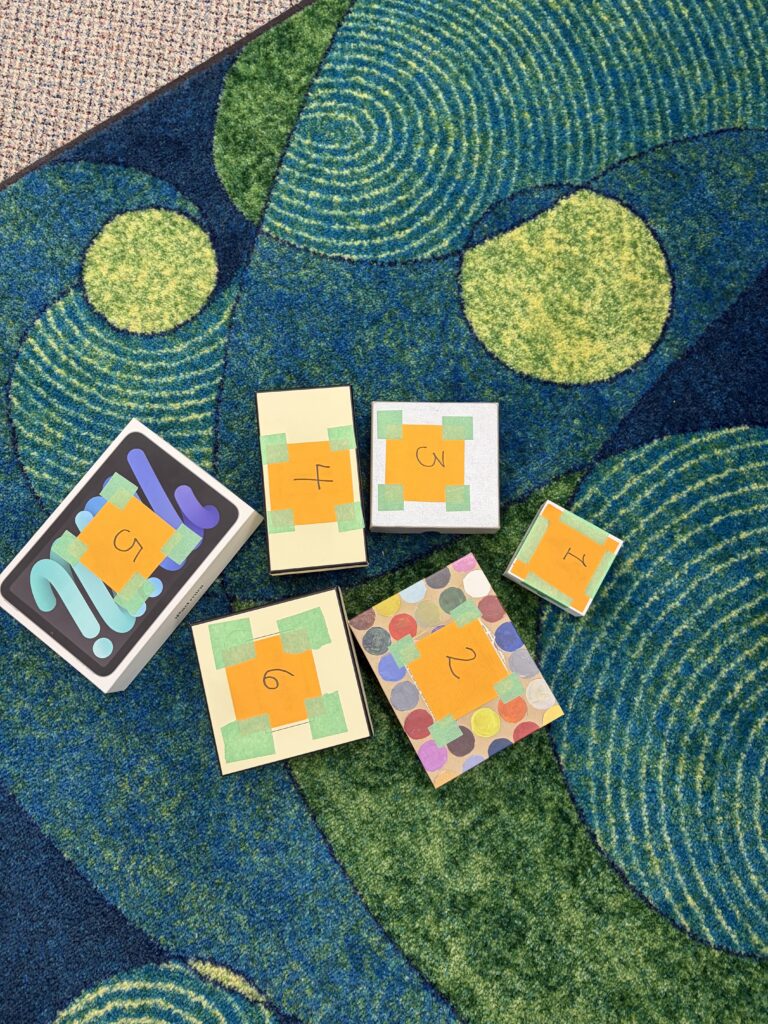
I took this picture. 2026

This is what our chart paper looked like:
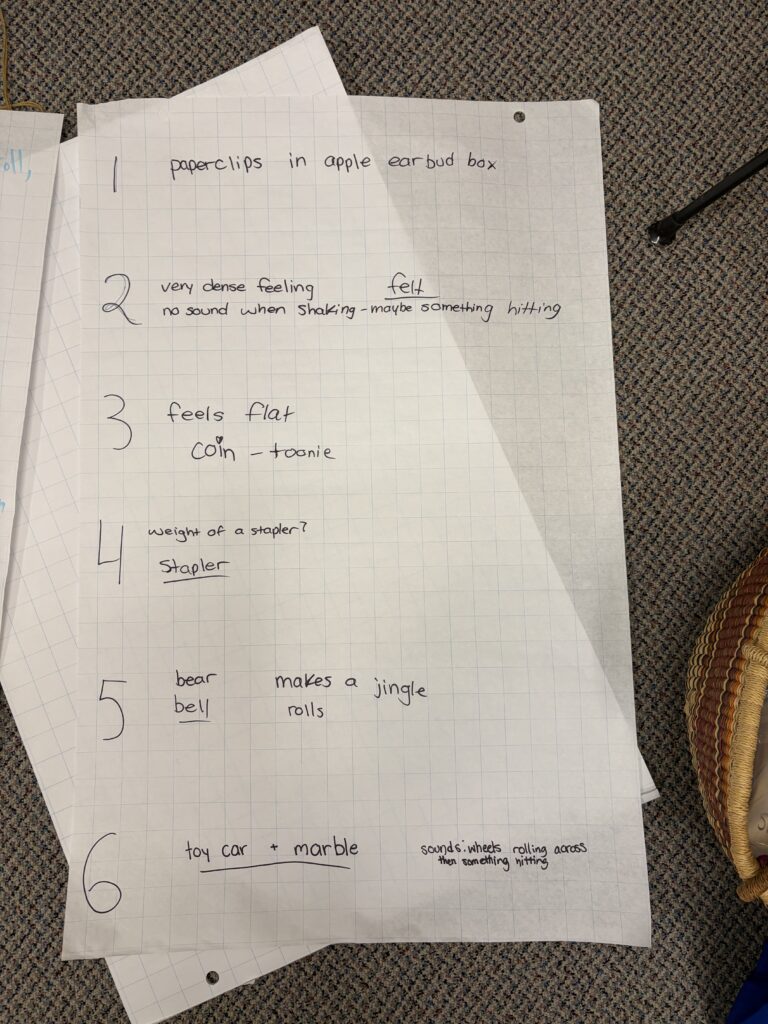
I took this picture. 2026

Once everyone had their guesses, as a class, the teacher held up the first box, moved it around, and got people to share their answers. Once everyone had shared their thoughts, the teacher then opened the box and revealed what was inside. You would then repeat this process until all six objects were presented. In my cohort we all loved this activity. We thought it was so engaging, fun, and exciting.

Automatically I came up with an idea on what else you could do with this activity. My idea was to put objects in the boxes and have the students guess what the object is using different sounds, feelings, etc. Create this activity based on the morning radio show where they play “guess that sound” where the class can be put into teams and have to “call in” using a fake phone at the front of the classroom to make an educated guess on what the object/sound is. This could be a morning game where only one team gets to make one guess a day and then eventually the team who guesses the sound correctly gets to choose the game they play in gym, etc.

BC Science Connection:

This activity connects to the BC Curriculum Curricular Competencies in Questioning and Predicting, Processing and Analyzing Data and Information. As we used our senses to explore the mystery boxes that our professor provided, we were forming educated guesses based on evidence and prior knowledge we have. At the elementary school level, students are expected to demonstrate curiosity, make predictions, and communicate their thinking to the teacher and their peers. This activity supported all of those Curricular Competencies in a playful and an engaging way. This activity also supports collaboration as we had to justify our ideas and explain our reasoning in our small working groups and then in front of the class.

Reflection:

I really enjoyed this activity because it showed me that everything in science is so impactful when it is done in an inquiry-based and exploratory way. It is a lot more joyful than having a worksheet-based class. My extension idea of “Guess That Sound” game would continue to build observation, inference, and thoughtful reasoning in a motivating way. I will definitely include this in my future classroom as I think it will be so much fun but I also think it will build crucial skills not only in Science but in SEL (social emotional learning). You could do this with younger grades and ask “what emotion is this” with a poster.

My AHA Moment:

My AHA moment is when I realized observation is not a small introductory skill; it is the foundation of scientific thinking. Additionally, I realized that gaining these important skills like observation can start from an early age where it is fun and engaging. Yet, I could use this lesson for all ages and they would still have fun.

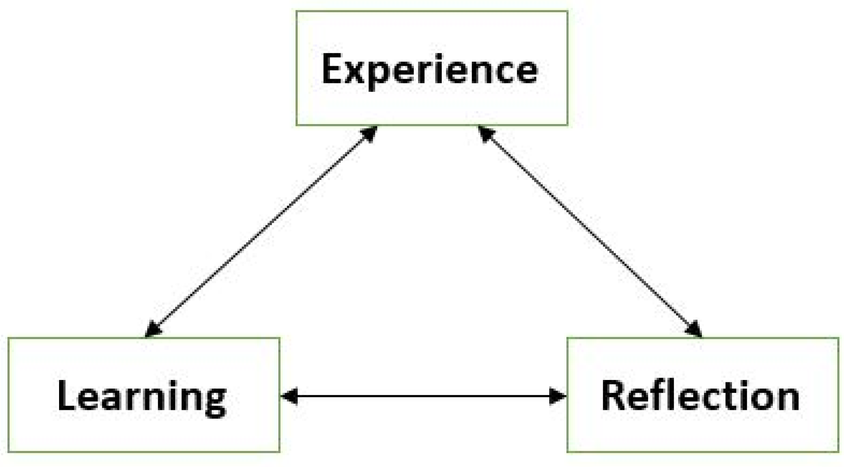
Comparison of Two Reflective Cycles

February 17, 2026

Today I am going to compare two different reflective cycles (Boud’s and Gibbs) then I will use one of the reflective cycles to reflect on one of my situations this year in one of my classes.

UVIC Teacher Competencies

This activity for my WordPress relates to Teacher Competency number 2. It links to competency number 2, develop a growth mindset demonstrated in collaboration with others, because I am using Boud’s reflective cycle to analyze my own teaching experiences, I identify what I have learned throughout that experience and created concrete changes for my future of teaching. I also have demonstrated collaborative, ongoing professional learning throughout this post. Additionally, it relates to UVIC Teacher Competency number 12, develop and understanding of how learners learn in order to cultivate effective learning environments. By using feedback to build on and my prior use with the Gibbs cycle has helped me deepen my reflections over the Teacher Education Program.

Boud’s Reflective Cycle

Boud’s Reflective Cycle. Accessed through Linkedin.
Boud’s Reflective Cycle. Accessed through ResearchGate.
Boud’s Reflective Cycle is a simple three step model that leads to what you learned from the experience and how it will shape your future thoughts, knowledge, experiences, and create new connections to past information. Boud’s reflective triangle is a faster reflection style that still supports personal and professional growth. In my third year of the EKTEP (East Kootenay Education Program) I feel like I use more this style.

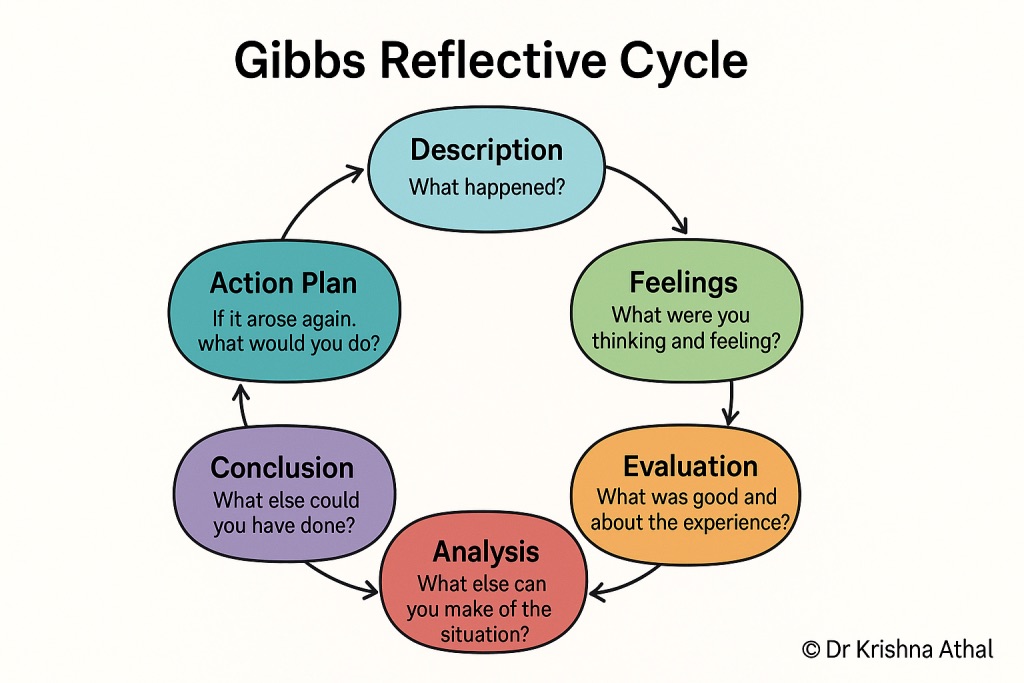
Gibbs reflective cycle

Gibbs Reflective Cycle. Accessed through Dr Krishna Athal’s website.

Gibbs reflective cycle is a six step reflection where you go through describing, your feelings, evaluating your experience, your analysis, conclusion, and your action plan for future experiences. This cycle helps guide you through a step by step reflection. The Gibbs cycle encourages deep, critical thinking to help improve your skills, and behaviours for your next experiences. This is the model that my cohort and I had to do for our second year of the program to create deeper reflections.

Similarities:

  • Both focus on learning from experience
  • Both encourage thinking about your thoughts, feelings, and actions
  • Both of these reflective cycles want to improve your future practices
  • Both support professional growth and reflection

Differences:

Gibbs:

  • Very structures with its six stage reflection steps
  • Gives people a step by step thought process
  • Occurs in a cycle (going through the stages of the reflective cycle over and over again)

Boud’s:

  • Not very structured (only has three main steps)
  • More flexible with instruction

Boud’s Reflective Cycle Science Paper Airplane Demonstration:

I chose to do this reflective triangle with my experience because like I have said before, I have done the Gibbs reflective cycle so I think that it will be beneficial if I try something new. I also used feedback to build on my prior knowledge with the Gibbs cycle which has helped me deepen my reflections over the Teacher Education Program. I feel like it is engraved in me to reflect on everything that I present or teach which helps me with my own growth mindset.

Experience – Some of my peers and I presented a demonstration on paper airplanes to my class. We used student volunteers to show how variables can impacts Newtons three laws of motion. During our presentation of our demonstration, I noticed that the peers who were not participating were not as engaged as our participants.

Reflection – Before presenting with a couple of my peers I felt nervous as we have never done a demonstration before but I knew we went above and beyond with our handouts and that we were prepared for our presentation to be successful. The more my group and myself spoke, I felt more confident in our presentation. After we finished the presentation, I was glad that we were one of the first groups to present. Something that always makes me nervous after a presentation is the mark. I am a perfectionist and I like to get the best possible grade. But once we received our mark I was relieved. I think I was so nervous about our mark because the people who went after us did a really good job which was making me second guess myself.

Learning – Through this presentation, I have learned that being over prepared helps me build my confidence going in front of a group. I realized that engaging the audience actively and consistently will increase participation and make the demonstration more effective. Next time, I would include the other people who were not participating within the demonstration so that they are not just sitting there. I could do this by getting them to vote which variable they want each airplane to have, etc. I also am still learning that comparing myself to what others do is not good and creates unwanted anxiety. This is an ongoing occurrence for me and is something that I will need to let go, or take there ideas for my future teaching practices. In the future, I will continue to prepare my lessons, units, and demonstrations carefully making sure I am over prepared, involve lots of participants in my presentations/ lessons, and to remind myself to evaluate my presentation based on my own effort rather than others.

Class 7 Reflection

February 17th, 2026

We had to reflect on one of Jo Chrona’s chapters in the book Wayi Wah! We read If Not Here, Then Where?

Reflection:

I really enjoyed reading this part of the book because some people truly don’t understand the importance of teaching Indigenous knowledge, and their ways of knowing. I almost feel like people forget about colonizers/colonization and how it truly impacted the people, plants, and animals that live here in Canada. Canada is a diverse country made up of many different cultures that should be all celebrated and learned, but especially as educators we need to make Indigenous knowledge a priority because the Indigenous people are the ones who took/take care of our land with care and consideration. In the 10th paragraph, there is this quote, “If the languages cease to spoken here, if the knowledges and perspectives are not taught and learned here, they do not exist elsewhere in the world.” This quote reminds me of what is going on for Indigenous peoples in Canada right now. Basically, Indigenous peoples are trying to get the government to change who gets a status card because right now because people who have a parent(s) that is Indigenous can get their status and then their kids will have it but the second generation will be cut off. Therefore, the Indigenous population of Canada will slowly die. How can that be “Reconciliation” on the governments part when they are still creating ways to “get rid of the Indian problem…” like John A. MacDonald said. I agree with Jo Chrona when she talks about how we need to celebrate our Indigenous peoples because no where else in the world celebrates them. That is not saying celebrating other cultures is wrong, it is saying keeping Indigenous cultures in the spotlight so they can be seen and celebrated where they belong, on their traditional territories. Including other cultures in your classroom is wonderful and great but their cultures have a homeland where I am sure they get celebrated more than Indigenous cultures in Canada. Therefore, we should be teaching Indigenous knowledge and culture to our students and make it a priority so the culture and knowledge stay alive.

How does this connect to the BC Curriculum?

In the BC Curriculum, there should always be a way to meaningfully Indigenize your lessons. There are many good resources like the Ktunaxa Core Competencies that you can access if you are an educator in SD5 (school district 5), and if your district does not have their Indigenous Core Competencies related to traditional animals, you should go and inquire about that. This makes it an easy way for students to relate to how they are doing. An example would be: I feel like a frog because….

UVIC Teacher Competency:

This reflection relates to the UVIC Teacher Competency number 6, practice respect for all learners from all cultures, including, specifically, Indigenous learners. I argue that Indigenous knowledge, rights, and ways of knowing must be centred and meaningfully embedded in my curriculum, lesson plans, unit plans, and overall my classroom practice.

Literacy Stations

This week, we had to prepare a literacy station for a grade of our choice. I choose grade 1 because that is the grade of my practicum. Throughout this experience, I had 3-4 students in a group and we rotated groups every 10 minutes. I found my literacy station on Tik Tok and I used the persons idea and made it my own by incorporating multiple different phonic styles in my iSpy. Ms. Tori has many good ideas for literacy centres. Here are some of her ideas:

  • Roll and read
  • Read and Draw (decodable text)
  • Shut the box
  • Sentence scramble
  • Teacher table (UFLI)
  • Build a story (character, setting, main event)

She has so many great ideas that I will be taking into my practicum!

My Activity:

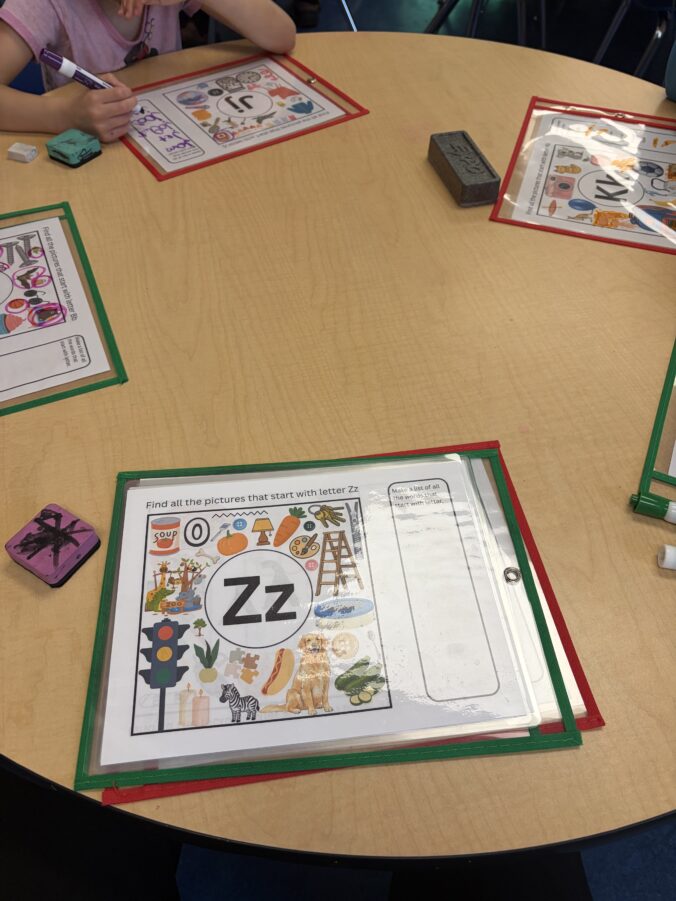
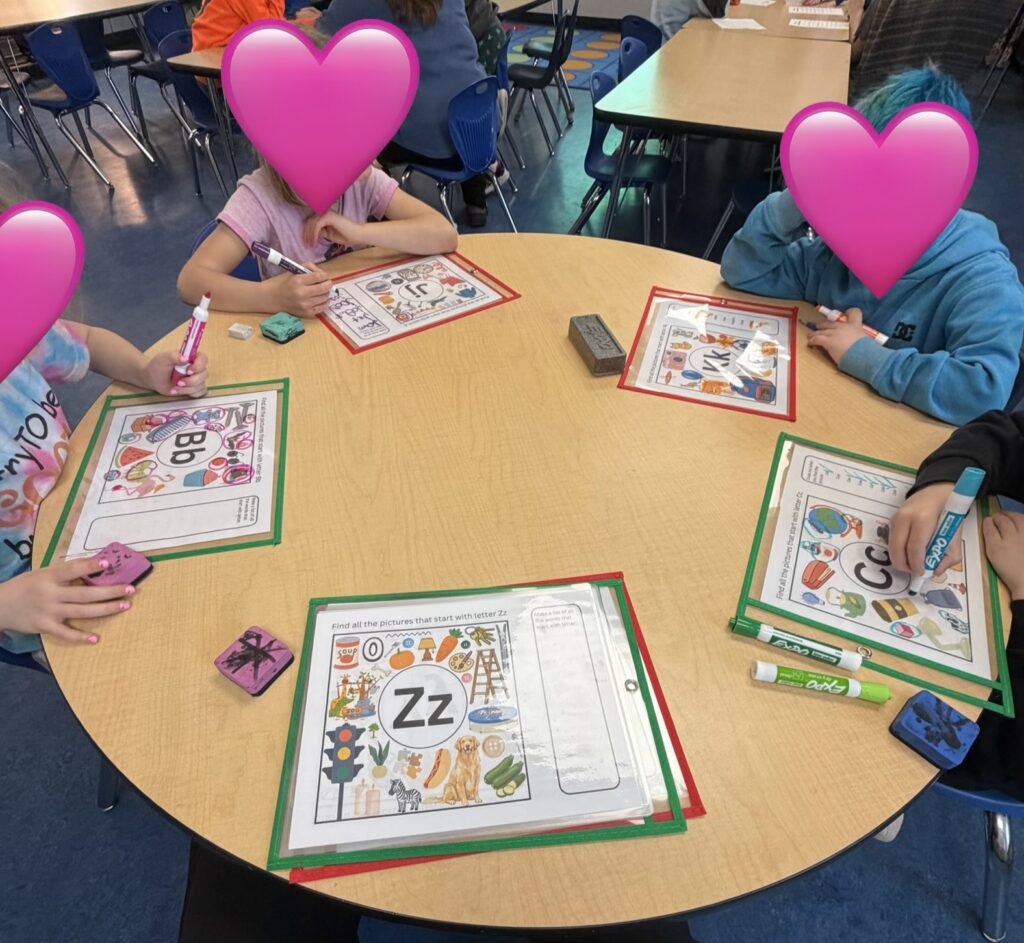
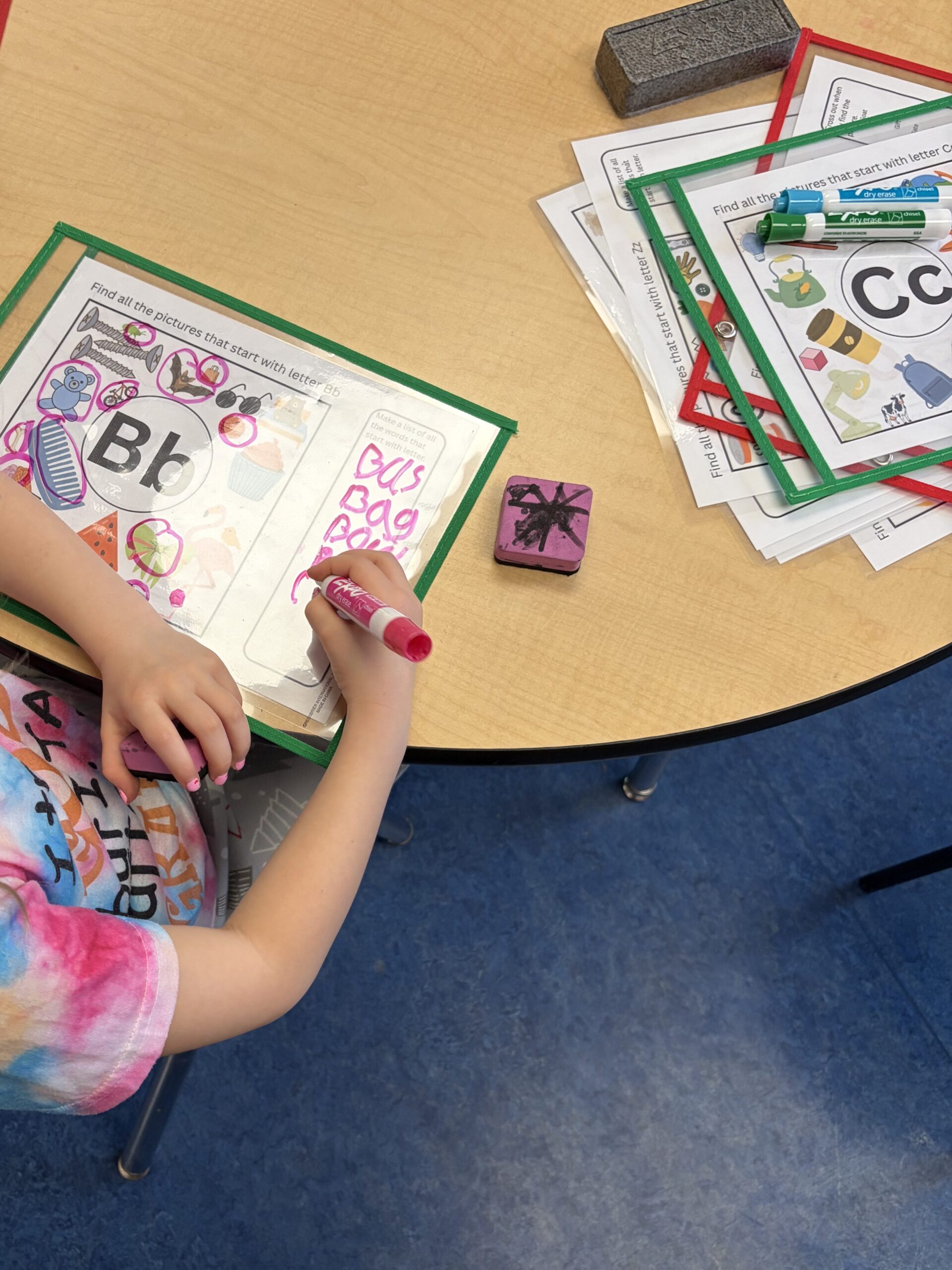
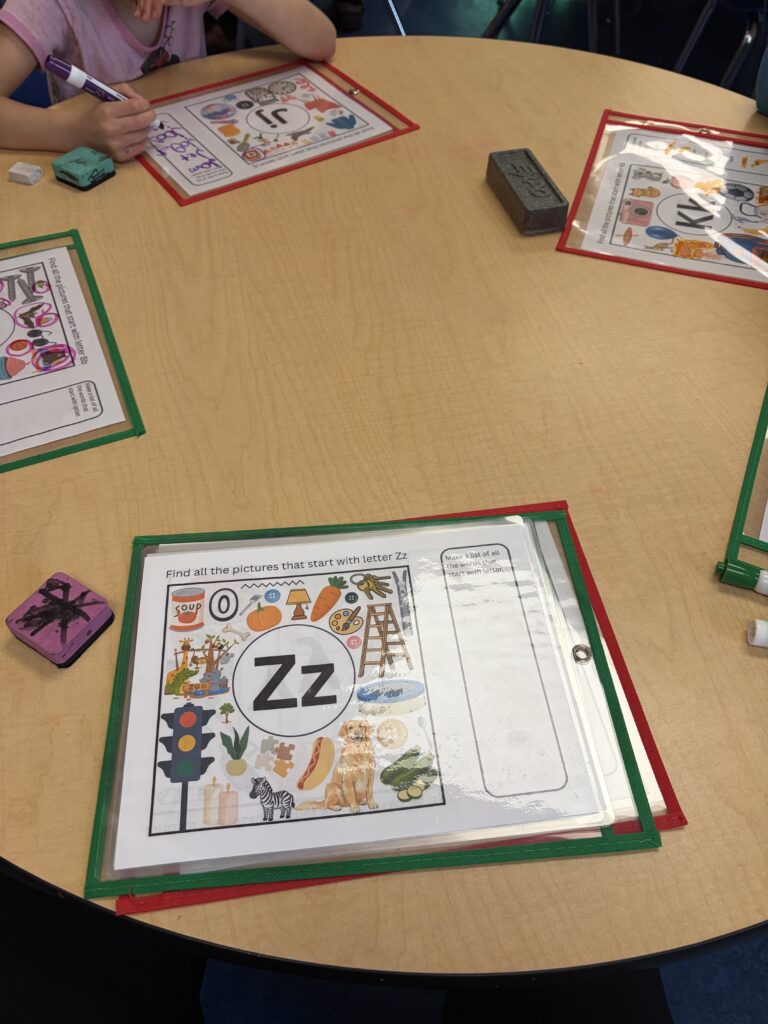
This iSpy has “magic e”, long and short vowels, and blending words. What the students will do is pick which iSpy sheet they want then they will grab a white board marker. Depending on what the students pick they will then either cross off the word that they find or they will have to write the word that starts will that letter. As well, students can circle the objects that they find to help them keep track. I was there to help students sound out words and let them know if they were missing any of the objects that correlated to their letter.

Here is a picture of my literacy station:

Photos taken by Lauren Penney.

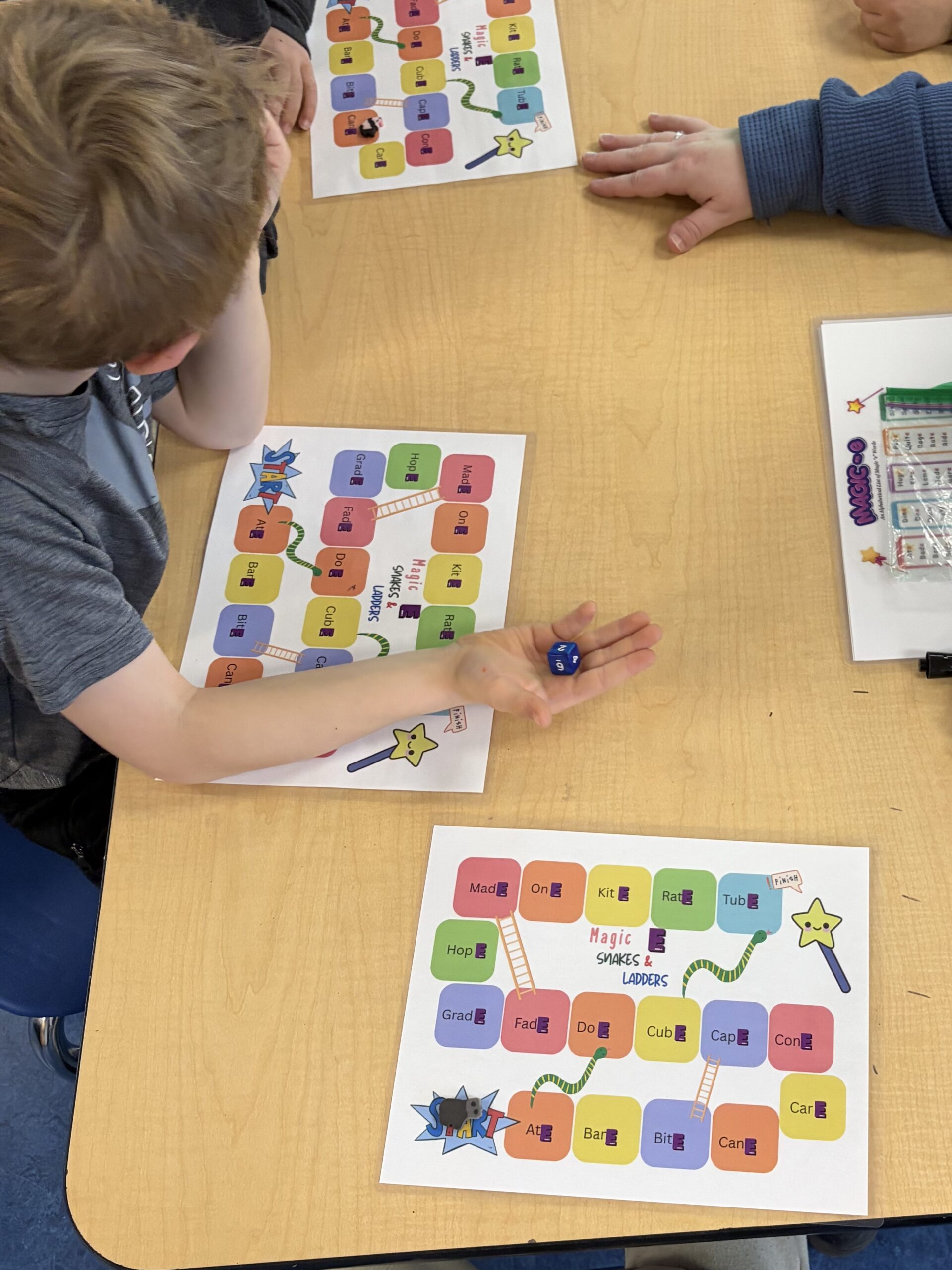
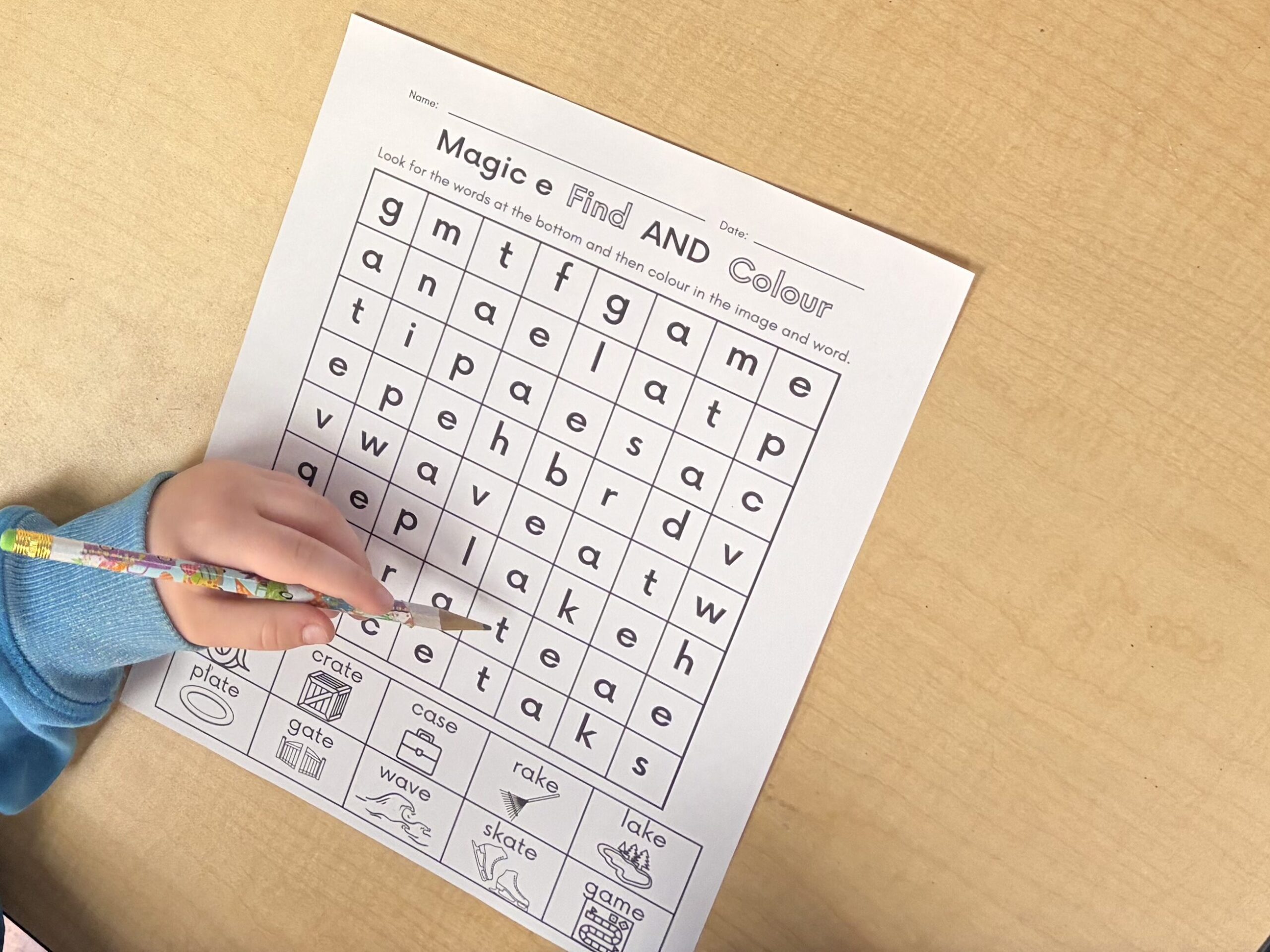
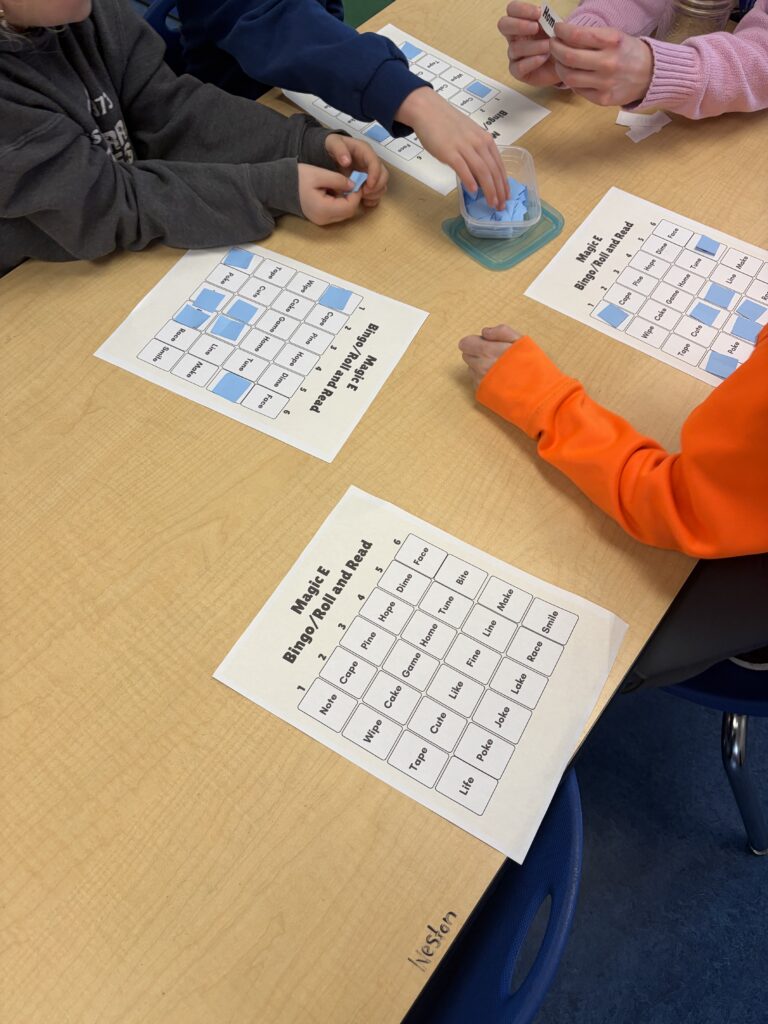
Here are what my peers in the same classroom decided to do:

  • Roll and Read
  • Snakes and Ladders
  • Bingo
  • Word search
Snakes and Ladders
Word Search
Bingo and Roll and Read

iSpy Connection to the BC Curriculum for Grade 1 ELA:

Big Ideas: Playing with language helps us discover how language works.

Curricular Competency: Use foundational concepts of print, oral and visual texts.

Content: Concepts of print. Print awareness. Phonemic and phonological awareness.

Reflection:

I had so much fun doing this with a grade one class. The students seemed engaged with my iSpy and they did quite well with it. I was surprised with how well they did with writing the words down. I did have some students who got confused on what letter they were looking for when they had to write down the object that they found in the side column, so I think making it more clear when I was giving the explanation would have solved that problem. The reason why some of the iSpy had the object words was for modifications and adaptions. I wanted to make sure that the class I was going into could have a challenge (writing the objects words on the side) if they were at that level. I felt like all of the groups were evenly divided up well. A couple of the students started acting silly and playing with the white board eraser so I took them away until they were finished. On average, the students were able to complete two letters of the iSpy. The students really seemed to enjoy this literacy activity and they wanted to keep playing. I cannot wait to use this again with students as I had just as much fun as they did!

Virtual Reality

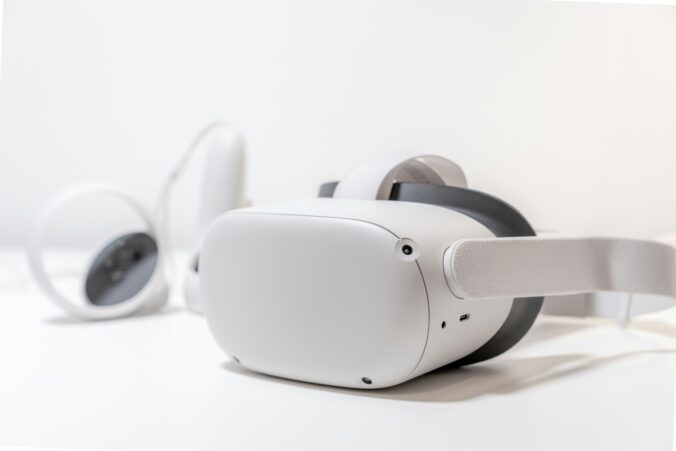
Last year in my technology course, we went to the design lab and we played around with many different toys, one of the them being VR (virtual reality). You can see what we did then by clicking here!

This year we went to our local Design Lab which we then went through what we were going to be doing the next day at a local school with grades 5’s and 6’s. We walked through how to proper size all of the VR sets for the students, how to set boundaries, and preset the game so when students put on the VR set they did not have to do any setting up.

VR Activities

Reading:

We started off by having 5 different readers at different parts of the school, reading The Wolves in the Walls by Neil Gaiman. The grades 5’s and 6’s then got into groups and the first group went to reader number one, once they were done reading the first part, the students would be guided by another one of my peers to reader number two, etc. Once a group was finished with reader number one, then another group of students would go to that reader. That is how we funnelled students in.

Worksheet:

When students were waiting for their group to be selected for their turn to go to reader number one, they were working on a booklet that my professor provided. Students were working in groups and the rest of my peers who were not reading or guiding students to the next spot were walking around helping students complete the pages in the booklet.

VR:

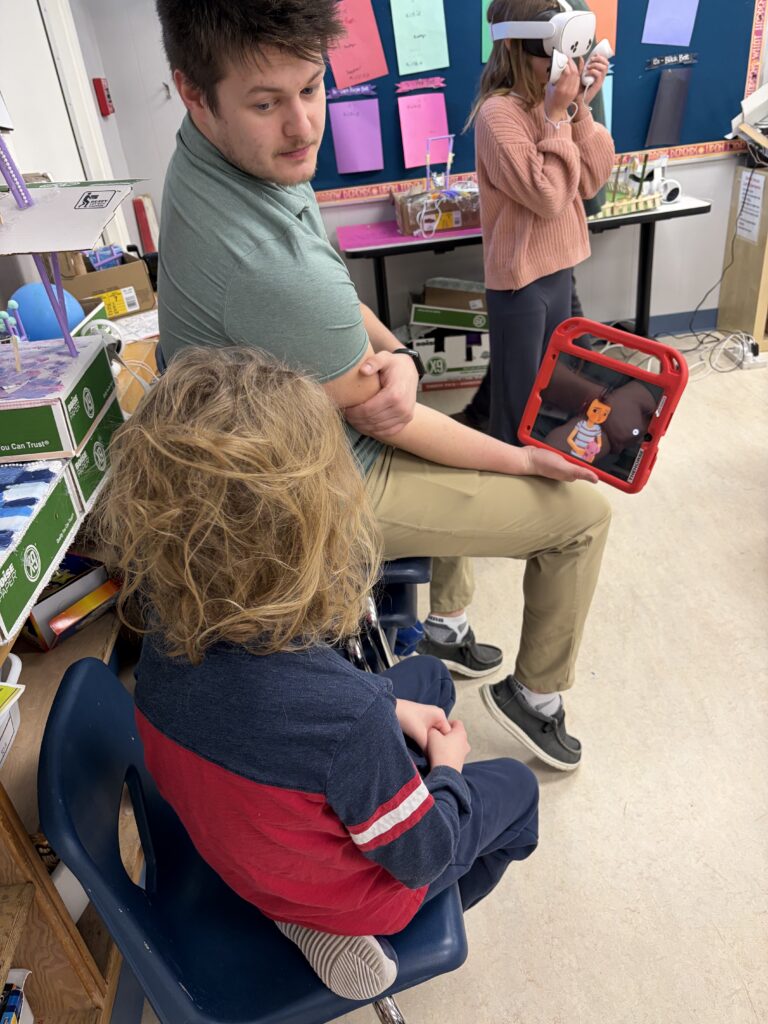
Once students finished all five parts of the book, they headed back to the classroom. This is when all of the EKTEP (East Kootenay Education Program) teacher candidates helped the students size their headsets and helped then through the story. We also had iPads that were connected to each students VR set so we could see what they were doing. Students loved watching the iPads to watch their friends during their experience.

Photo taken by Lauren Penney

Here is a video of what the students saw. The students get to be Lucy’s friend and help her show proof to her family that there are wolves in the walls. It is an interactive story where the students get to take pictures, help Lucy get the wolves out of the walls, draw, etc.

Watching my peer complete the VR experience.
Photo taken by Allie Kostiuk.

Connection to the BC Curriculum (ELA)

Grade 6:

Big Ideas – Language and text can be a source of creativity and joy.

Curricular Competency – Understand how literary elements, techniques, and devices enhance and shape meaning.

Content – Text features and literary elements.

Grade 5:

Big Ideas – Language and text can be a source of creativity and joy.

Curricular Competency – Recognizing how literary elements, techniques, and devices enhance meaning in texts.

Content – Text features and literary elements.

Cross Curricular – Applied Design, skills, and Technologies, Drama

Reflection

During my time with this class, I walked around to different reading groups to see how they were doing, I helped students work on the booklet, and I helped students fit their VR sets and make their way through the VR story. The students were engaged and enjoyed the VR experience. This is something that I would like to see more often. I know it cannot replace reading an actual book but I think it gives students a different perspective and really engages them in the story.

Demonstrations

Throughout this class, we had to make a demonstration and present it to our cohort. My partners for the demonstration were Carter White and Connor Hall. We did a lot of brainstorming and we decided to do our demonstration on paper airplanes. We connected this topic to the grade 6 science curriculum.

What we did to prepare:

  • Created a student worksheet to guide inquiry and reflection
  • Created a teacher document that our peers could follow in the future
  • Researched how Paper airplanes could connect to FPPL (First People Principles of Learning) in a meaningful way
  • Tested our demonstration before our presentation

Here is everything we gave our class:

As you see, in the teacher notes, we have already connected our demonstration to the BC Curriculum by tying in the Big Ideas, Content, and FPPL.

Big Ideas:

  • Newtons three laws of motion, describe the relationship between force and motion.

Content:

  • Newtons three laws of motion
  • Force of gravity

FPPL:

  • Intro in Ktunaxa
  • Learning is hands on and contextual
  • Learning involves recognizing consequences of one’s actions
  • Learning involves patience and time
  • Learning is reflective
  • Sharing Circle at the end – talking about what went well and what we could improve on
  • Recommended to do the activity outside if the weather is nice
  • Fredrick James Carmichael (first Indigenous commercial pilot)

AHA Moment

My aha moment came when I realized how much work it is for teachers to set up each demonstration and when I realized that engagement alone does not equal understanding. Students get really engaged with paper airplanes therefore, it is easy for a class to be engaged but not create a meaningful connecting to the content that is being covered. When my group was brainstorming, we kept thinking how we could make sure that the students were actually learning and that is how we came up with our worksheet. We had to make sure our worksheet was guided and structured in a way that students would make meaningful scientific observations and guesses. The worksheet and teacher notes are essential to help me understand that strong science teachings are about purposeful structure that supports the students inquiries.

Reflection

This experiment and assignment impacted how I view science instruction at the elementary and middle school level. When I was a student, I loved science experiments because I found them exciting and fun (I mean I still do). Now, as a future educator, I see the importance of intentional design behind all of the experiments.

Moving forward in my practices and creating student worksheets, I want to make sure that I somehow include something for the students to record. This should include their data/ observations (predictions and their explanations). I feel like those three things really helped us with creating a good worksheet that help guide students into meaningful hands on learning.

One thing I need to keep in mind when I am creating scientific demonstrations is how I will keep my class focused on the learning intention while still allowing time for their own exploration. I believe that there has to be both structured learning but also unstructured inquiry/play but there needs to be a clear purpose, place, and time for each of those things.

Having meaningful hands on learning in elementary and middle school classrooms helps students make abstract concepts concrete. Science at the elementary and middle school level should encourage curiosity, critical thinking, and different types of problem solving skills. This demonstration helped me understand how to design learning outcomes that support these goals I have.

Using Scientific Instruments within Different Age Groups

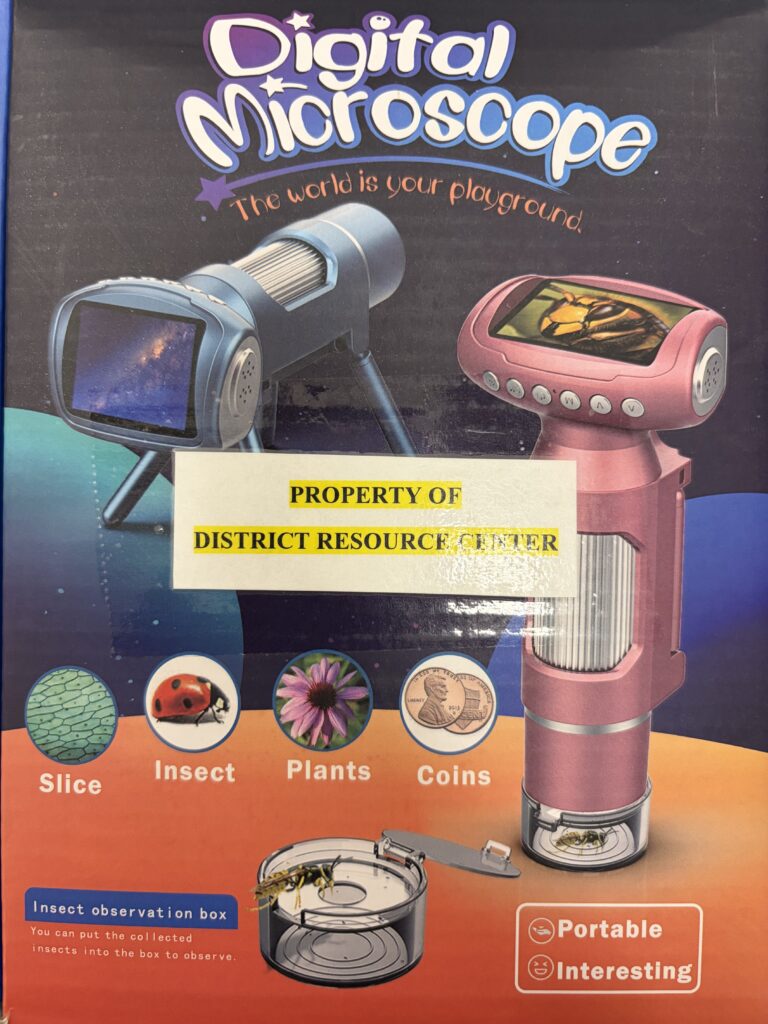
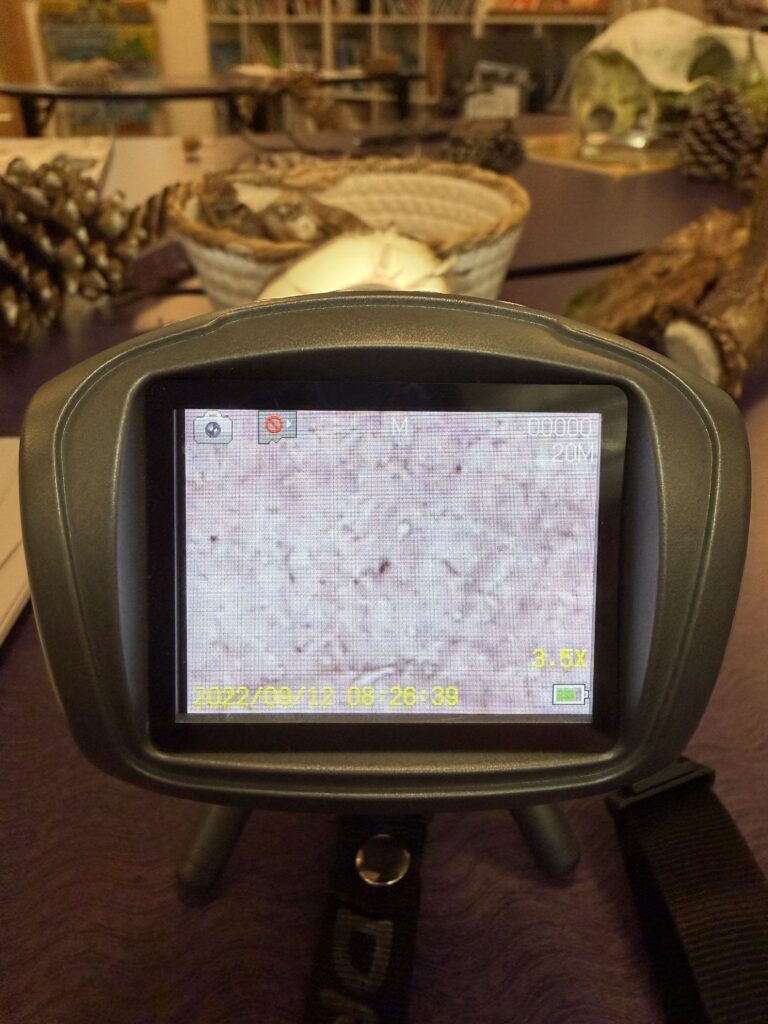
For this class, we brought out microscopes that were age appropriate to use within elementary schools. This was my AHA moment. I totally would have never even realized that there are different levels of scientific instruments that are for elementary students that even the primary grades could use. My teacher rented them from our local resource centre.

Here is what the microscopes look like:

I took this picture. 2026

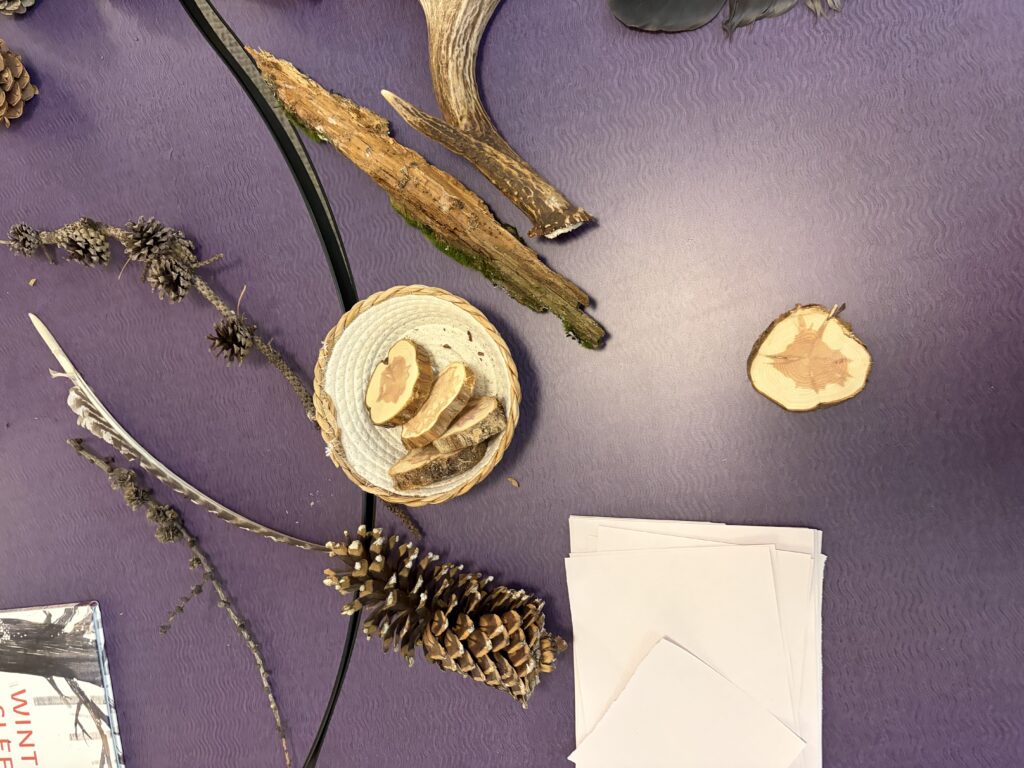
Using these microscopes, our teacher brought in natural resources from outside for us to look at through these microscopes.

I took this picture. 2026

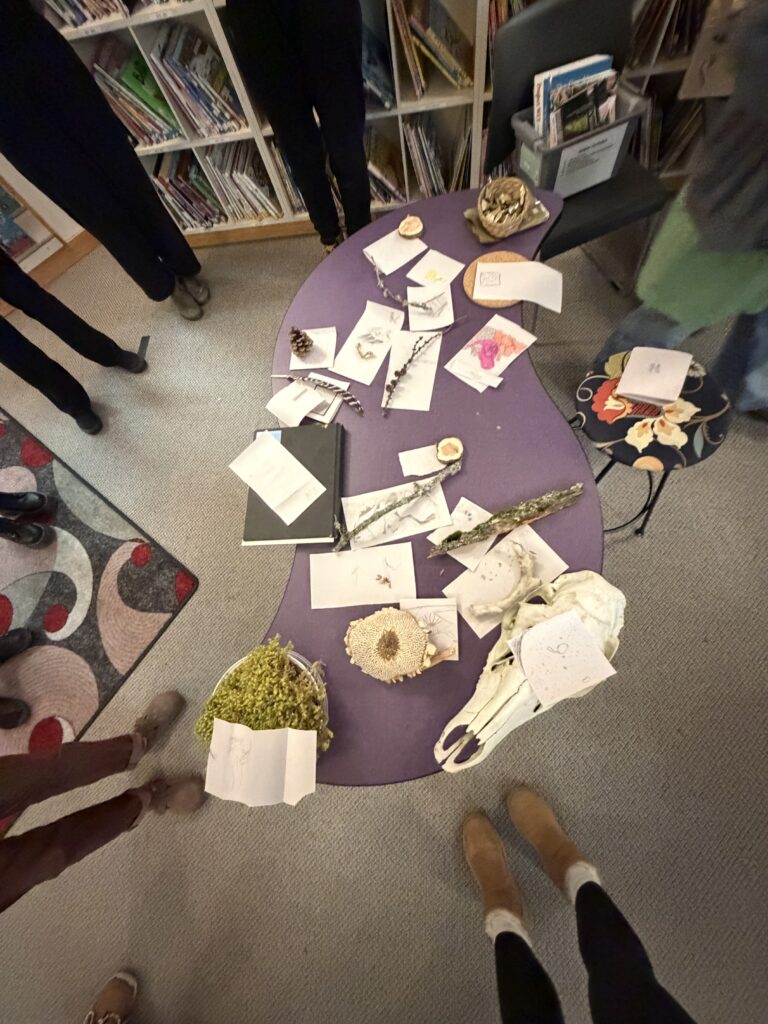
When we focused these items on our microscope, we had to draw what it looked like. This is what I drew (cork hot plate). Although the picture below is of one of the wood cookies.

This image has an empty alt attribute; its file name is IMG_0639-768x1024.jpeg
Microscope looking at a cork hotplate

When we were done drawing, we had to put our drawing and our item on the table in random spots. We our teacher picked a couple of us to guess which drawing went with an object. After a couple of us guessed, we all picked our item and put it with the object we drew.

Matching Activity

This connects with the BC Curriculum Science Curricular Competencies, communication, processing and analyzing data and information, and additionally, safety of using scientific tools. This lesson allows students to be curious and experiment while other students are still working on their drawings. When I was waiting for my peers to finish their drawings, I was looking at the table we sat at and other objects through the microscope that were from outside. Additionally, this allows students to analyze details and represent their findings through drawing. This activity is inquiry based which reflects how the BC Curriculum highlights hands on exploration rather than memorization in the elementary school levels.

This was an AHA moment because I realized scientific tools like microscopes are accessible even in primary grades. It challenged my thinking about what is developmentally appropriate in science. This activity impacted my learning by reminding me that students learn best when they feel like real scientists (hands-on learning). I think science is hard to always have hands on learning but this activity made it clear that it is important to have hands on learning whenever possible to keep students engaged and learning. Microscopes also help students learn ways about the world that they would not be able to see with their naked eye which will create inquiry. I know I was engaged and being curious about what other objects look like around me.

Growing Together

This week in our science class, focused on the chapter of Braiding Sweetgrass Asters and Goldenrod. This chapter was amazing to read.

There was one quote that stuck out to me which was:

“Growing together, both receive more pollinator visits than they would if they were growing alone. ” (Kimmerer, 2013, p.46)

This quote relates to more than just nature. It relates to human beings. I took this quote and understood it as no one will flourish as an individual, rejecting help, being stubborn, etc. To grow in not only life but academically, we need to have others to be there for us and to help us learn throughout our journeys. This also resonates with me because this gives me evidence on why I want my future classroom to be supportive, encouraging, and a community. Additionally, this quote is important to science because it shows how scientific understanding is strengthened through collaboration, observation, and Indigenous knowledge, rather than memorization. Reading the chapter of Braiding Sweetgrass made it very clear that science cannot just be a western view. There has to be both western and Indigenous knowledge within scientific learning through all grades/ levels.

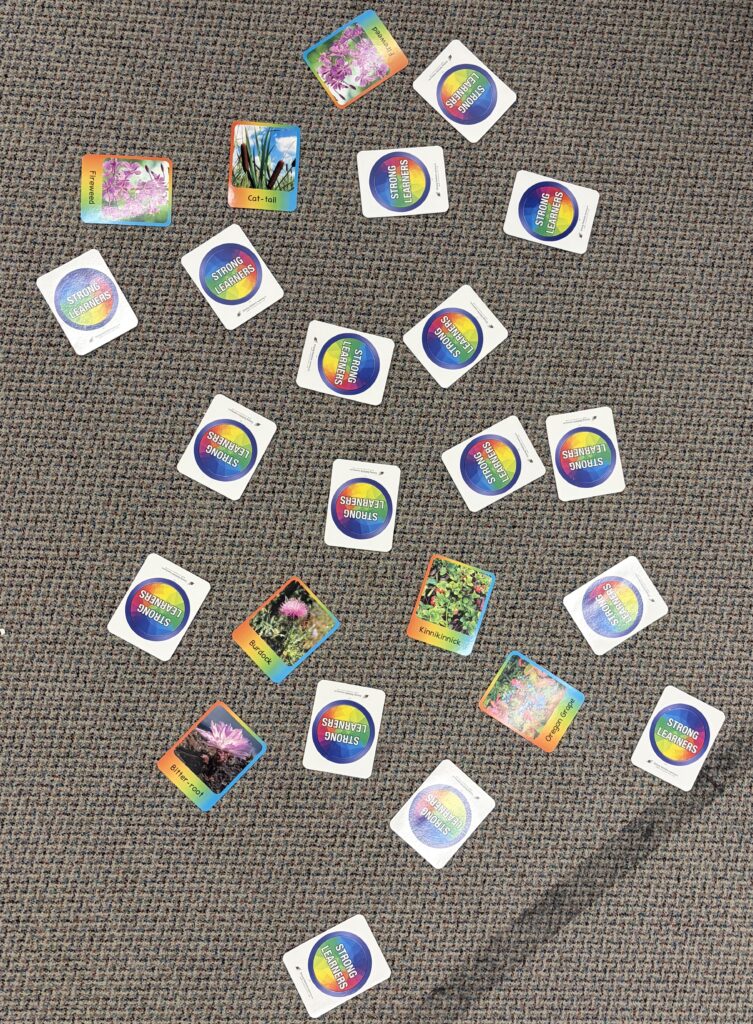
After we reflected on those questions as a class, our professor showed us the game Strong Learners by Strong Nations. There are many different games that are “Strong Learners”, but this game was a memory matching game with Indigenous plants. To play, I would go off of the classroom list and call a student to go and lift to cards to see if they were a match. If they were not a match, I would tell them to read the plant names and then flip the cards back over. If a student got a matching pair, I would then get them to say the name out loud to their classmates and then go on First Voices and then play the Ktunaxa word and practice the pronunciation as a class. The game would continue like so.

Picture I took of the matching card game

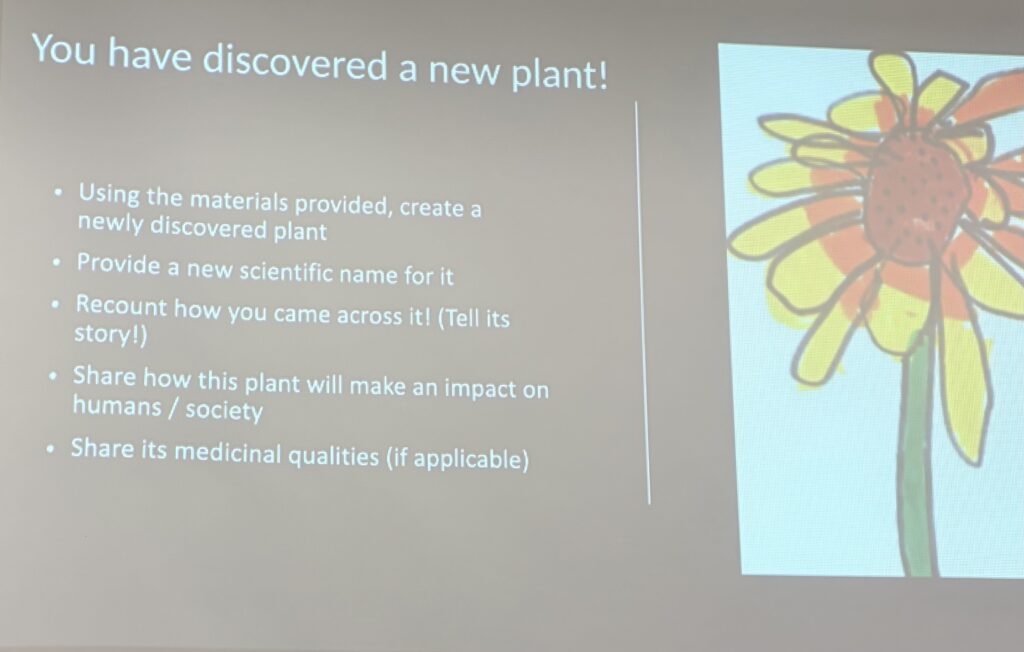
Following the game, we got these prompts:

Picture I took of our Professor’s slide of our instructions.

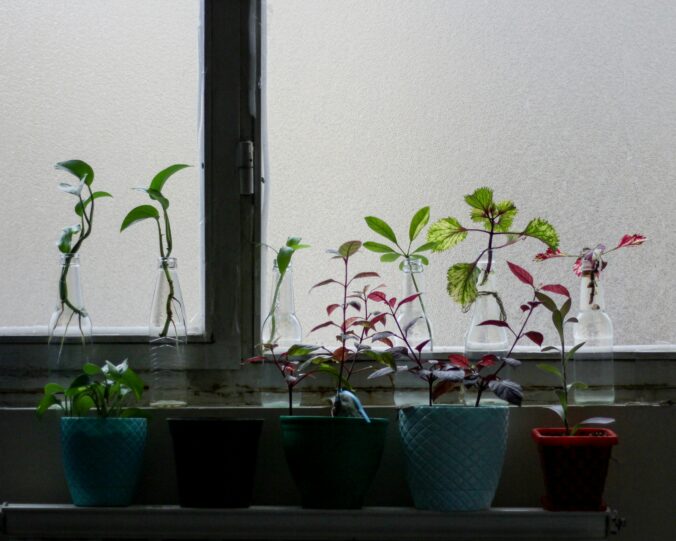
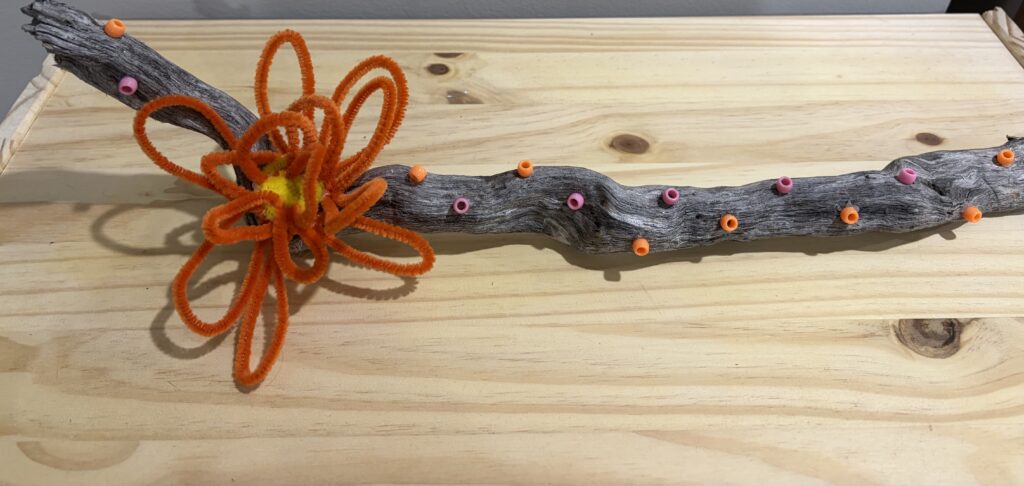
Using this information, we created a plant out of a tree root and we had to decorate it.

A picture I took of my root I created.

This is my creation. The scientific name is Lauren Vitacê Boudica. Which means Lauren’s Immune Boosting Victory. The short name for this plant is Labragut. I found this plant by walking in the forest with my Labrador Retriever and he started eating these flowers. He has really bad allergies and he did not have an upset stomach after eating the flowers and it helped his allergies. I then told my friends who have allergies and they tried it and it worked. So it stops allergic reactions from happening.

The chapter that was covered, and the activities completed are connected directly to the BC Curriculum, but more specifically, Life Sciences, where students explore how living things are interconnected within the ecosystems and how relationships in nature support growth and balance. This learning shows how Indigenous knowledge is just as important and valuable for us to understand the world around us. By bringing in Indigenous ways of knowing, students are able to see that science is about relationships, collaboration with peers, and learning from the land around us. When we get students to learn by doing, exploring, and experiencing we enhance their understanding and they will then create deeper connections with the content we present to them. Lastly, I think creating those connections to our curriculum and the FPPL (First Peoples Principles of Learning) will allow students to see that science is not separate from culture, community, and lived experiences.

I have included everything in this post because I would love to do this lesson in my future classroom. I think that it is a great lesson for all ages which you could increase the complexity or decrease it so that it is suitable for all ages. These lessons just remind me how it is simple to connect Indigenous knowledge in every lesson. This lesson allows for multiple different perspectives as Indigenous knowledge is involved, latin terminology can be involved, and the western view is involved. These activities just help myself understand that bringing in Indigenous knowledge does not have to be complicated in the education systems.

Soft Starts

February 14th 2026

Soft starts are used in classrooms to provide a calm and flexible way to begin the school day or to transition students back into learning after recess or lunch-hour play. Soft starts can be intentionally planned by the teacher, or they can be offered through bins with different activities that students can choose from independently. These activities are meant to be low stress, calming, and creative. The goal of having soft starts throughout the day is to ease students into the learning environment while also creating connections with their peers.

Some examples of soft starts we have done so far this year in our EDCI 330 class include:

  • Puzzles
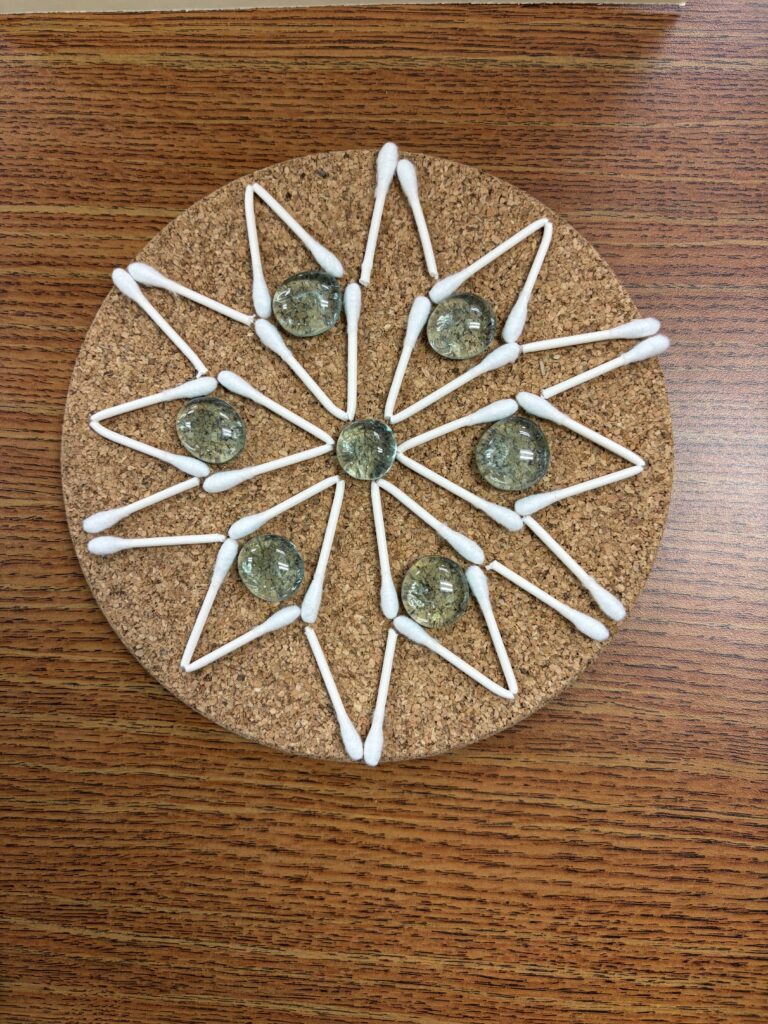
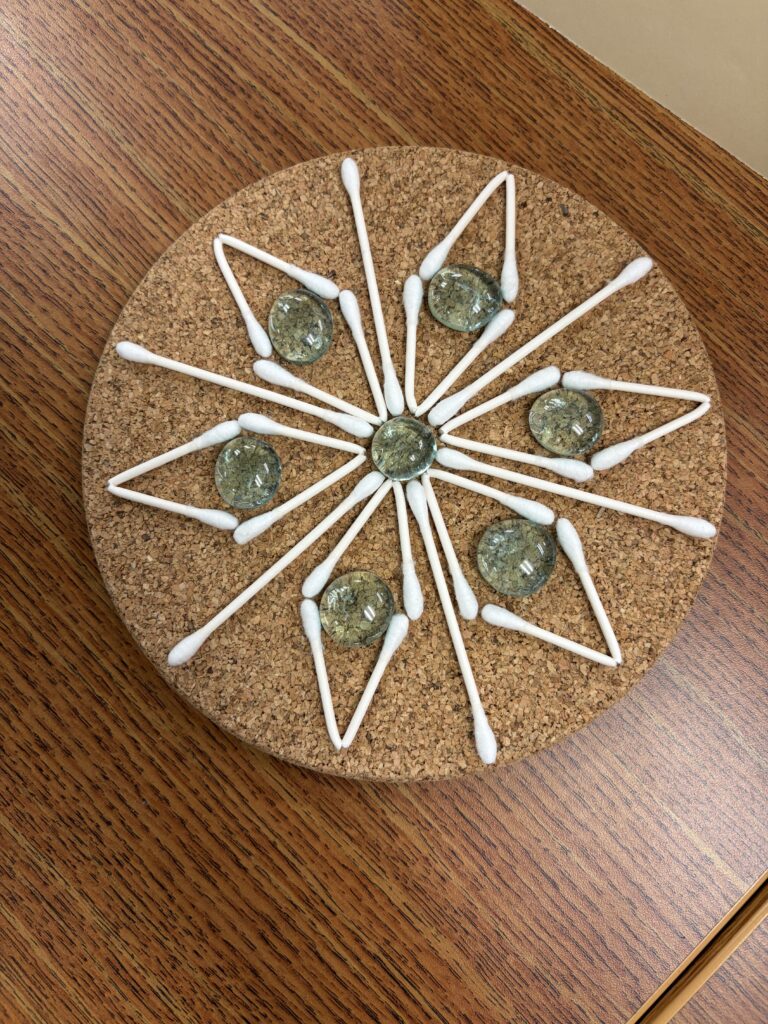
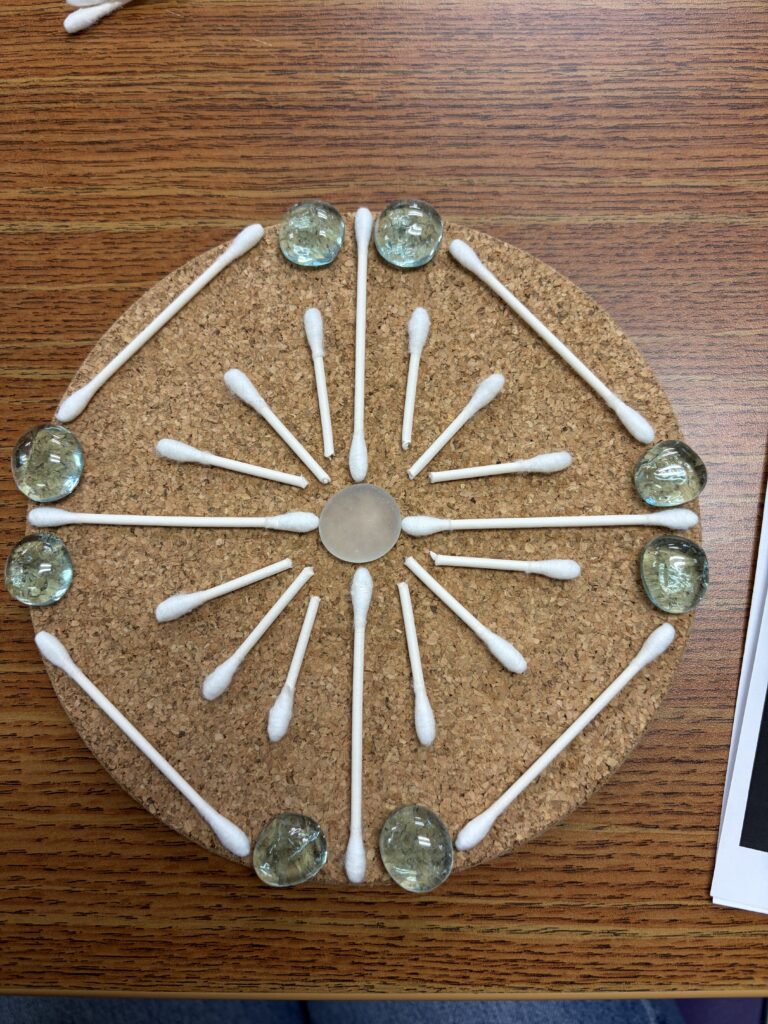
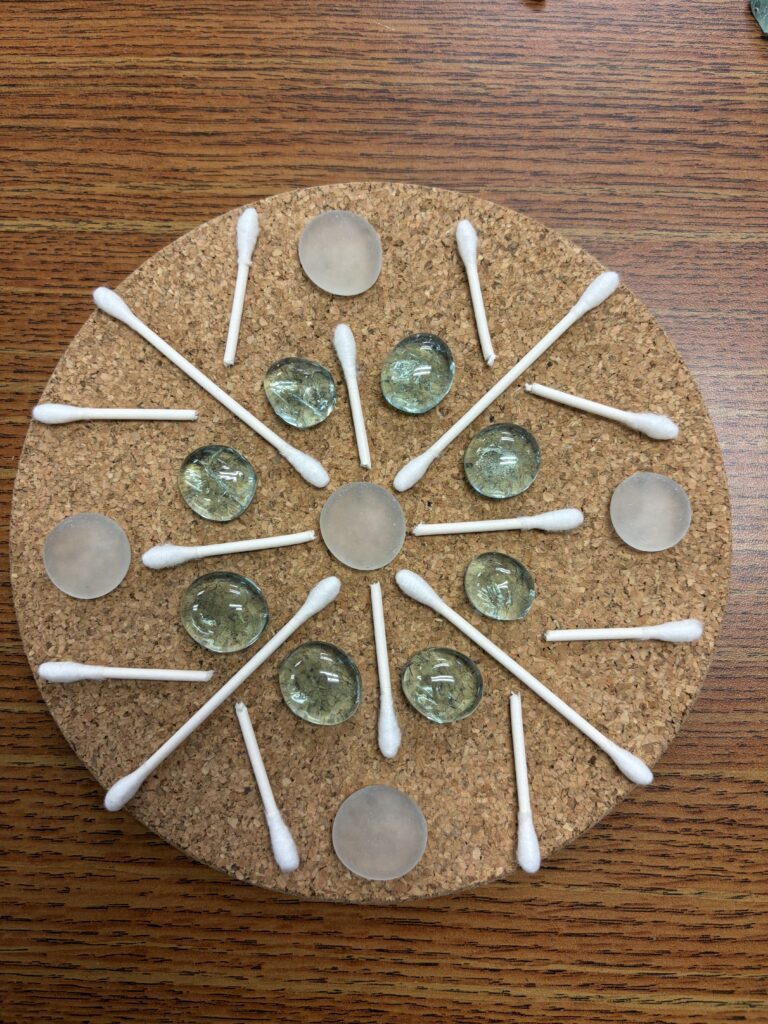
  • Building snowflakes
  • iSpy
  • Finger knitting
  • Story Rocks

There are many different other activities of soft starts such as:

  • Reading
  • Drawing/journalling
  • STEM activities
  • Games
  • Group Discussions

I also listened to the Truth for Teachers podcast episode on soft starts, which offered many soft start ideas from kindergarten to older grades.

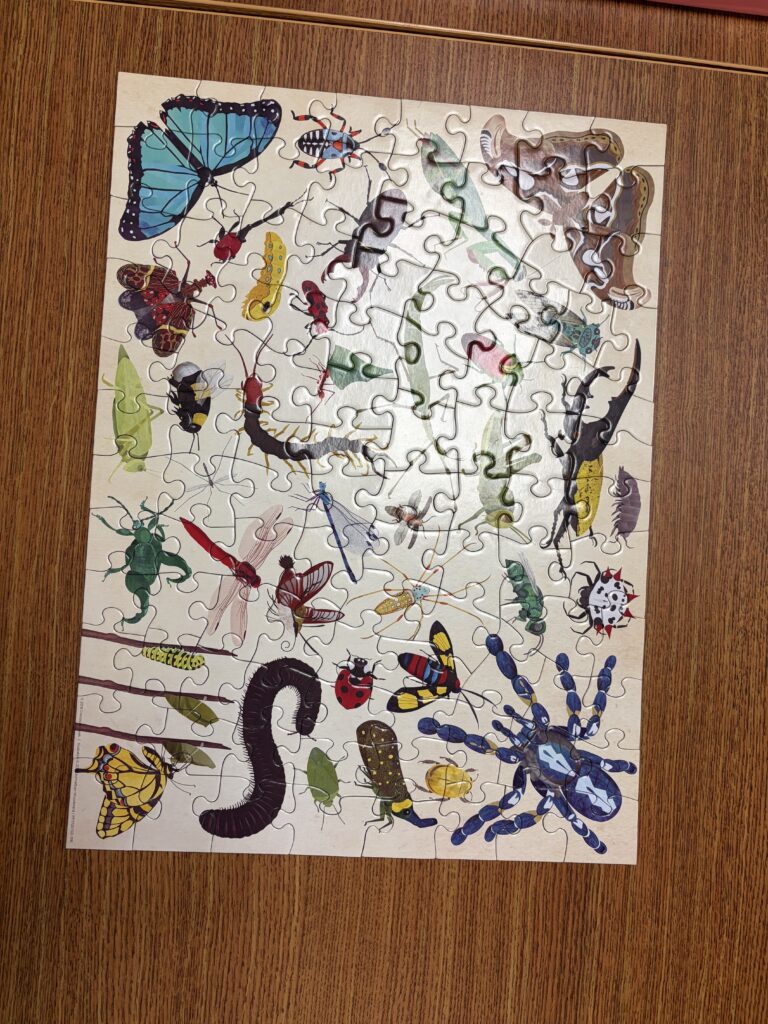
Puzzle Soft Start Activity

Puzzles are a great soft start activity because they support the development of problem solving skills while remaining no risk/low risk for students. This keeps students engaged as they focus on their own puzzle. Puzzles enhances fine motor skills, and improves SEL (social emotional learning). They enhance language development, memory, and students spatial awareness.

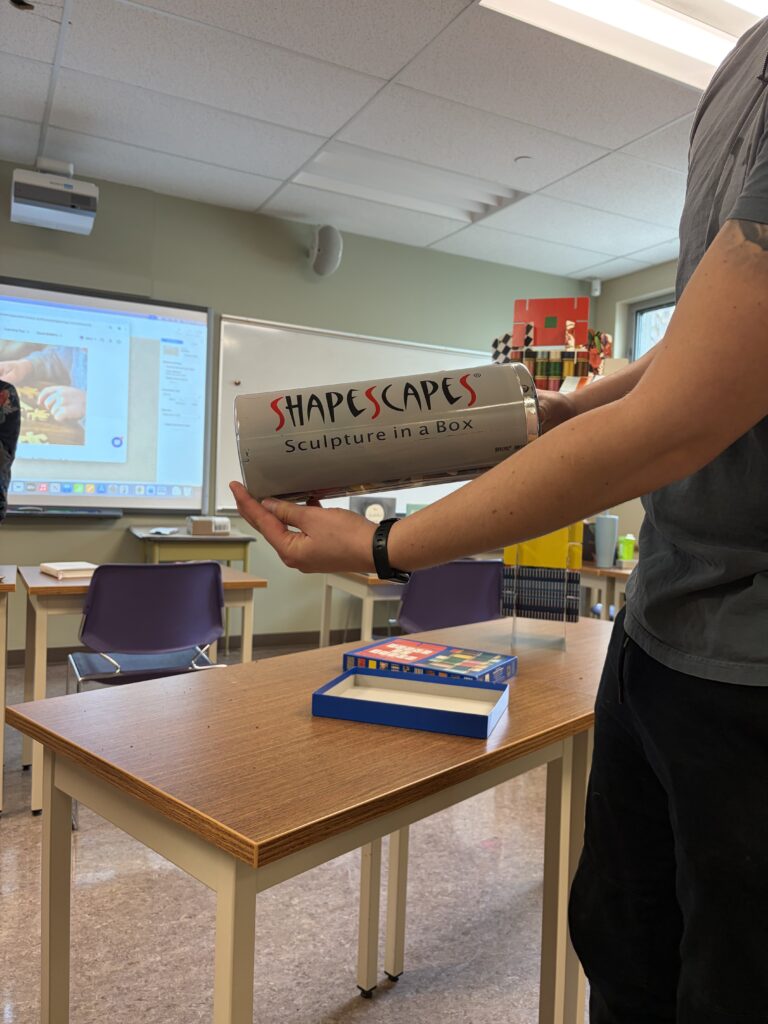
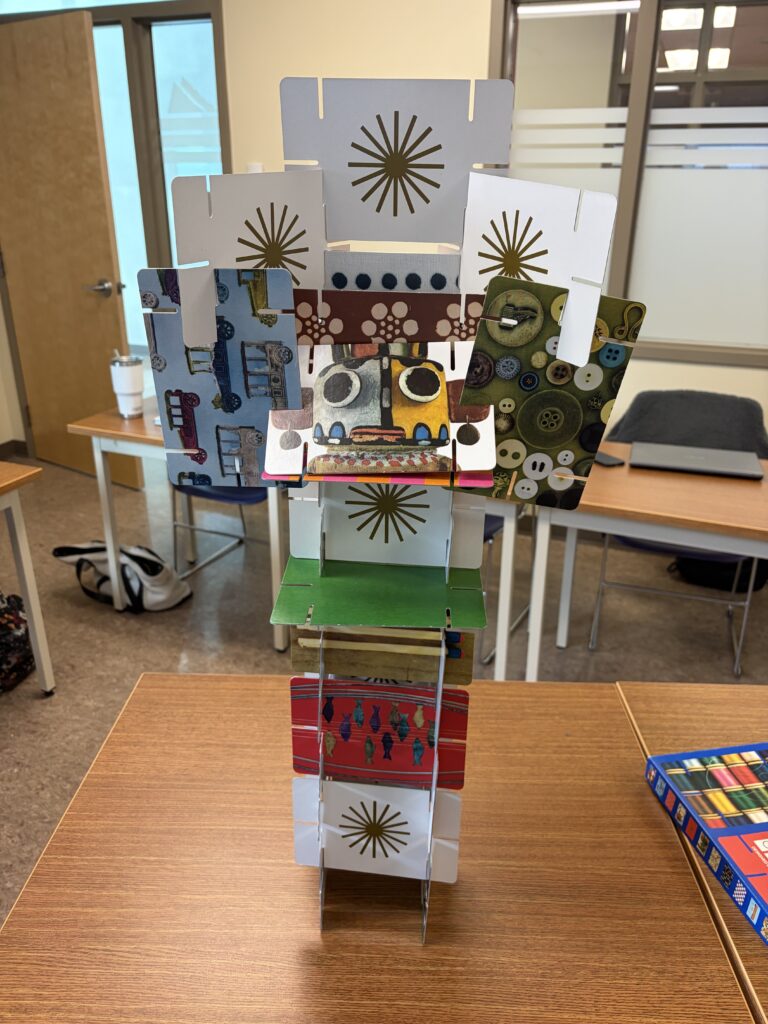
Our teacher started this class by creating groups of 2-3 students. She then handed out different puzzles for each group to complete. Our teacher provided Ktunaxa puzzles, animal puzzles, she even had Shapescapes and House of Cards (for some reason, I cannot find the link). Once the first group finished their puzzle, they were allowed to try different types of puzzles with their group. I thought that puzzles were a great type of soft start that was super engaging and relaxing. I really liked how there were multiple types of puzzles so that you either be more creative, like with the house of cards, or you could choose to stick with a basic jigsaw puzzle. Starting off with puzzles in the morning is a great idea because there is no pressure to finish the puzzle. The focus is on where you are at. If groups are more talkative, the activity allows space for connection; if students are quieter, it still supports focus and calm engagement. This activity relates to the UVIC Teacher Competency number 7, Practice working collaboratively and collegially as well as independently, as it encourages both independently and collaboratively working. By incorporating puzzles into your soft start activities, teachers promote collaboration, communication, and shared problem solving in a low-pressure environment.

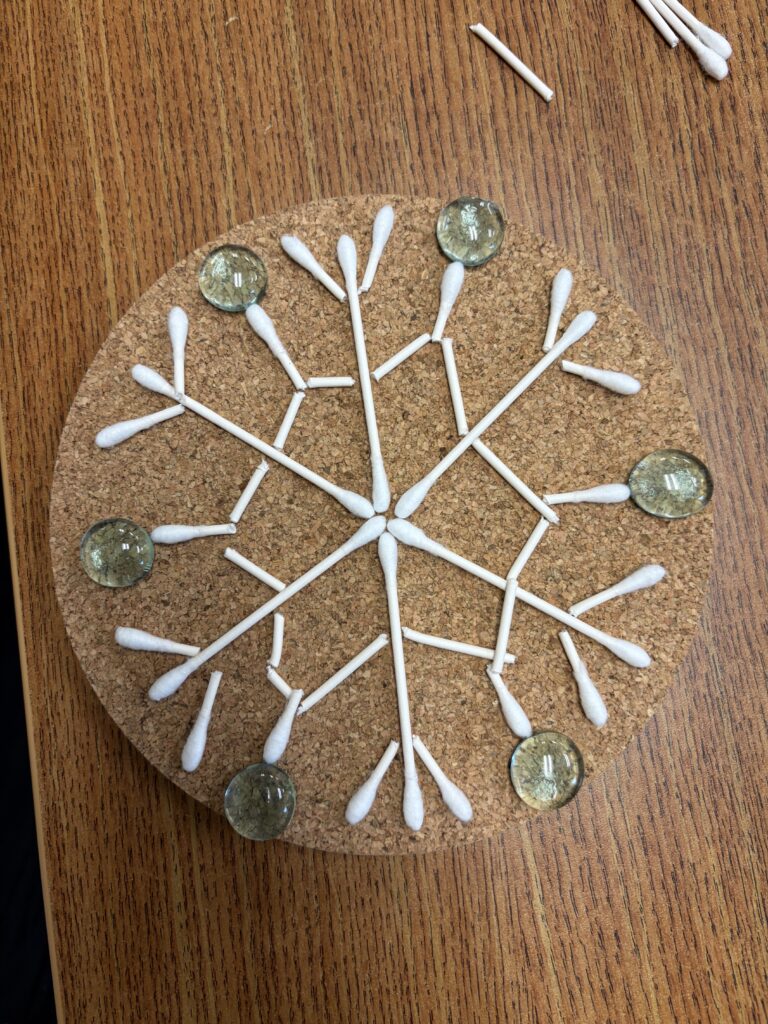
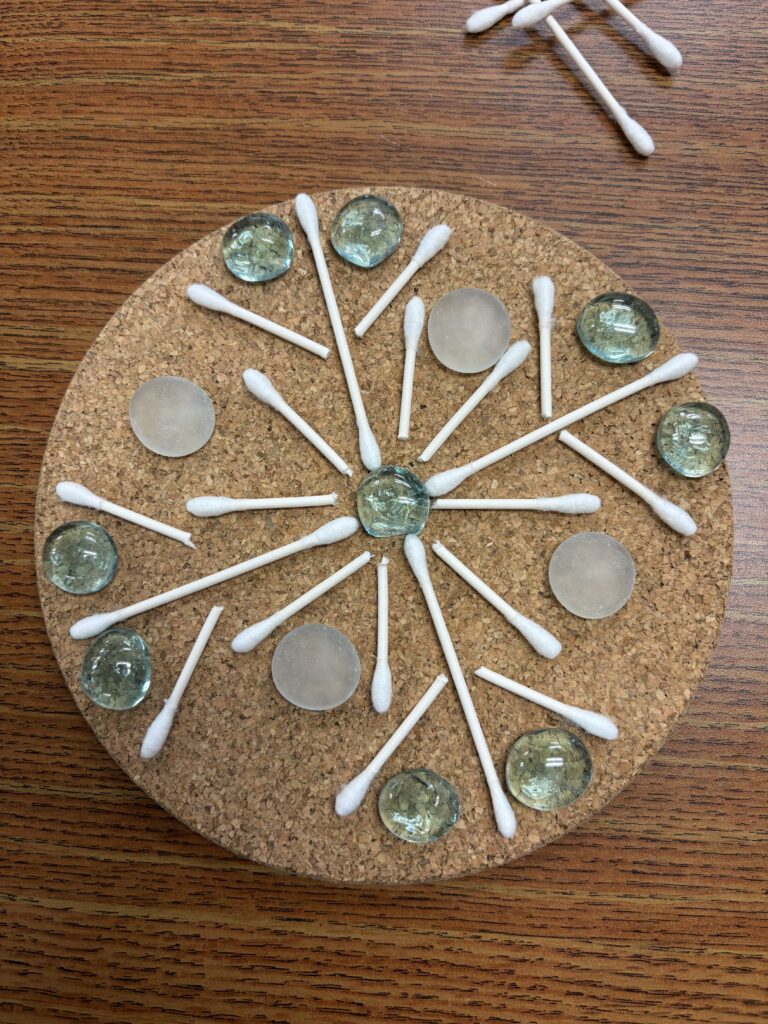
Snowflake Soft Start Activity

What you need:

  • Cork hot plates
  • Q-tips
  • Glass counters
  • Pom-poms
  • Scissors
  • Different Pictures of snowflake shapes and patterns

In this soft start activity, students will use the supplies to create a snowflake design. They can choose to follow the pictures provided by the teacher, or they can come up with their own design. During this activity, students are encouraged to use critical thinking, problem solving, creativity, and decision making. Students are allowed to work independently or in pairs. When working in pairs, the students must make sure that both participants are taking turns.

This activity is a great way to engage students in a calm and creative way, and it could easily be cross curricular with Science, English, and Art. This activity allows students to become comfortable in their learning environment while slowly transitioning into their learning mode.

Creating snowflakes out of different resources benefits the students as there is no pressure to immediately think academically or to think creatively. This activity relates the UVIC Teacher Educational Competency number 12, develop an understanding of how learners learn in order to cultivate effective learning environments. This competencies relates to the snowflake activity by recognizing the students’ needs and providing a positive, supportive learning environment that sets them up for a successful learning day.

Having soft starts in your classroom helps create a welcoming environment where everyone is/feels respected and is able to express themselves on how they are doing that day. Soft starts allow students to unknowingly build on their SEL (social emotional learning), while also creating connections with their peers. Many soft start activities naturally connect to SEL making them a valuable part of the school day.

In the future, I plan to incorporate soft starts into my own classroom. Creating and offering different activities every morning for 10-15 minutes is beneficial for creating those relationships with your students and understanding how your students are going to preform academically. Soft starts also provide teachers with time to observe your students and assess their skills, emotional states, and social interactions with their peers. Lastly, it allows for the teacher to have one on one time with those students who may need additional support, helping to build a positive and inclusive classroom community.

Read Aloud IN-SITU

For three weeks straight, I have gone into a local school and did three different read aloud’s with a literacy activity that went with a book of our choice.

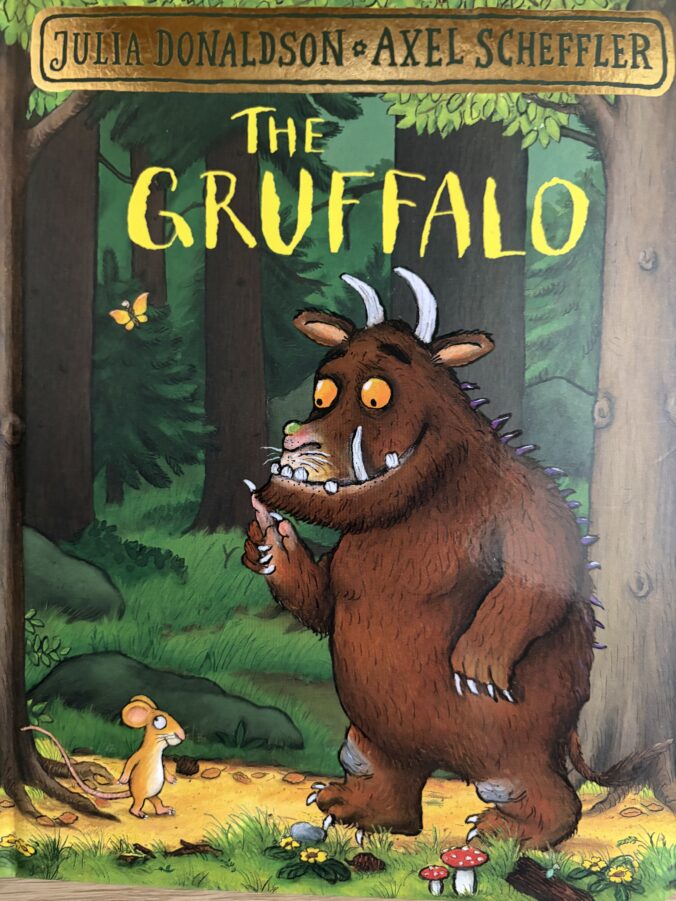
I am going to be focusing on week two which is where I read The Gruffalo to a grade 2/3 class.

I completed the Read Aloud Planning Template, from our textbook, Read Alouds for All Learners by Molly Ness (2024) on page 102.

How does this connects to the BC Curriculum for English Language Arts in the grade 2/3?

Big Idea: Language and story can be a source of creativity and joy.

Curricular Competency: Exchange ideas and perspectives to build shared understanding.

Content: Strategies and processes – reading strategies

Core Competencies: Communicating, and Creative thinking.

This activity connects to the Big Idea that language and story are a source of creativity and joy, as students used their imagination and narrative language to create their own original characters. The curricular competency of exchanging ideas was demonstrated through class discussions during the read aloud and during the activity.

My Activity:

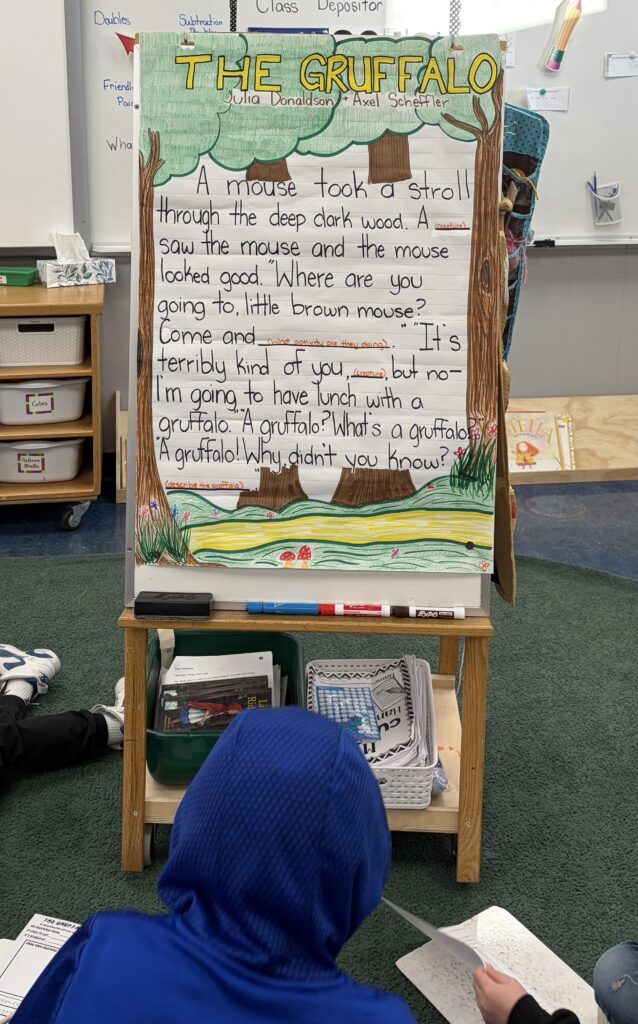
When I walked into the classroom, the students and the teacher were at the carpet. I then introduced myself and then the teacher asked if they could finish talking about their day plan. While they were finishing up, I put their literacy worksheet on their desks. Then I joined the class on the carpet and I read The Gruffalo. I then got the students engaged by pausing throughout the book to get the students to think if they notice any patterns, or what they think was going to happen next. Once we got through the whole book, I put up the poster I created on the white board and explained it with the class. I explained that the poster followed the same lines as the Graffalo and this would be important for when we did the activity.

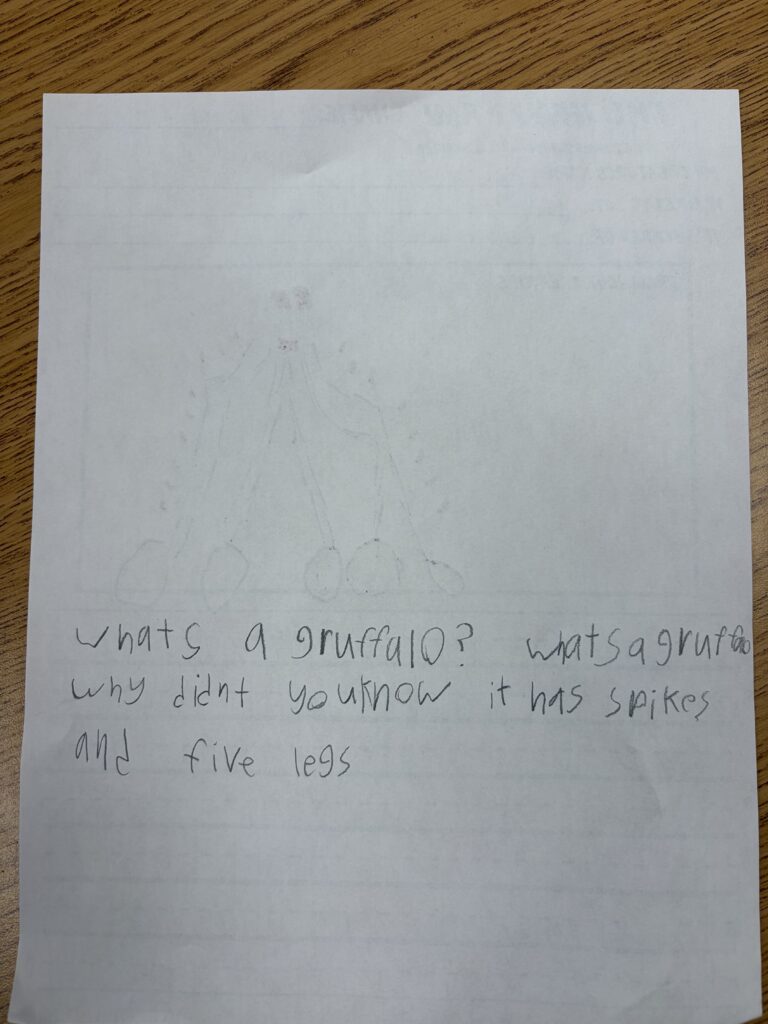
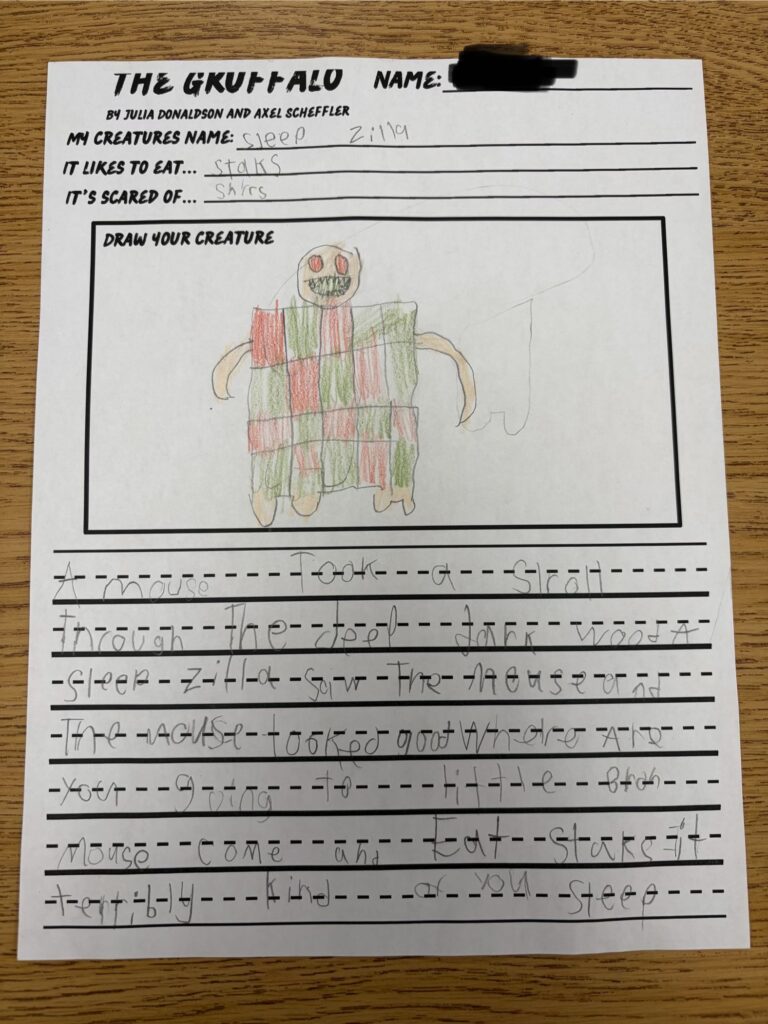
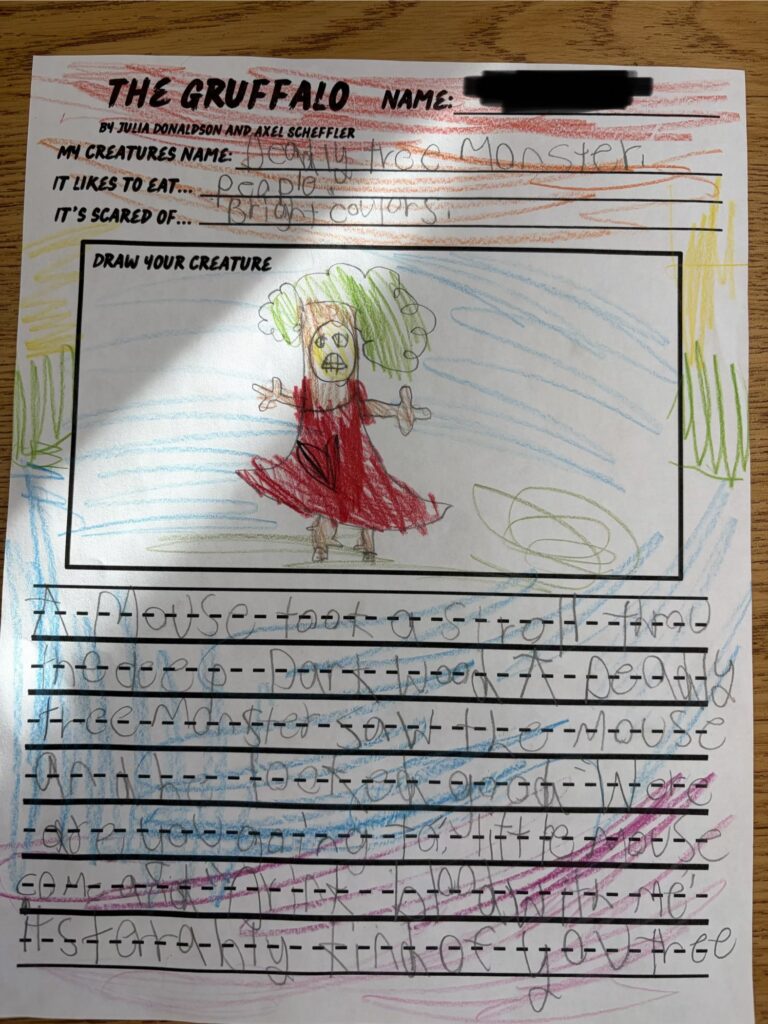
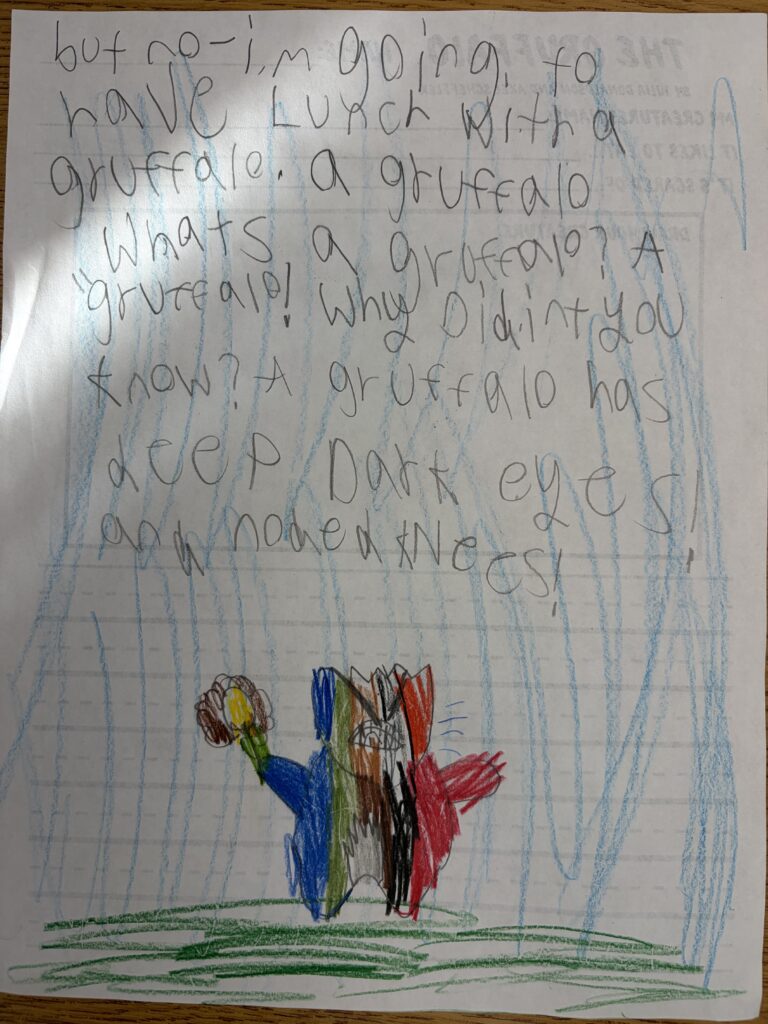
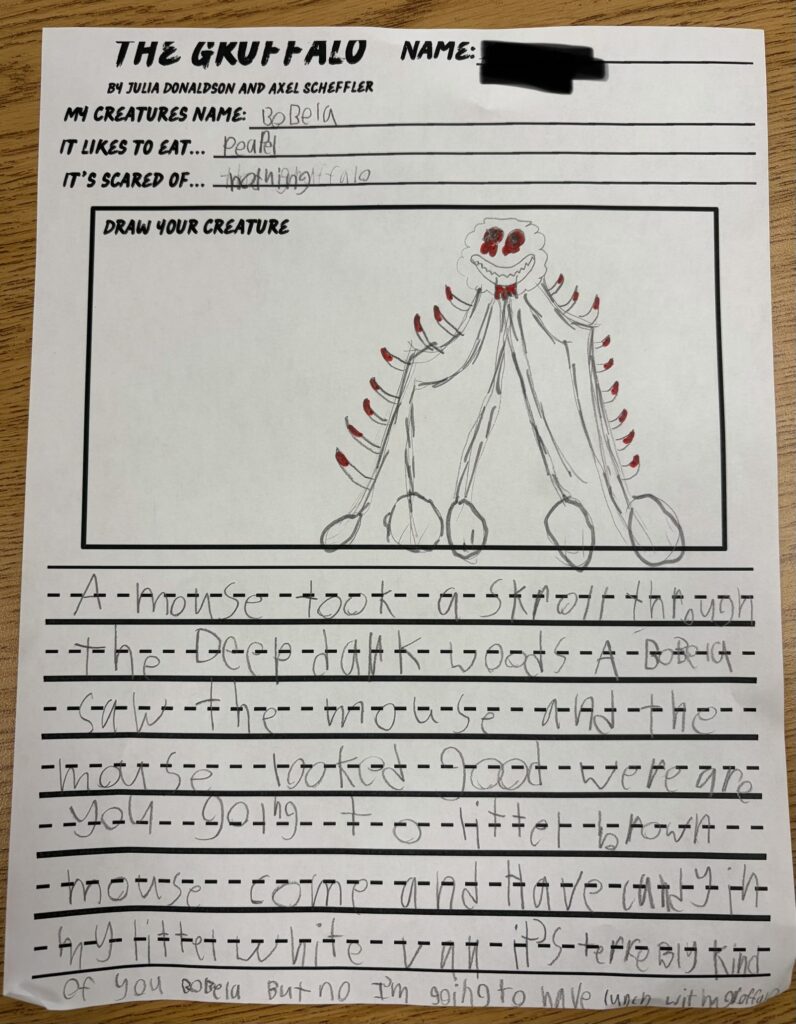
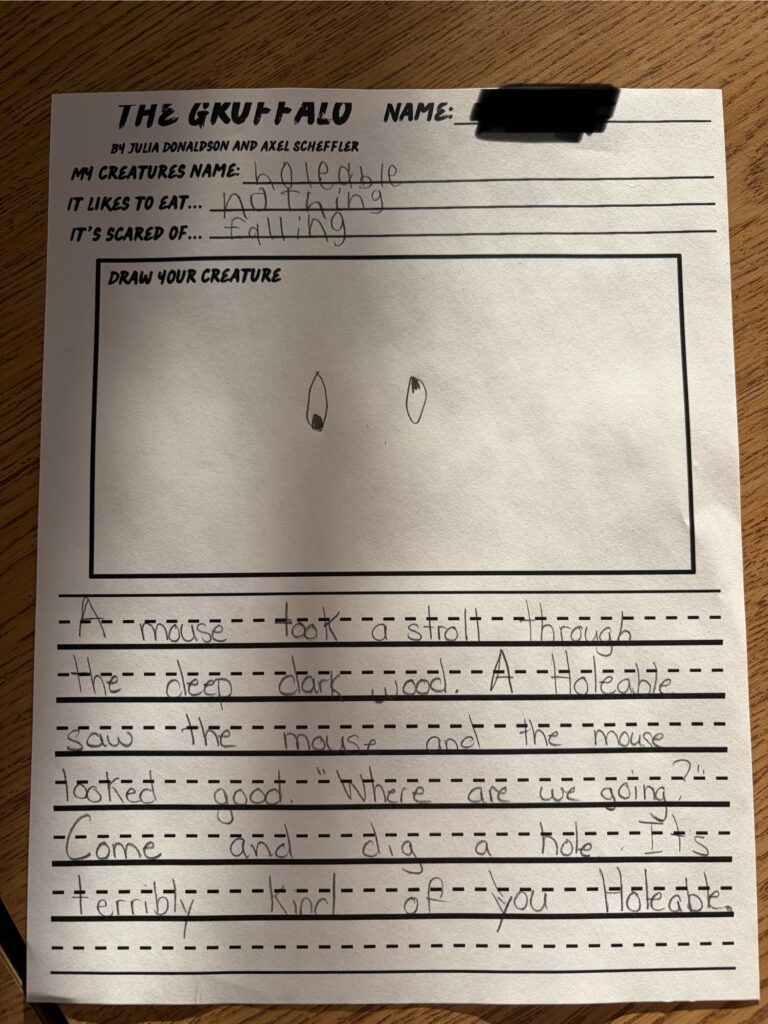
The activity was a worksheet I created on Canva. The students created a creature by giving it a name, what it likes to eat, what it’s scared of, and then they would draw a picture of what their creature would look like. Below the box where they would draw their creature, they were to use the poster that I created (see above) to follow the story line. When the orange blank lines came up in the sentences, students would use the information they came up with to fill the sentence in. While the students were working on their worksheet, I was walking around and seeing how they were doing.

Reflection:

This activity went really well. Students were engaged and loved creating their own creatures. One thing that I wished I had explained was that students did not have to go off of my poster and they could create their own story line with the Gruffalo. The teacher and I talked about it and they said that sometimes having the support for the students like the poster to copy off of and then fill in the blanks gives them no creativity and can by overwhelming to follow. Therefore, I wish that I told the students that if they did not know what to write that they can follow the poster to help guide them through the writing process but it was not mandatory. There were some students in the class who did not want to write, so then I told them to tell the story to their friends instead and they still got oral story telling in. The teacher was there to help me when students asked if they could write their own stories and they said yes. I truly felt support from this teacher as they communicated with me what the students wanted to do and how their was freedom which made it easier for me to think about what I would do differently for next time. The activity that I created supported the students oral language development, and their understanding of story structure by expressing their ideas in both written and oral forms.

Of course with this blog and writing about students, teachers, and other staff members, I have to follow the Professional Standards for BC Educators. I think I successfully completed standards 1, 2, 5, 6, 7, and 8. Throughout this blog and my lesson, I demonstrated standard 1 by prioritizing students well being and learning from the teacher, my own reflection, and adapting to the teachers suggestions on the spot. Standard 2 was completed by maintaining confidentiality by removing the students names on their examples and on the whiteboard where my poster was, not naming the teacher or the school I was in. I demonstrated standard 5 by reflecting on inclusive and purposeful teaching practices by thinking what I could do better next time. Standard 6 was shown through my ability to link classroom experience to the BC Curriculum and applied it to my teaching pedagogy. Lastly, by being engaged and reflective throughout my time in the classroom I demonstrated standards 7 and 8 by asking students what they were going to create, helping students get ideas, and again, adapting to the teachers feedback/adaptions.

Here are some student examples of the worksheet:

« Older posts Newer posts »

© 2026

Theme by Anders NorenUp ↑