This week in our science class, focused on the chapter of Braiding Sweetgrass Asters and Goldenrod. This chapter was amazing to read.

There was one quote that stuck out to me which was:
“Growing together, both receive more pollinator visits than they would if they were growing alone. ” (Kimmerer, 2013, p.46)
This quote relates to more than just nature. It relates to human beings. I took this quote and understood it as no one will flourish as an individual, rejecting help, being stubborn, etc. To grow in not only life but academically, we need to have others to be there for us and to help us learn throughout our journeys. This also resonates with me because this gives me evidence on why I want my future classroom to be supportive, encouraging, and a community. Additionally, this quote is important to science because it shows how scientific understanding is strengthened through collaboration, observation, and Indigenous knowledge, rather than memorization. Reading the chapter of Braiding Sweetgrass made it very clear that science cannot just be a western view. There has to be both western and Indigenous knowledge within scientific learning through all grades/ levels.
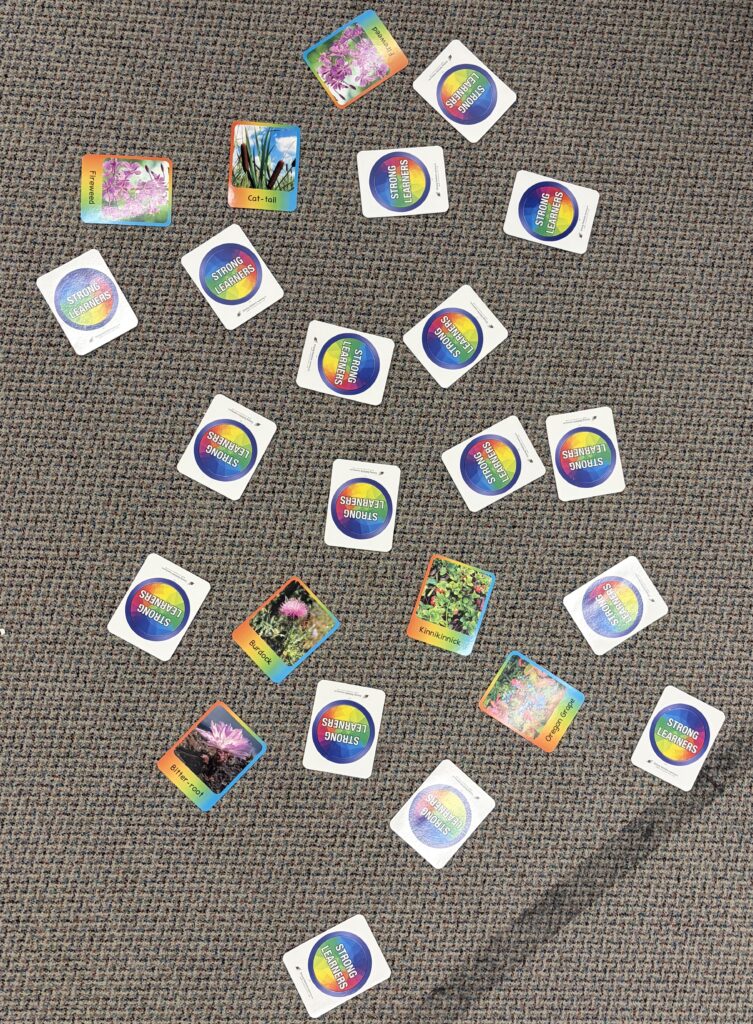
After we reflected on those questions as a class, our professor showed us the game Strong Learners by Strong Nations. There are many different games that are “Strong Learners”, but this game was a memory matching game with Indigenous plants. To play, I would go off of the classroom list and call a student to go and lift to cards to see if they were a match. If they were not a match, I would tell them to read the plant names and then flip the cards back over. If a student got a matching pair, I would then get them to say the name out loud to their classmates and then go on First Voices and then play the Ktunaxa word and practice the pronunciation as a class. The game would continue like so.
Following the game, we got these prompts:
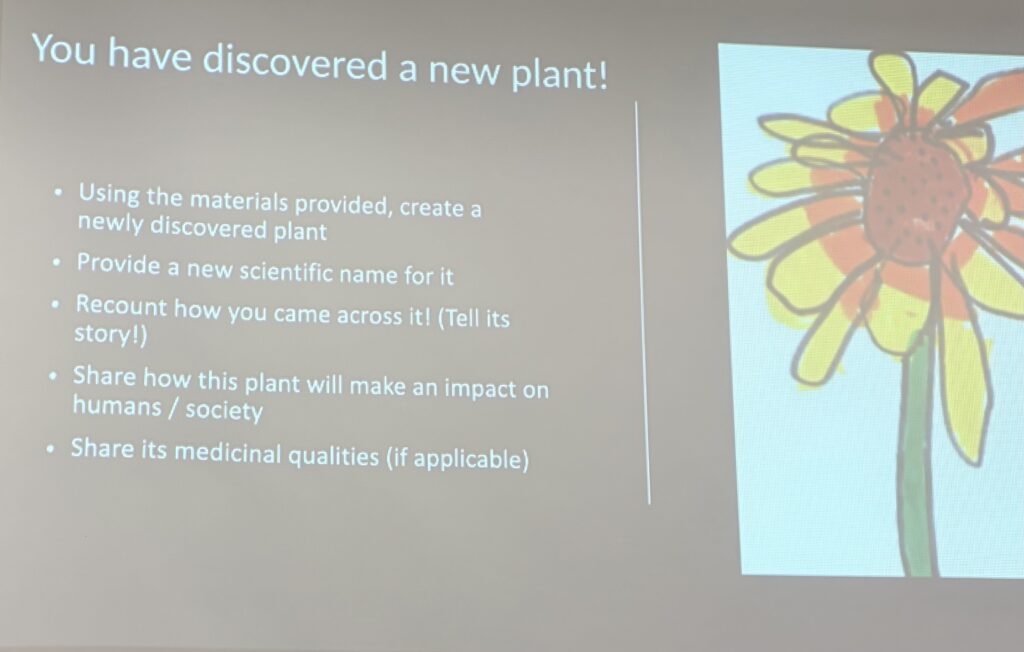
Using this information, we created a plant out of a tree root and we had to decorate it.
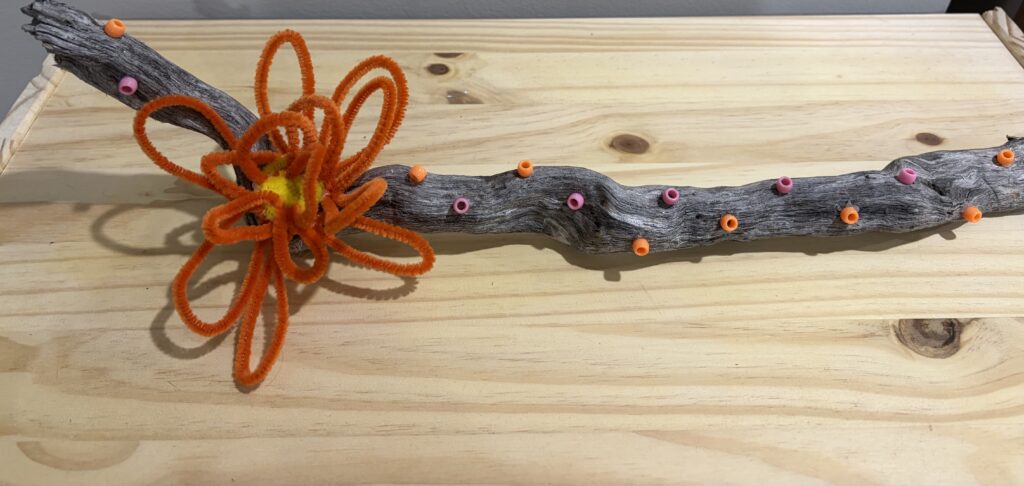
This is my creation. The scientific name is Lauren Vitacê Boudica. Which means Lauren’s Immune Boosting Victory. The short name for this plant is Labragut. I found this plant by walking in the forest with my Labrador Retriever and he started eating these flowers. He has really bad allergies and he did not have an upset stomach after eating the flowers and it helped his allergies. I then told my friends who have allergies and they tried it and it worked. So it stops allergic reactions from happening.
The chapter that was covered, and the activities completed are connected directly to the BC Curriculum, but more specifically, Life Sciences, where students explore how living things are interconnected within the ecosystems and how relationships in nature support growth and balance. This learning shows how Indigenous knowledge is just as important and valuable for us to understand the world around us. By bringing in Indigenous ways of knowing, students are able to see that science is about relationships, collaboration with peers, and learning from the land around us. When we get students to learn by doing, exploring, and experiencing we enhance their understanding and they will then create deeper connections with the content we present to them. Lastly, I think creating those connections to our curriculum and the FPPL (First Peoples Principles of Learning) will allow students to see that science is not separate from culture, community, and lived experiences.
I have included everything in this post because I would love to do this lesson in my future classroom. I think that it is a great lesson for all ages which you could increase the complexity or decrease it so that it is suitable for all ages. These lessons just remind me how it is simple to connect Indigenous knowledge in every lesson. This lesson allows for multiple different perspectives as Indigenous knowledge is involved, latin terminology can be involved, and the western view is involved. These activities just help myself understand that bringing in Indigenous knowledge does not have to be complicated in the education systems.