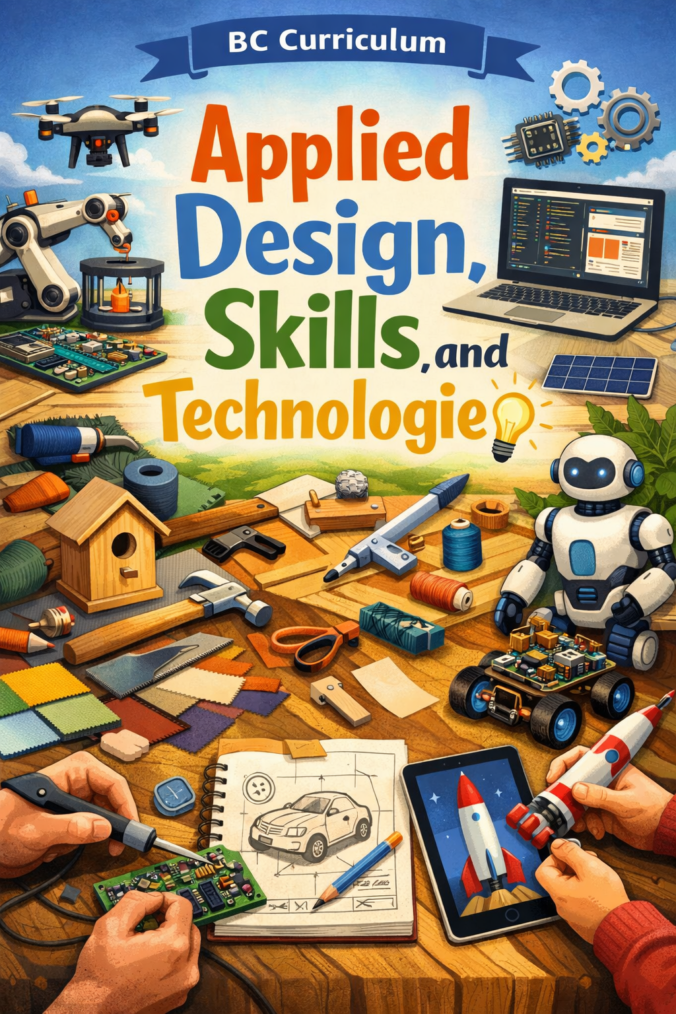
This week in our class we dove into the topic Applied Design, Skills, and Technologies (ADST), which is in the BC Curriculum for all Grades. We used ADST and connected it to the Science 5 curriculum. ADST can be integrated across all subject areas, and teachers are encouraged to connect with their local resource centre to learn more about how it can be incorporated and to explore the resources available within their district.
We first did a read aloud and then watched videos on Rube Goldberg. We decided to create our own inspired Rube Goldberg creation and make one ourselves. Our Instructor put us into groups of three which is a perfect number to make sure everyone is included and participates. We then got straight to work. After we completed our Rube Goldberg inspired machines, we did a gallery walk where each team shared their think process, struggles, and then did a run through of their circuit. My groups circuit was so close to working. Here is a video that one of my group members took.
As you can see, the marble was supposed to hit the car, then the car would hit the plastic sheets to create a domino effect. My group could not figure out how to get the car to go from the marble without rolling down the ramp by itself. We tried many different ideas. Completing this activity, you have to adjust and be willing to try something new.
As a class, we developed our own criteria and connected it to the BC Curriculum. Here are pictures of what our requirements were and how it connects to the BC Curriculum.
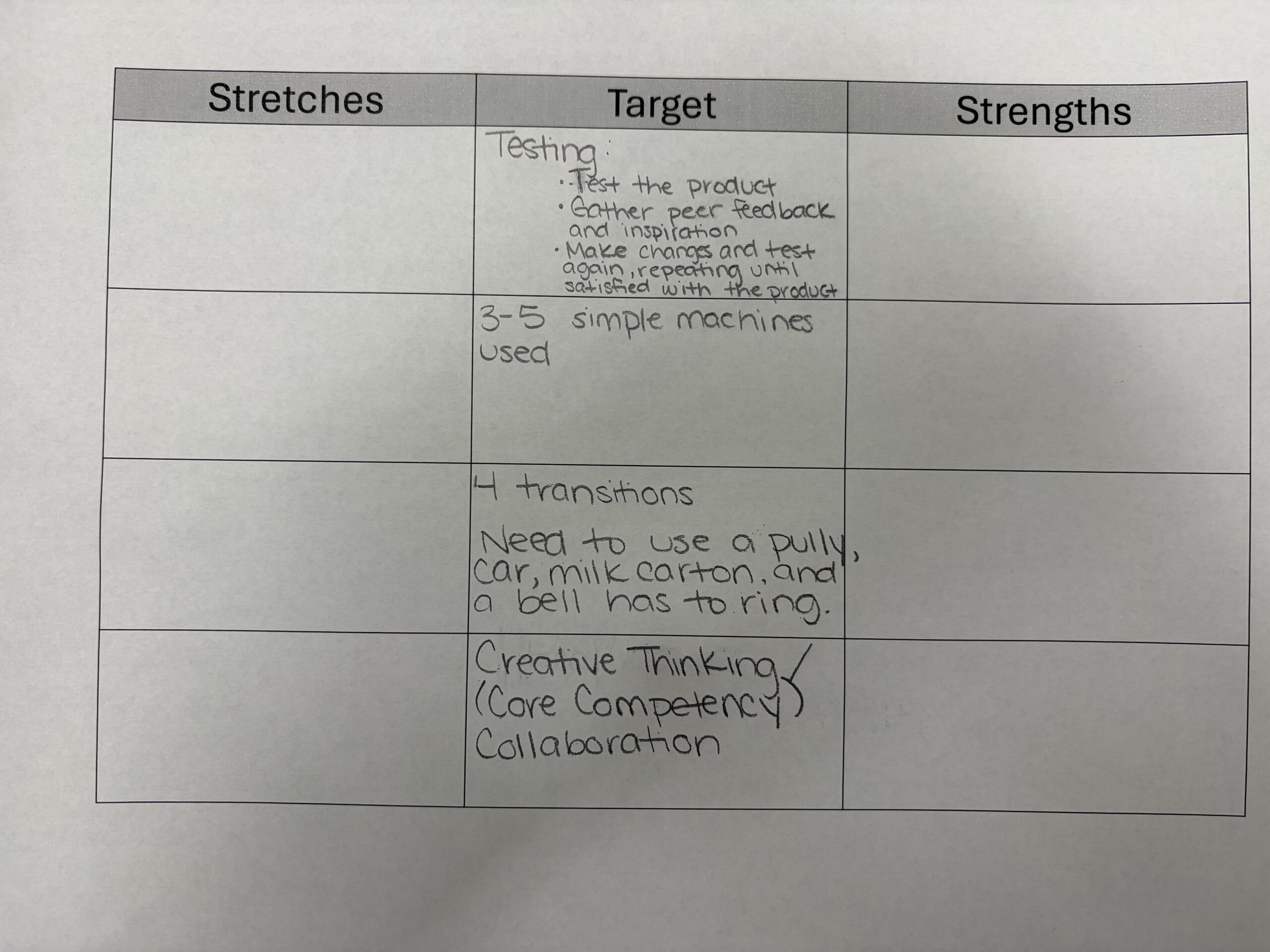
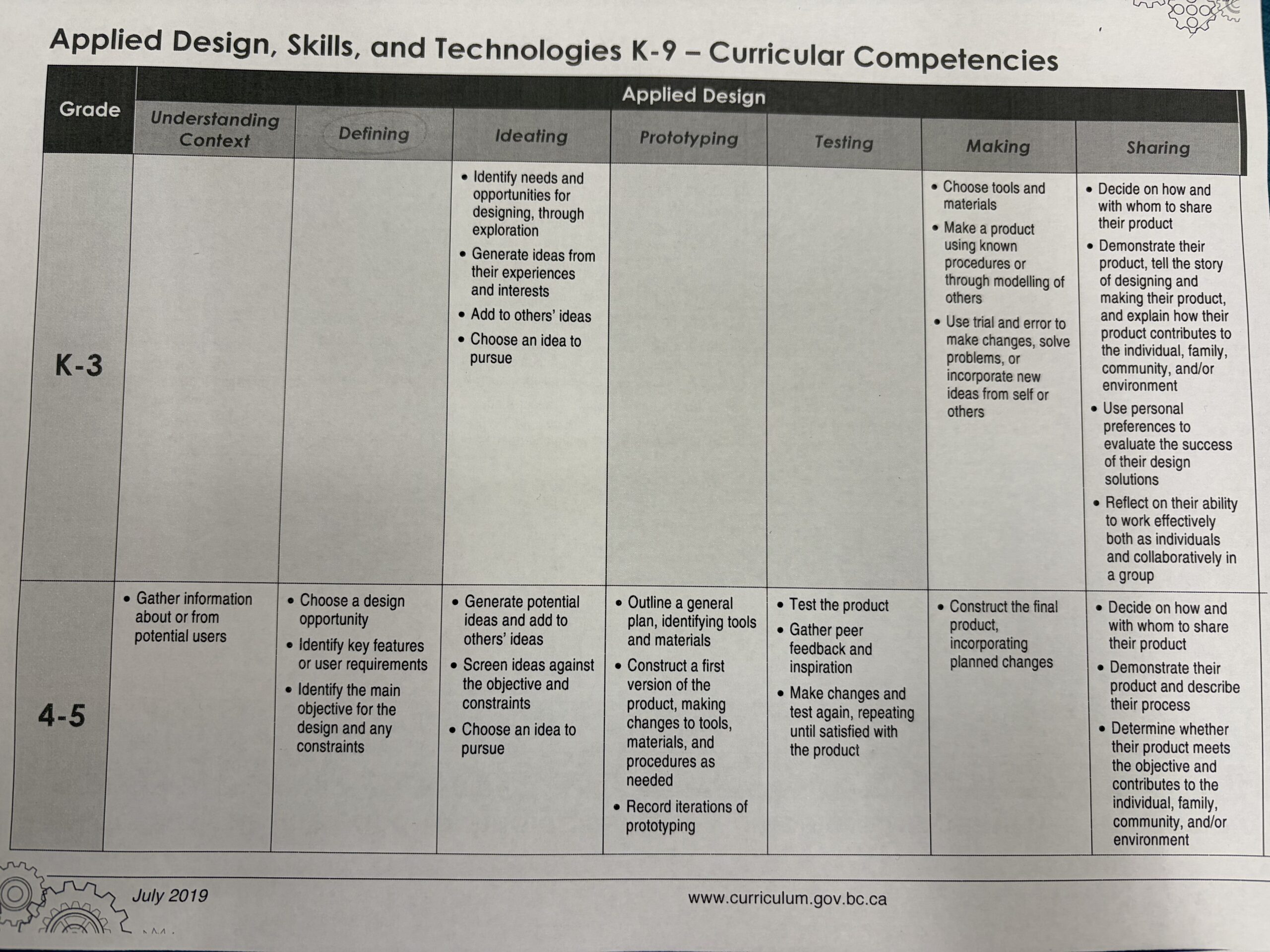
In our requirements, the first target was testing, which is shown in the image above. This target connects to the project by making it mandatory to include a couple of simple machines. If I were to implement this in my future classroom, I would require students to include all six simple machines and provide them with a full week to develop and refine their projects.
The 6 simple machines:
- Pulley
- Lever
- Wheel and Axel
- Wedge
- Incline Plane
- Screw
One potential challenge would be determining where students can store and build their creations throughout the week, as this will take up lots of space in the classroom. Additionally, to support the students success, I would break the activity into manageable steps by first allowing students to explore the available materials, then having them create a plan that outlines their design, including the sequence of transitions and the materials they will need.
This activity was highly engaging, hands-on, and enjoyable, making it effective for a wide range of learners. I would definitely like to incorporate it into my future classroom. I would plan to extend the activity over the course of a week, using guided steps that students would complete prior to building their own Rube Goldberg machine.
BC Curriculum
We connected this with the BC Curriculum as we looked into the Science 5 curriculum and used the content simple machines:
Properties of simple machines
- levers, wedge, inclined plane, wheel and axle, pulley, and screw
- force effects include changing direction and multiplying force