RAFT is a writing strategy that helps students have a creative approach to writing that allows students to write from a different perspective. This strategy helps students identify their audience, select an appropriate format, and focus on a specific topic. This writing strategy works within the BC Curriculum in the subjects ELA, Social Studies, and Mathematics. This strategy can be implemented from Grade 1- Grade 12.
Role, Audience, Format, Topic:
Role – of the writer. This helps writers decide on what point of view and voice they will have. Who are you?
Audience – for the piece of writing. This will help the writer that they must communicate ideas to someone else. Additionally this will help the writer determine the content and the style of writing. Who are you writing to?
Format – of the material. Helps the writer organize ideas and how it will be displayed (newspaper, letters, interview, song, etc.) What is the structure of the writing?
Topic – of writing. This helps the writer focus on the main ideas. What will you write about?
How to use it:
Before the teacher introduces this writing strategy with their students, they should think about what you want your students to learn. Consider thinking about what may enhance their understanding of content. The teacher should also think about what the students need to learn so they can be successful (perspective, different formats of writing, etc).
Brainstorm with your class about what the possible roles are, who they could be writing to, how they would like to format/present their writing piece, and what are they going to be writing about.
Once you have finished brainstorming with your class, the teacher should get the students to pick one from the four categories (role, audience, format, topic). Students can either all have the same role, audience, format, and topic or they can all choose different things from the different categories. Students should start writing. Once they have finished, tell them to identify the role, audience, format, and topic.
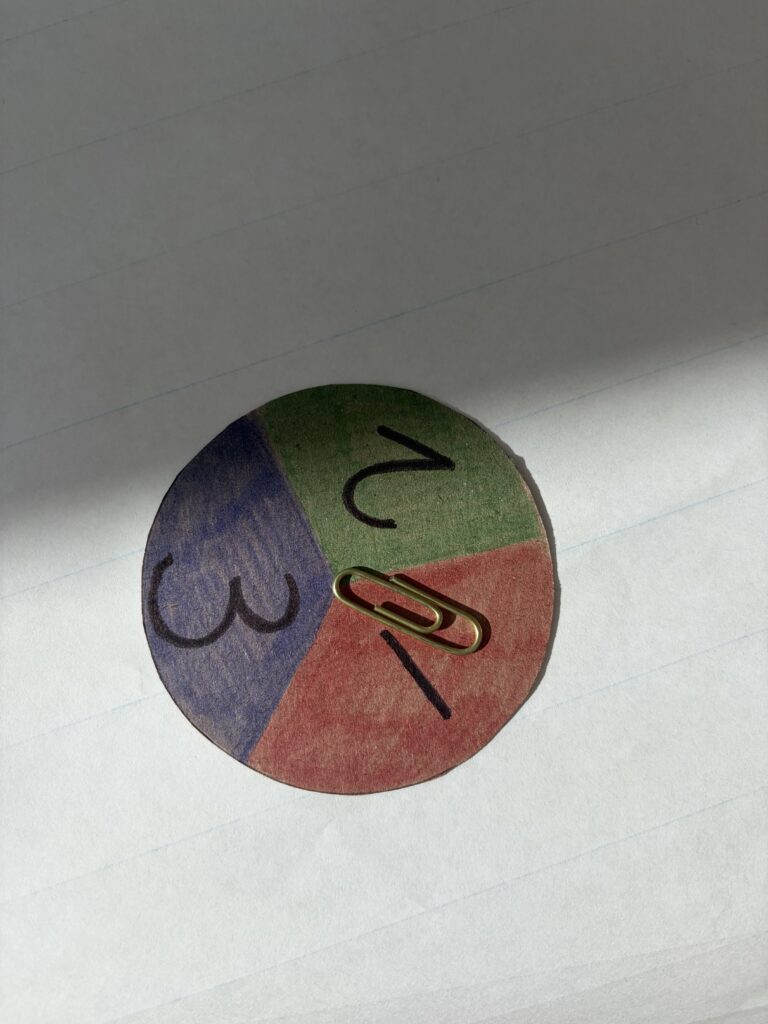
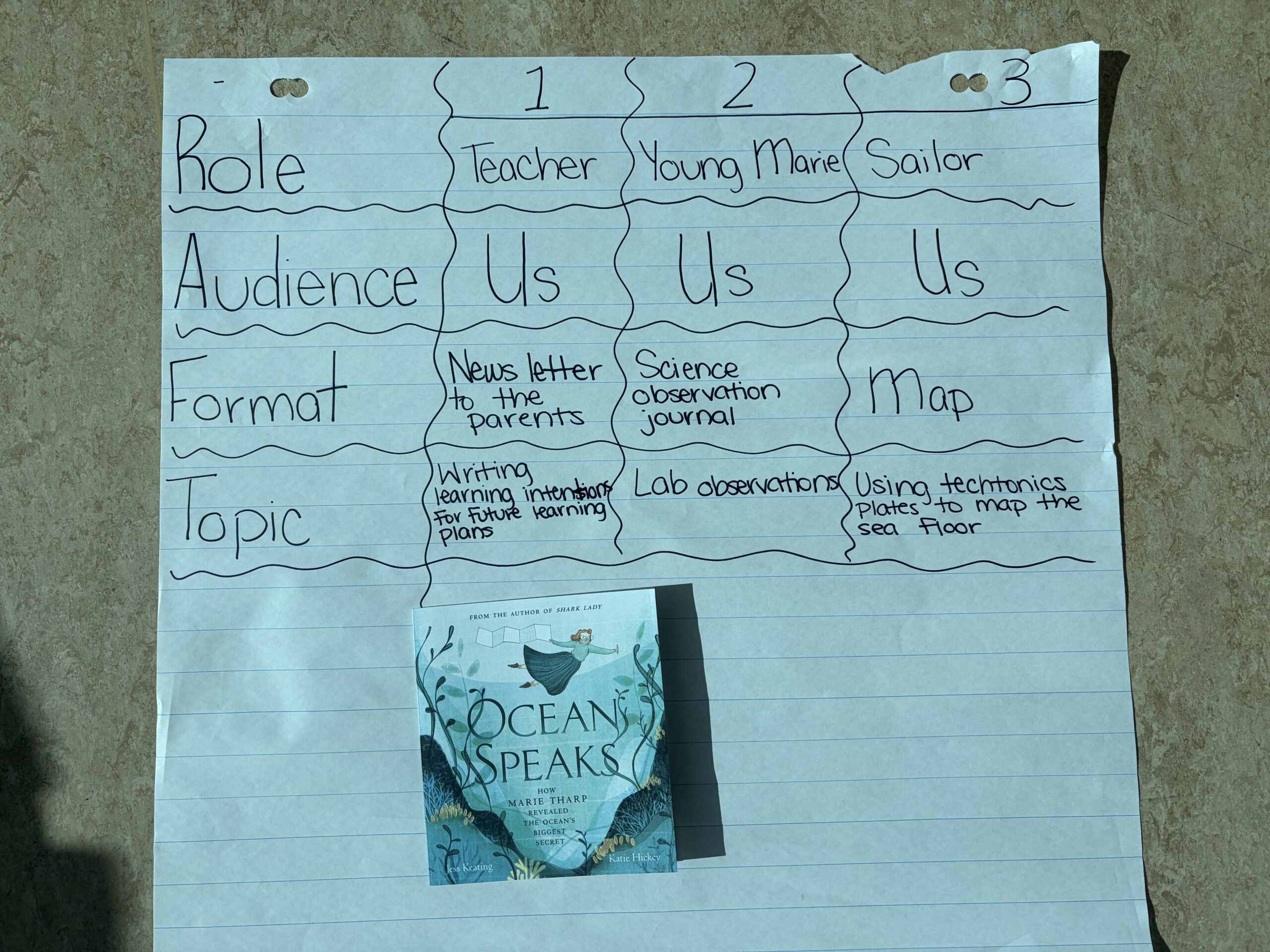
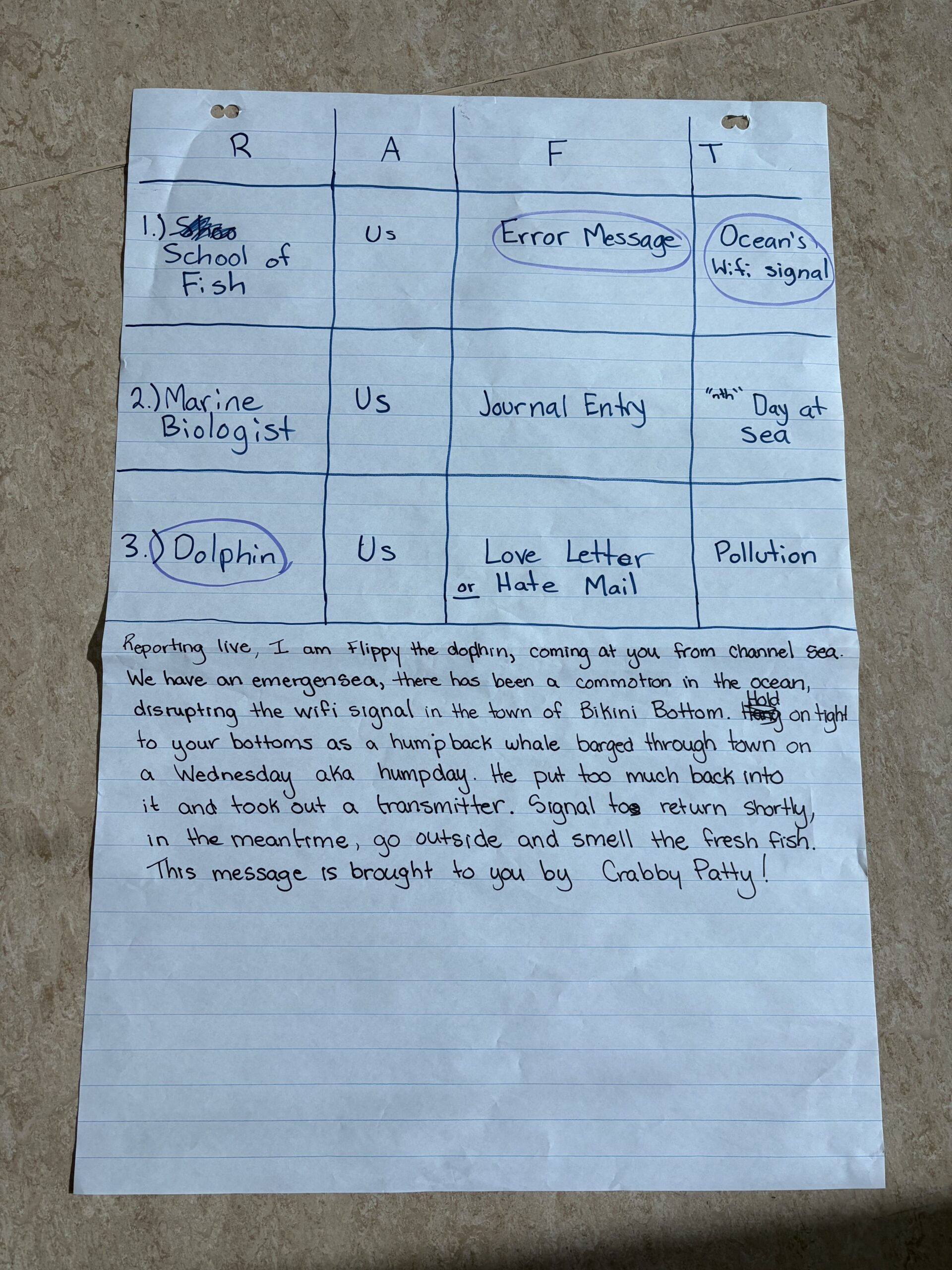
Or teachers could come prepared with the roles, audience, format, and content. This is what we did today in class, we made spinners, created our chart, switched our chart with a different group and then we spun our spinner to see what we were going to get for what we had to tell a story on.
The spinner I created.
The poster my group and I created using Ocean Speaks for inspiration.
This is the story that my group came up with from another groups ideas.
Strategies:
You can provide students spinners with four choice or however many choices you have with numbers (you also have to number the choices), this helps your diverse learners choose a topic if they are feeling overwhelmed.
The teacher can create a chart for students and then the students choose which role, audience, format, and topic they like best.
UVIC Teacher Competency:
The RAFT writing strategy relates to the UVIC Teacher Competency number 5, practice effective communication appropriate to the context and audience, enabling responsiveness to diversities of learners. This UVIC Teacher Competency allows participants to adjust their voice and tone based on their role, consider their audience, choose a format that best communicates their or their peers ideas, and lastly, it can clearly express their understanding of a topic.
Reflection:
Thinking about teaching the RAFT literacy strategy has pushed me to reflect more on perspectives and intentional design within assignments or projects. Meaningful change requires someone to step into someone else’s mindset which allows you to take on the role you are writing from. If a student is writing about elephants, they must be the elephant, understanding and incorporating the elephants world from the elephants perspective.
This strategy helped deepen my understanding of inclusion and how we can support these learners with this activity. We watched a video a couple classes ago about how students notices differences between themselves and another child. I noticed that they were focusing more on their strengths, interests, than on physical traits. This video reminded me how students see themselves and others as well as valuing differences within the learning envrionment. Moving from equity requires removing barriers so each student has what they need to succeed. Through different approaches (Universal Design for Learning, Scaffolding, Grouping, etc.) we are able to design a classroom where everyone feels supported and everyone feels like they are able to complete the tasks.
This quote was in our instructors presentation and it stuck with me.
“When a flower doesn’t bloom, you fix the environment in which it grows, not the flower” – Alexander den Heijer
Lastly, I really enjoyed this activity and I am going to plan to use it in my Grade 1 practicum class. Here is what I would adjust:
Students use objects to tell the story then present it in front of the class (felt story, rock story, puppets, act it out)
I would start by including the role and topic first
Today I am going to compare two different reflective cycles (Boud’s and Gibbs) then I will use one of the reflective cycles to reflect on one of my situations this year in one of my classes.
UVIC Teacher Competencies
This activity for my WordPress relates to Teacher Competency number 2. It links to competency number 2, develop a growth mindset demonstrated in collaboration with others, because I am using Boud’s reflective cycle to analyze my own teaching experiences, I identify what I have learned throughout that experience and created concrete changes for my future of teaching. I also have demonstrated collaborative, ongoing professional learning throughout this post. Additionally, it relates to UVIC Teacher Competency number 12, develop and understanding of how learners learn in order to cultivate effective learning environments. By using feedback to build on and my prior use with the Gibbs cycle has helped me deepen my reflections over the Teacher Education Program.
Boud’s Reflective Cycle
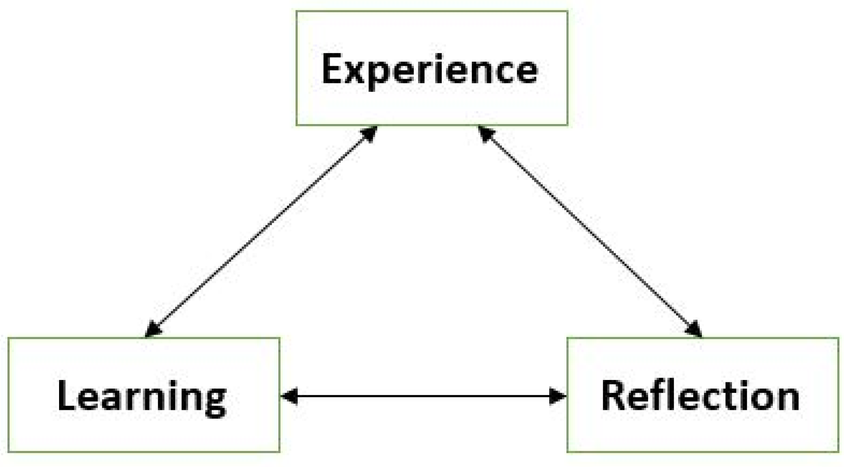
Boud’s Reflective Cycle. Accessed through Linkedin.
Boud’s Reflective Cycle. Accessed through ResearchGate.
Boud’s Reflective Cycle is a simple three step model that leads to what you learned from the experience and how it will shape your future thoughts, knowledge, experiences, and create new connections to past information. Boud’s reflective triangle is a faster reflection style that still supports personal and professional growth. In my third year of the EKTEP (East Kootenay Education Program) I feel like I use more this style.
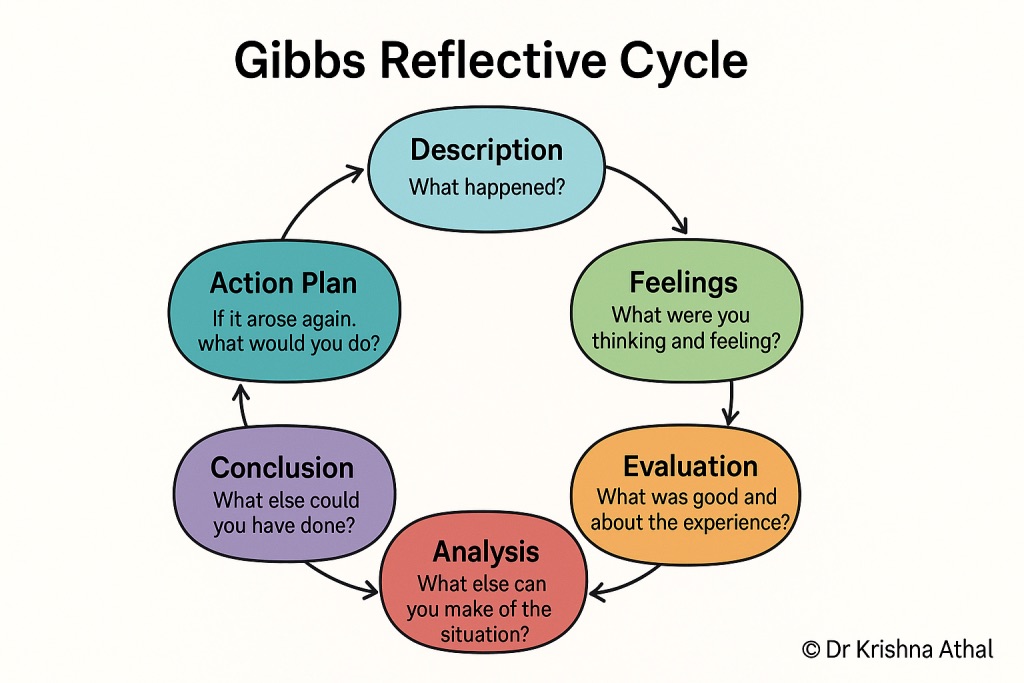
Gibbs reflective cycle is a six step reflection where you go through describing, your feelings, evaluating your experience, your analysis, conclusion, and your action plan for future experiences. This cycle helps guide you through a step by step reflection. The Gibbs cycle encourages deep, critical thinking to help improve your skills, and behaviours for your next experiences. This is the model that my cohort and I had to do for our second year of the program to create deeper reflections.
Similarities:
Both focus on learning from experience
Both encourage thinking about your thoughts, feelings, and actions
Both of these reflective cycles want to improve your future practices
Both support professional growth and reflection
Differences:
Gibbs:
Very structures with its six stage reflection steps
Gives people a step by step thought process
Occurs in a cycle (going through the stages of the reflective cycle over and over again)
Boud’s:
Not very structured (only has three main steps)
More flexible with instruction
Boud’s Reflective Cycle Science Paper Airplane Demonstration:
I chose to do this reflective triangle with my experience because like I have said before, I have done the Gibbs reflective cycle so I think that it will be beneficial if I try something new. I also used feedback to build on my prior knowledge with the Gibbs cycle which has helped me deepen my reflections over the Teacher Education Program. I feel like it is engraved in me to reflect on everything that I present or teach which helps me with my own growth mindset.
Experience – Some of my peers and I presented a demonstration on paper airplanes to my class. We used student volunteers to show how variables can impacts Newtons three laws of motion. During our presentation of our demonstration, I noticed that the peers who were not participating were not as engaged as our participants.
Reflection – Before presenting with a couple of my peers I felt nervous as we have never done a demonstration before but I knew we went above and beyond with our handouts and that we were prepared for our presentation to be successful. The more my group and myself spoke, I felt more confident in our presentation. After we finished the presentation, I was glad that we were one of the first groups to present. Something that always makes me nervous after a presentation is the mark. I am a perfectionist and I like to get the best possible grade. But once we received our mark I was relieved. I think I was so nervous about our mark because the people who went after us did a really good job which was making me second guess myself.
Learning – Through this presentation, I have learned that being over prepared helps me build my confidence going in front of a group. I realized that engaging the audience actively and consistently will increase participation and make the demonstration more effective. Next time, I would include the other people who were not participating within the demonstration so that they are not just sitting there. I could do this by getting them to vote which variable they want each airplane to have, etc. I also am still learning that comparing myself to what others do is not good and creates unwanted anxiety. This is an ongoing occurrence for me and is something that I will need to let go, or take there ideas for my future teaching practices. In the future, I will continue to prepare my lessons, units, and demonstrations carefully making sure I am over prepared, involve lots of participants in my presentations/ lessons, and to remind myself to evaluate my presentation based on my own effort rather than others.
I really enjoyed reading this part of the book because some people truly don’t understand the importance of teaching Indigenous knowledge, and their ways of knowing. I almost feel like people forget about colonizers/colonization and how it truly impacted the people, plants, and animals that live here in Canada. Canada is a diverse country made up of many different cultures that should be all celebrated and learned, but especially as educators we need to make Indigenous knowledge a priority because the Indigenous people are the ones who took/take care of our land with care and consideration. In the 10th paragraph, there is this quote, “If the languages cease to spoken here, if the knowledges and perspectives are not taught and learned here, they do not exist elsewhere in the world.” This quote reminds me of what is going on for Indigenous peoples in Canada right now. Basically, Indigenous peoples are trying to get the government to change who gets a status card because right now because people who have a parent(s) that is Indigenous can get their status and then their kids will have it but the second generation will be cut off. Therefore, the Indigenous population of Canada will slowly die. How can that be “Reconciliation” on the governments part when they are still creating ways to “get rid of the Indian problem…” like John A. MacDonald said. I agree with Jo Chrona when she talks about how we need to celebrate our Indigenous peoples because no where else in the world celebrates them. That is not saying celebrating other cultures is wrong, it is saying keeping Indigenous cultures in the spotlight so they can be seen and celebrated where they belong, on their traditional territories. Including other cultures in your classroom is wonderful and great but their cultures have a homeland where I am sure they get celebrated more than Indigenous cultures in Canada. Therefore, we should be teaching Indigenous knowledge and culture to our students and make it a priority so the culture and knowledge stay alive.
How does this connect to the BC Curriculum?
In the BC Curriculum, there should always be a way to meaningfully Indigenize your lessons. There are many good resources like the Ktunaxa Core Competencies that you can access if you are an educator in SD5 (school district 5), and if your district does not have their Indigenous Core Competencies related to traditional animals, you should go and inquire about that. This makes it an easy way for students to relate to how they are doing. An example would be: I feel like a frog because….
UVIC Teacher Competency:
This reflection relates to the UVIC Teacher Competency number 6, practice respect for all learners from all cultures, including, specifically, Indigenous learners. I argue that Indigenous knowledge, rights, and ways of knowing must be centred and meaningfully embedded in my curriculum, lesson plans, unit plans, and overall my classroom practice.
Soft starts are used in classrooms to provide a calm and flexible way to begin the school day or to transition students back into learning after recess or lunch-hour play. Soft starts can be intentionally planned by the teacher, or they can be offered through bins with different activities that students can choose from independently. These activities are meant to be low stress, calming, and creative. The goal of having soft starts throughout the day is to ease students into the learning environment while also creating connections with their peers.
Some examples of soft starts we have done so far this year in our EDCI 330 class include:
Puzzles
Building snowflakes
iSpy
Finger knitting
Story Rocks
There are many different other activities of soft starts such as:
Reading
Drawing/journalling
STEM activities
Games
Group Discussions
I also listened to the Truth for Teachers podcast episode on soft starts, which offered many soft start ideas from kindergarten to older grades.
Puzzle Soft Start Activity
Puzzles are a great soft start activity because they support the development of problem solving skills while remaining no risk/low risk for students. This keeps students engaged as they focus on their own puzzle. Puzzles enhances fine motor skills, and improves SEL (social emotional learning). They enhance language development, memory, and students spatial awareness.
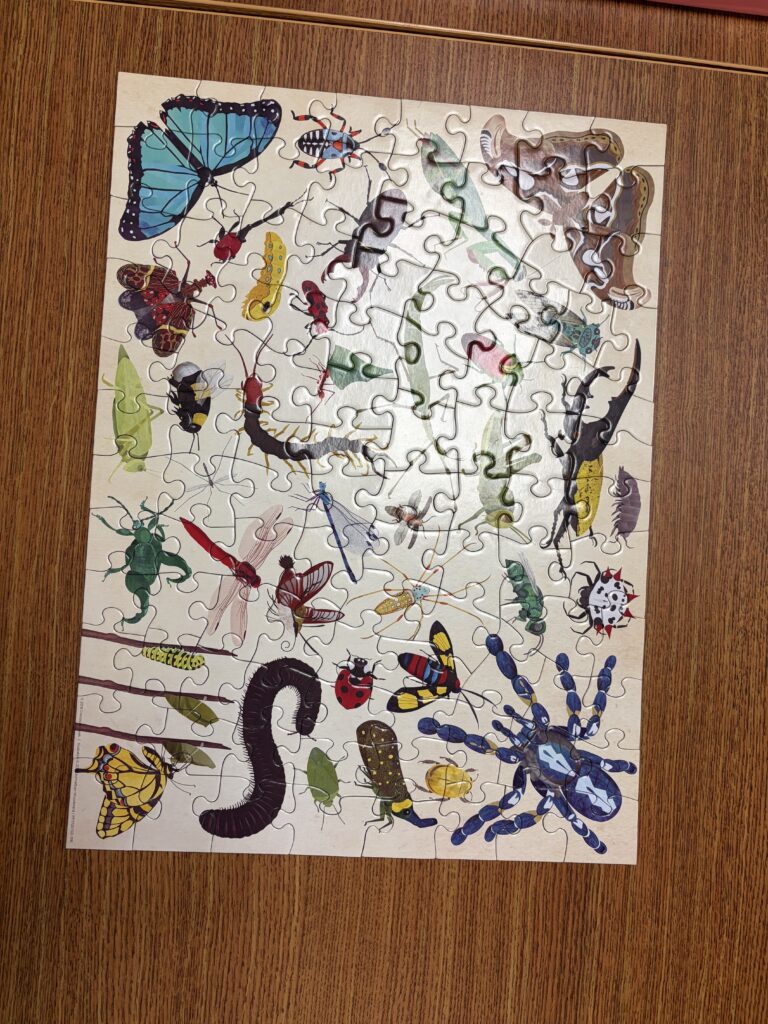
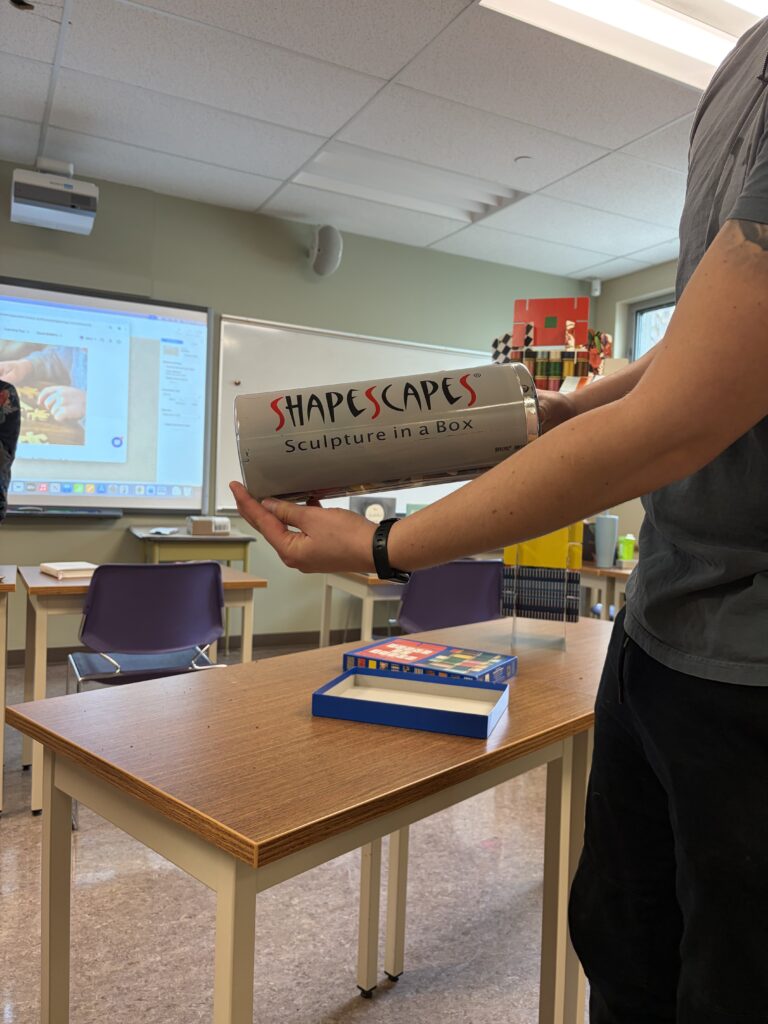
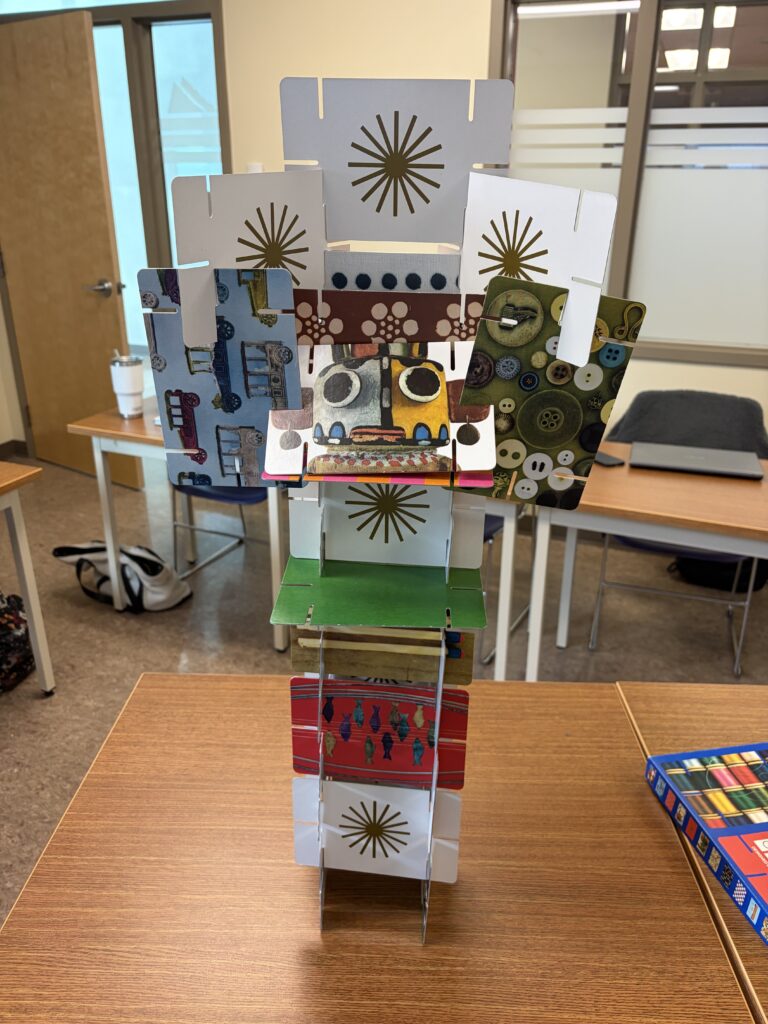
Our teacher started this class by creating groups of 2-3 students. She then handed out different puzzles for each group to complete. Our teacher provided Ktunaxa puzzles, animal puzzles, she even had Shapescapes and House of Cards (for some reason, I cannot find the link). Once the first group finished their puzzle, they were allowed to try different types of puzzles with their group. I thought that puzzles were a great type of soft start that was super engaging and relaxing. I really liked how there were multiple types of puzzles so that you either be more creative, like with the house of cards, or you could choose to stick with a basic jigsaw puzzle. Starting off with puzzles in the morning is a great idea because there is no pressure to finish the puzzle. The focus is on where you are at. If groups are more talkative, the activity allows space for connection; if students are quieter, it still supports focus and calm engagement. This activity relates to the UVIC Teacher Competency number 7, Practice working collaboratively and collegially as well as independently, as it encourages both independently and collaboratively working. By incorporating puzzles into your soft start activities, teachers promote collaboration, communication, and shared problem solving in a low-pressure environment.
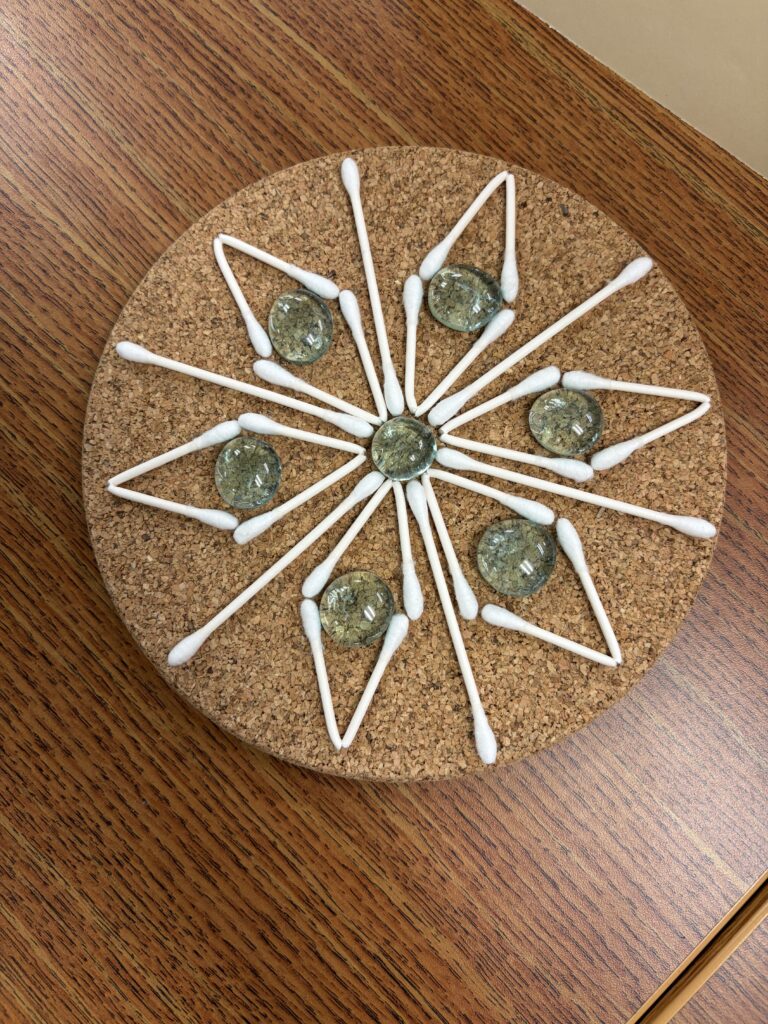
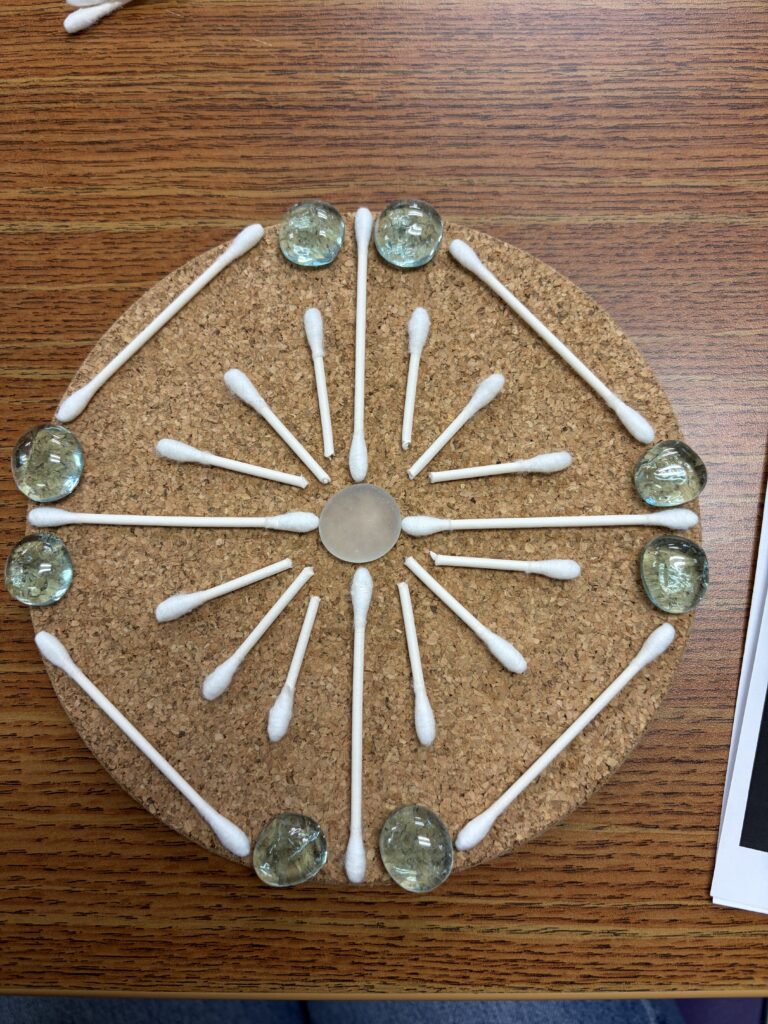
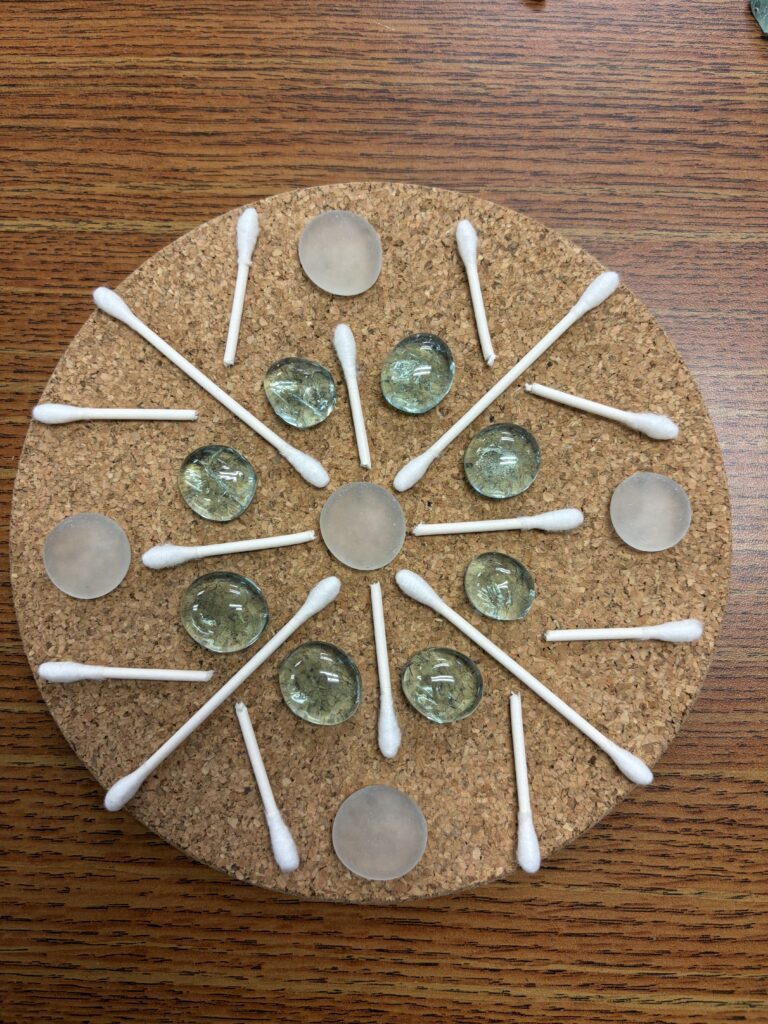
Snowflake Soft Start Activity
What you need:
Cork hot plates
Q-tips
Glass counters
Pom-poms
Scissors
Different Pictures of snowflake shapes and patterns
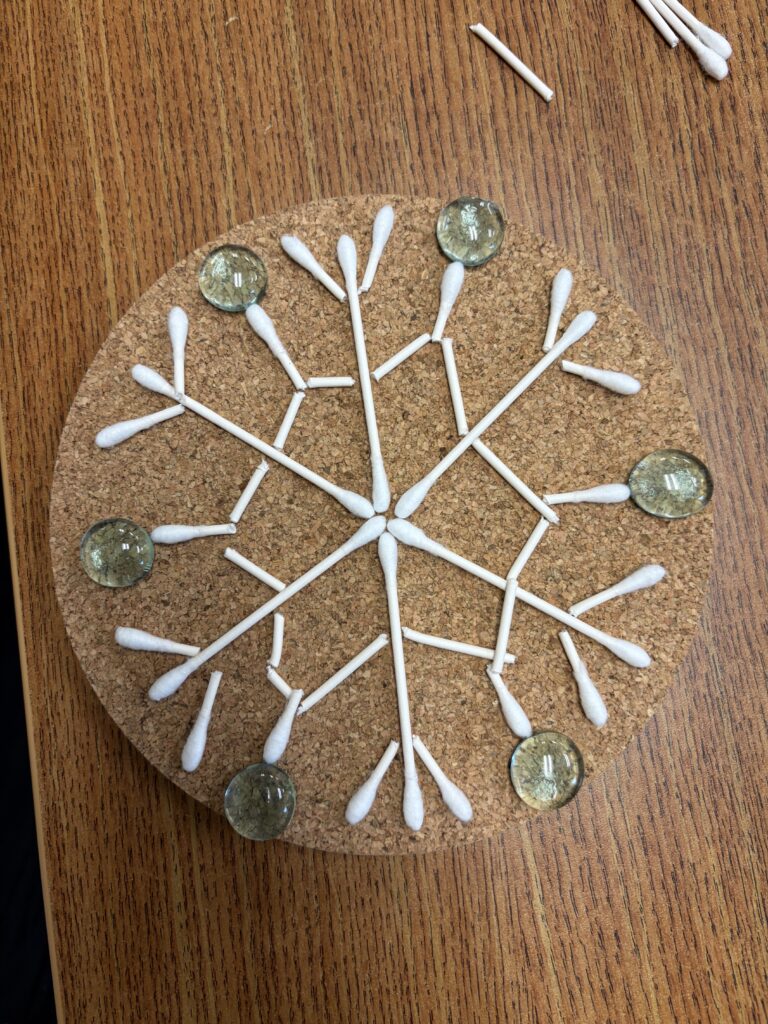
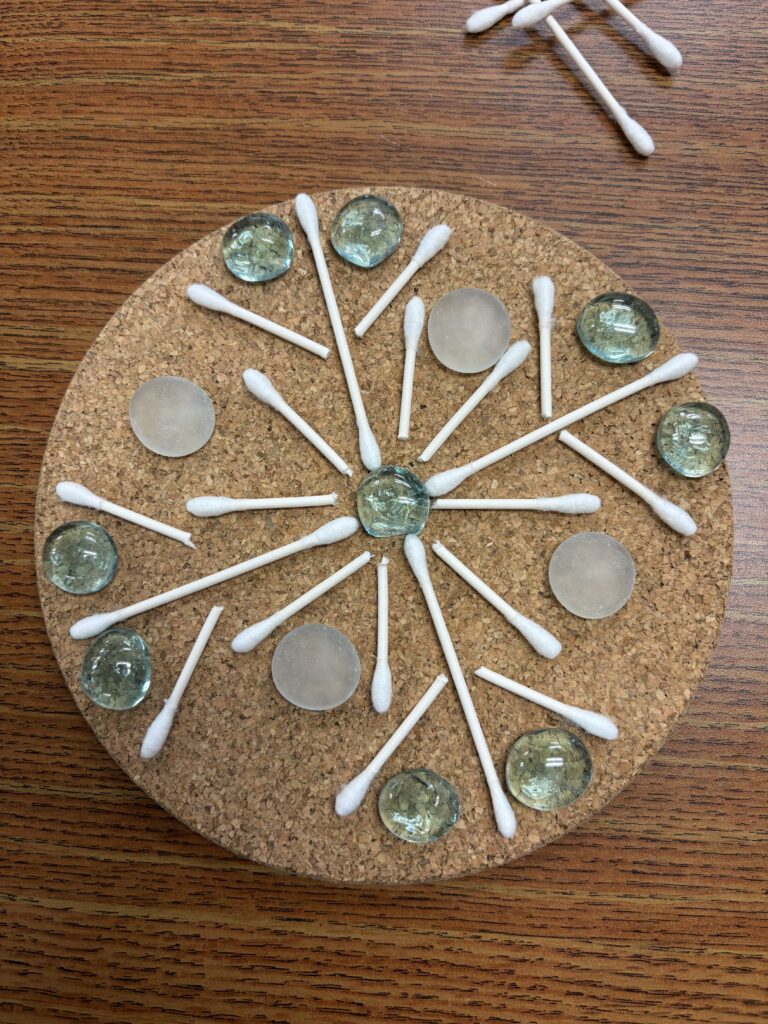
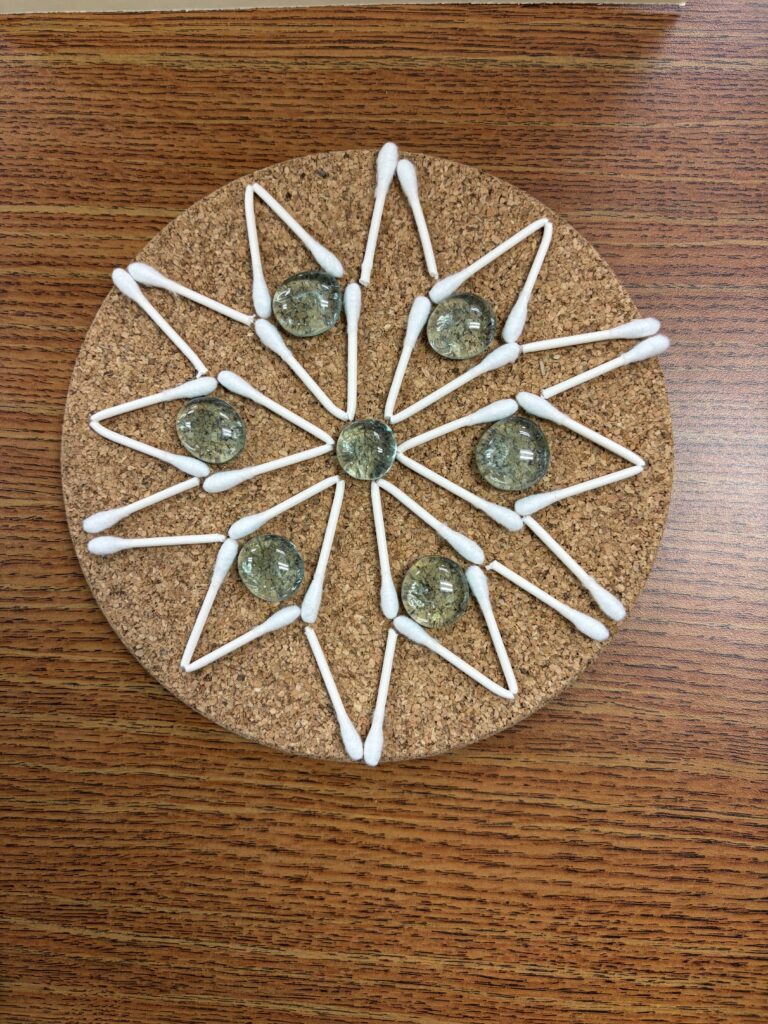
In this soft start activity, students will use the supplies to create a snowflake design. They can choose to follow the pictures provided by the teacher, or they can come up with their own design. During this activity, students are encouraged to use critical thinking, problem solving, creativity, and decision making. Students are allowed to work independently or in pairs. When working in pairs, the students must make sure that both participants are taking turns.
This activity is a great way to engage students in a calm and creative way, and it could easily be cross curricular with Science, English, and Art. This activity allows students to become comfortable in their learning environment while slowly transitioning into their learning mode.
Having soft starts in your classroom helps create a welcoming environment where everyone is/feels respected and is able to express themselves on how they are doing that day. Soft starts allow students to unknowingly build on their SEL (social emotional learning), while also creating connections with their peers. Many soft start activities naturally connect to SEL making them a valuable part of the school day.
In the future, I plan to incorporate soft starts into my own classroom. Creating and offering different activities every morning for 10-15 minutes is beneficial for creating those relationships with your students and understanding how your students are going to preform academically. Soft starts also provide teachers with time to observe your students and assess their skills, emotional states, and social interactions with their peers. Lastly, it allows for the teacher to have one on one time with those students who may need additional support, helping to build a positive and inclusive classroom community.
This post is going to be about Worldviews which is the first point in the UVIC Teacher Education Competencies under Personal and Professional Preparation. It states “Develop an awareness of your worldview and how this relates to others’ worldviews.” I am going to be answering a list of questions that my instructor has provided to get a better understanding of my own worldview and how it can influence other peoples as well as relates to others worldviews.
What does it mean to be ‘effective’?
Being effective means to get the end result that you were either wanting or looking for.
What characteristics does an effective teacher have?
There are many characteristics that an effective teacher has, here are some I think an effective teacher has:
Communicating clearly and respectfully
Working well with others and cooperating in groups
Being understanding of other people’s lives, feelings, and situations
Being reliable and dependable
Having a positive and optimistic attitude
Being open to trying new strategies and ideas
Using problem – solving skills to handle challenges
Being aware of personal biases and not letting them affect decisions
Setting and maintaining clear boundaries and expectations
Being proactive and taking initiative
Being flexible when plans or situations change
Being able to work independently
Being curious and willing to learn
Being self aware and reflective
What kind of teacher do I want to become?
I want to become a teacher who is effective. Everything that I have listed above, I strive to be that kind of teacher when I graduate from EKTEP (East Kootenay Teacher Education Program). I think that every “good” teacher is effective and show these qualities in themselves. I don’t think it matters about how much these qualities show, as long as they are somewhere in that person then they are an effective teacher.
What do I need to learn to become an effective teacher?
I think that everything I need to learn to be an effective teacher cannot be taught and has to be self discovered. What I think that I could work on myself is:
Being understanding of other people’s lives, feelings, and situations
Being aware of personal biases and not letting them affect my decisions
Being flexible when plans or situations change
I know that I have the other qualities that I have listed above, but what I also know is that I and everyone can always improve the qualities that they already have. So I think that I have a lot of personal growth to do.
What are my beliefs about teaching (my teaching philosophy)?
My teaching philosophy is ongoing and changes the more I learn about myself and learning about myself in a school setting.
I believe that students learn best when they feel safe, seen, and valued within the classroom and this is done by building strong, trusting relationships. Once there is the relationship, the students will be more willing to take risks and engage in their learning when they feel supported. I want a welcoming, inclusive classroom where all students feel respected and represented. I believe meaningful learning happens when students are involved and are given opportunities to have guided exploration to create and think critically. I aim to design engaging, fun, hands-on learning experiences that encourage creativity, problem solving, and growth. I view mistakes as important parts of the learning process.
What is a worldview?
A worldview are peoples beliefs depending on the experiences they have lived. Everyone will have a different worldview depending on influences in their childhood and who has impacted them most as a person. These influences will impact what a person believes, what choices they make in life, how they act in different situations and how they view the world when challenges enter their life.
“We are all the product of our worldviews…”
Kimmerer, R. W. (2013). Braiding sweetgrass: Indigenous wisdom, scientific knowledge and the teachings of plants. (p.163)
How would you describe your worldview?
I would describe my worldview as a continuation of change. I think every year my experiences and what I learn through travel and conversations with people impact my worldview and modifies it. These past couple years of being in the program have made me understand more about myself, and what my beliefs are in life. But if I had to say a couple words that describes my worldview, it would be inclusive, ethical, respectful and hopeful. I want everyone to have equal rights, be respectful towards everyone and everything around them. As well as being ethical to make thoughtful choices about what I will do that could impact someone. Lastly, I am hopeful about the outcome of my life and how the world is. Right now there is a lot of sad in the world and I am hopeful that there will be change.
While thinking about your own worldview, also consider the impacts of your ethnocultural, socioeconomic, geopolitical and spiritual identity.
I have lived in Canada my entire life, growing up in the East Kootenay region shaped my understanding of belonging, and community. Growing up in the middle class and always having all of the essentials has increased my awareness of my own privilege. As an Indigenous person, my learnings of Indigenous people came from the Ktunaxa Peoples and their culture. Only recently, have I started learning more about my Mi’kmaq heritage which has deepened my understanding of my own identity, which I am still continuously learning about.
Why, as a teacher, is it important to be aware of your own worldview, as well as those of your students and school community?
I think it is important to be aware of our worldviews before we go and teach so that we do not impose our beliefs onto the students. Our job is to be neutral and not say what we agree with or not. Additionally, my thought is the same for the students and school community so that you do not pick “favourites” just because their belief and your belief align. As well, you do not want students to feel like they are judged or for them to feel like there is a power imbalance. Everyone should be at an equal playing field because at the end of the day we are all there to learn, have fun, and support everyone’s learning even the teachers.
What can you do, as a teacher, to ensure that your worldview does not impede the success of the diversity of learners in your classroom?
Teachers can provide multiple different perspectives to ensure that our worldviews does not impede the success of the diversity of learners in our future classrooms. Teachers can do this by inviting different people into the class to talk about cultures, ethnicities, etc. Providing students with multiple different worldviews and experiences will ensure they learn many worldviews so they can create their own that is not bias towards mine. Having exposure to multiple worldviews will make sure that students learn about the world and all different perspectives.
When do you consider it to be necessary to challenge the western worldview as it impacts the K-12 education system?
I think it is necessary to challenge the Western worldview in the K-12 education system when it controls/influences curriculum, teaching methods, and assessment and when it limits knowledge and experiences to our students.
I think that K-12 Education System/ curriculum will always be impacted by Western worldviews because of what is going on in the world and the steps forward and backwards that Indigenous people are experiencing from the government from the governments way of reconciliation. I often find that the influences of Western worldview marginalizes Indigenous ways of knowing which will impact FPPL (First People’s Principles of Learning) due to the thought of “Western” approaches seem to be always the “correct” way of doing things. I find this leaves no room to grow the FPPL and actually practice this in the classroom without it feeling pushed, OR fake (not meaningful).
As a future teacher, challenging the Western worldviews is a priority of mine and that means I need to create an environment in my classroom for Indigenous perspectives, stories, and relational approaches for learning. Having this approach will allow an inclusive education system that allows students to understand the world in multiple lenses rather than a single lens. I think every teacher needs to remember to be mindful how colonial histories are still impacting what we do in the classrooms, the ways we teach, what we teach, and who benefits from these outcomes.
What aspects of the BC curriculum reinforce or challenge a Western worldview?
I did read UBC’s Indigenous Corporate Training before I answered this question, I looked at the differences between Western worldview and Indigenous worldviews. There are so many great resources to find the difference between each of the worldviews, also each Indigenous worldview will be a bit different depending on the band.
The BC curriculum reinforces a Western worldview because of these things:
Being organized by subject areas (ELA, Math, Science, Social Studies, etc.), grade levels, and the learning standards. Many Indigenous worldviews understand learning holistic, cross curricular, etc. (kinship based).
Western worldviews are reinforced because of assessment (competition, and measurable achievement). While Indigenous ways of demonstrating learning (oral storytelling, observation, growth) can be harder to recognize or assess within these systems.
In many textbooks that are used within higher grades to teach the content off of the BC curriculum website, majority of the time Indigenous content is included but last in the chapter, also majority of the time the author of the text book always talks in “Western” perspective.
I am sure there are many more ways the BC Curriculum reinforces the Western worldview but I thought I would just list a few.