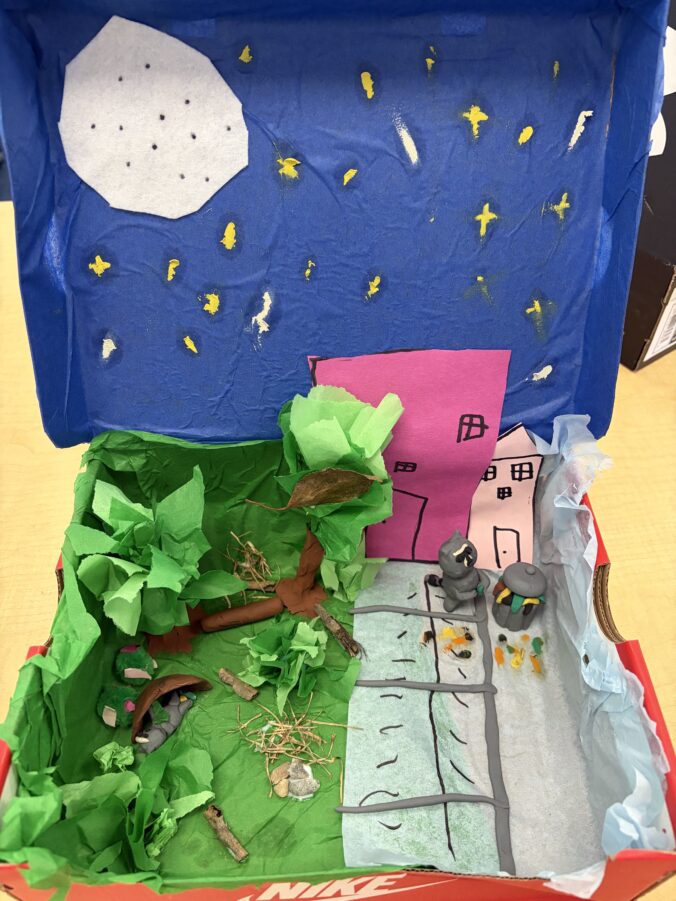
This week, my cohort had a wonderful opportunity to go into a local grade 2 classroom and create dioramas. We got to work with a students one on one, which was an amazing experience to create relationships. Each student selected a local animal, and had to go to the library and prepare resources that they could use to help with creating their dioramas. With the students we created a busy book for them, researched the Ktunaxa name of their animals and used First Voices to help learn the correct pronunciation. The student I was assigned to picked a raccoon for their animal.
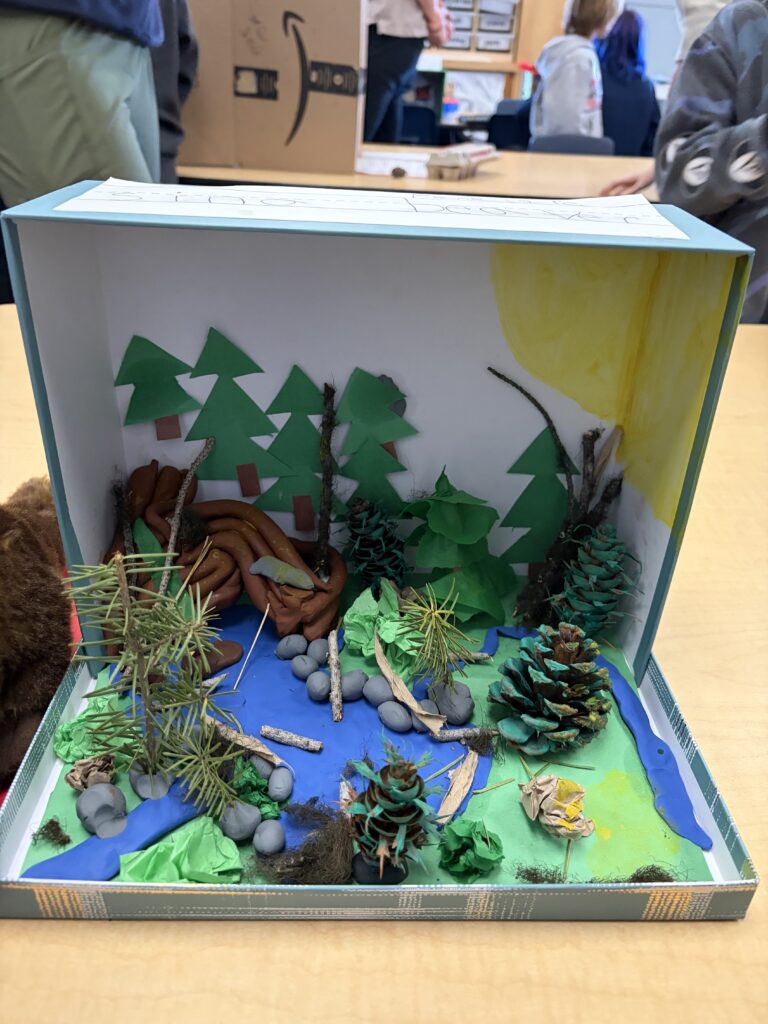
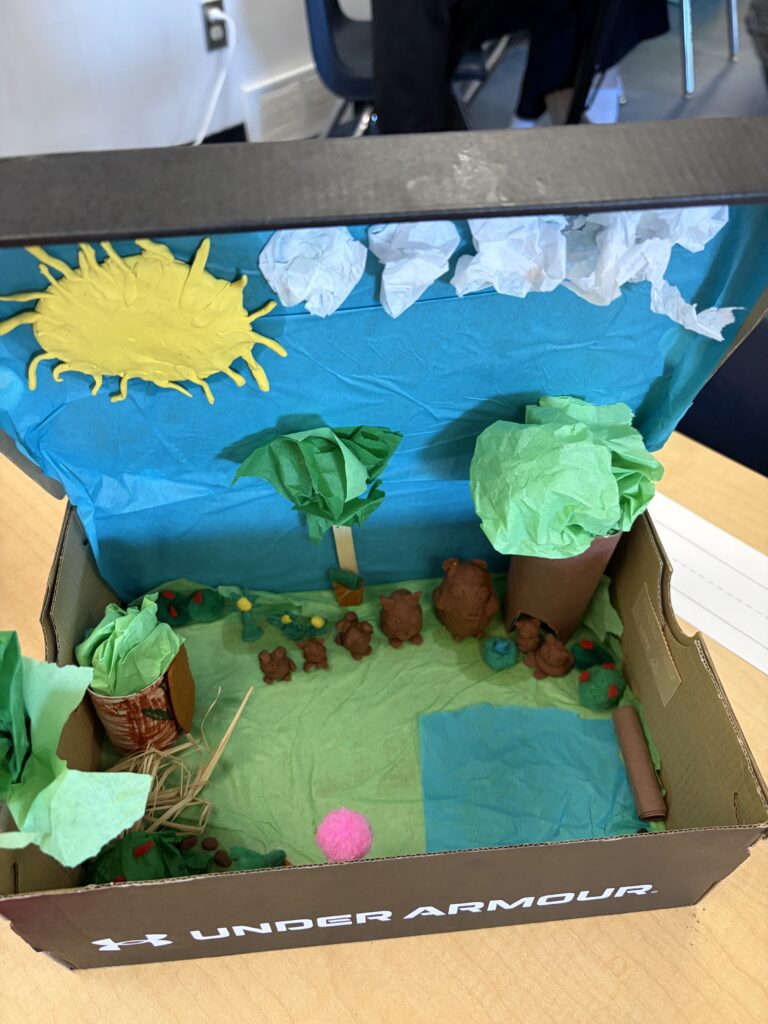
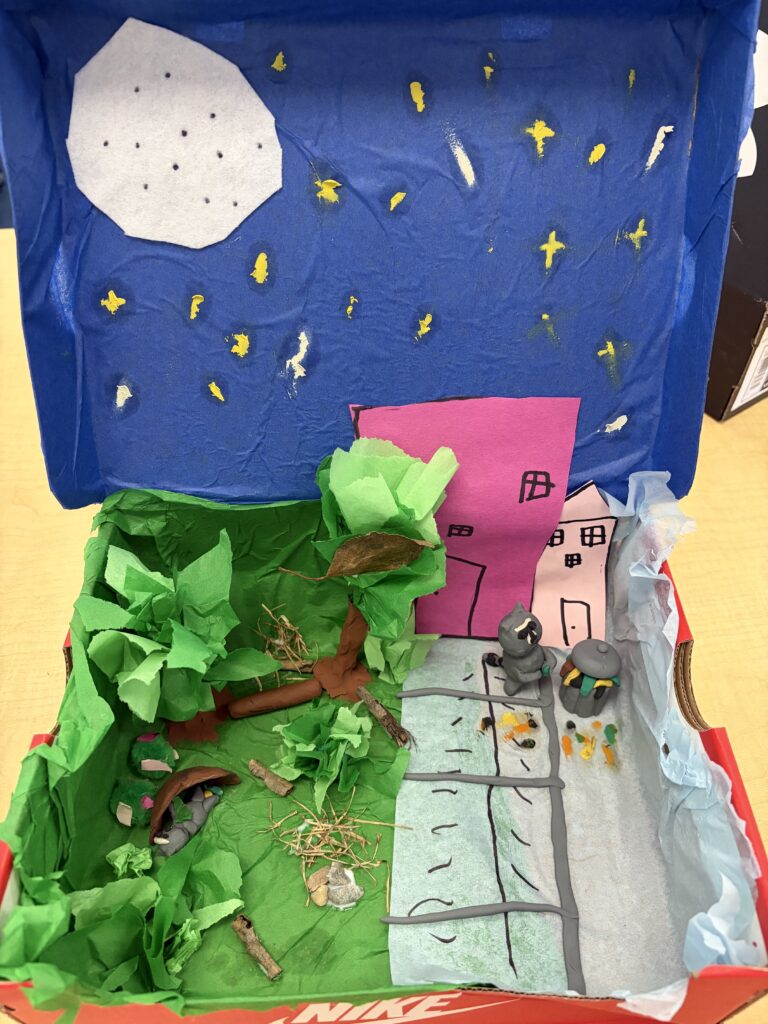
Photo of my students and I’s raccoon diorama. Photo taken by Lauren Penney.
BC Curriculum Connection:
In the BC Curriculum, in the content learning standards, the grades where it mentions plants and animals start from Kindergarten all the way to grade 3. But dioramas can be used for more than just learning about animals and their habitats. You can use dioramas to explore storytelling, ecosystems, lifecycles, history, etc.
My AHA Moment:
This activity was an amazing experience. I remember creating a diorama when I was in school and I had so much fun doing so. This is an activity that I would love to incorporate into my future classroom. It is a great way to learn and to meaningfully Indigenize learning, as it is hands-on, and engaging. My aha moment was truly how much work goes into planning an activity like this. At this grade level, I noticed that there are students who would be able to complete this project by themselves with no problem but then there are some students who I think would benefit from the 1 on 1 support. This made me think of other ways I could do this project without adult assistance and these ways are:
- Have students in groups of 2 or 3
- Get big buddies into the classroom
- The whole class studies one animal or the class splits up into two different animals
- Guide students step by step so all students are completing the same parts of their diorama at the same time (teacher lead)
Reflection:
Dioramas are so important for younger grades. They are a visual that the students get to create and it is great for teachers because they will then be able to see the students understanding and creativity. I included my thoughts on dioramas because this experience helped me recognize that meaningful learning is not about content but about access and differentiation when it comes to planning. Seeing the range of independence in a Grade 2 classroom deepened my understanding of how hands on inquiry supports diverse learners and allows students to complete their project to what makes the most sense to them. This is important to science education because it helps builds students curiosity, builds observational and research skills.