
What we did:
In this class, we talked about water tension and how water striders use water tension to essentially walk on water. we then created our own water tension station with a group of us.
What you need:
- Piece of cardboard
- Food colouring
- Eye droppers
- Parchment paper
- Tape
- Three cups
- Water
We then taped the parchment paper on the piece of cardboard while one person grabbed the rest of our supplies.
Once you are back at your seat, you should have your piece of cardboard with parchment paper on it, you should fill the three cups with water, and grab the food colouring. We then put in one drop of different food colouring into the cups so that we had different colours and then we placed on eye dropper in each cup.
This is what our centre looked like:
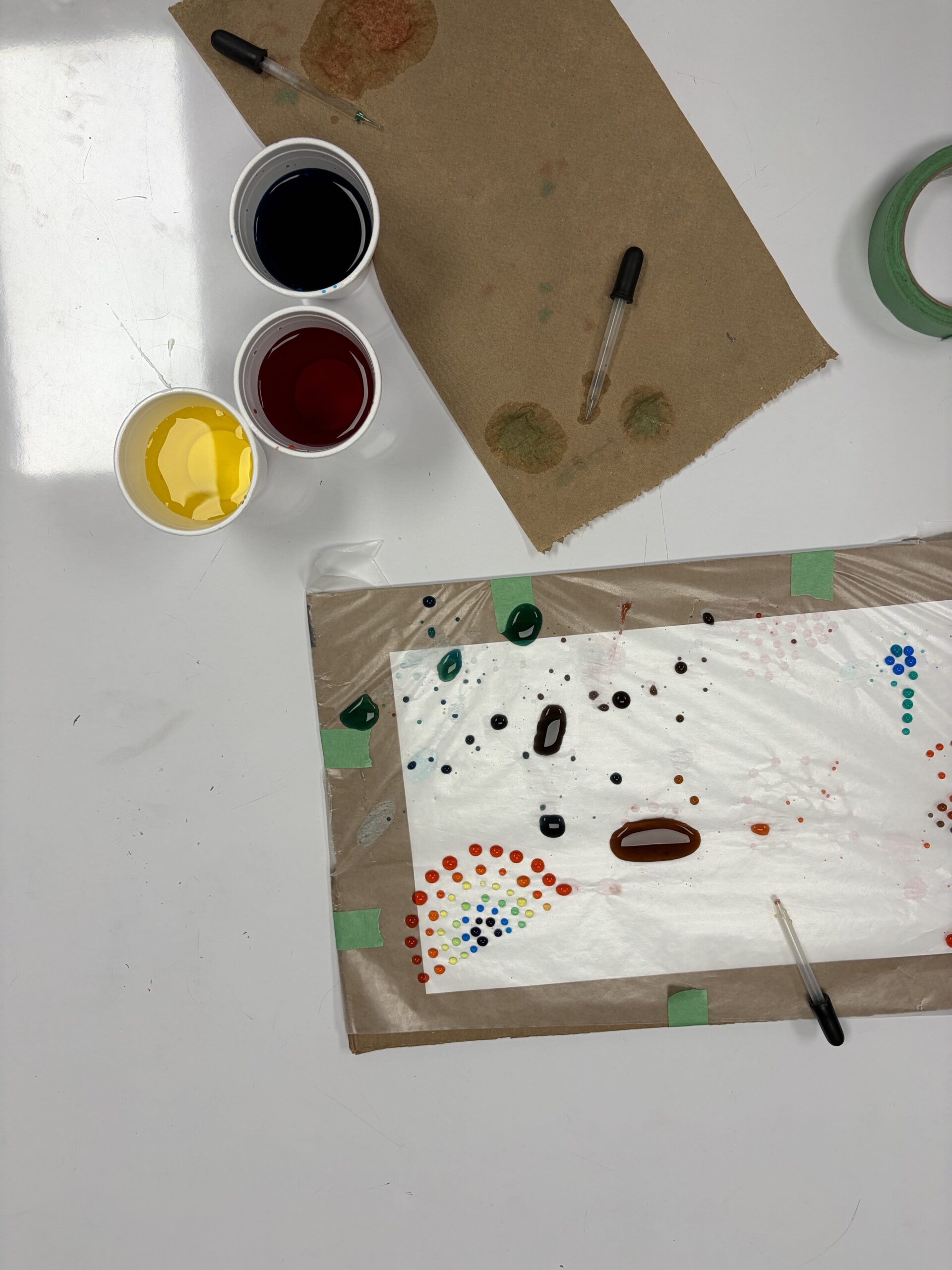
My group experimented and saw how the water would move on the parchment paper and how big of a water drop you could make and drag it around the area. My group also enjoyed creating different colours and mixing them.
The next step to our water tension lesson was to see how many drops of water a loonie, toonie, quarter held.
What do you need:
- Coins
- Eye dropper
- Cup
- Water
- Paper towel (to clean up the mess)
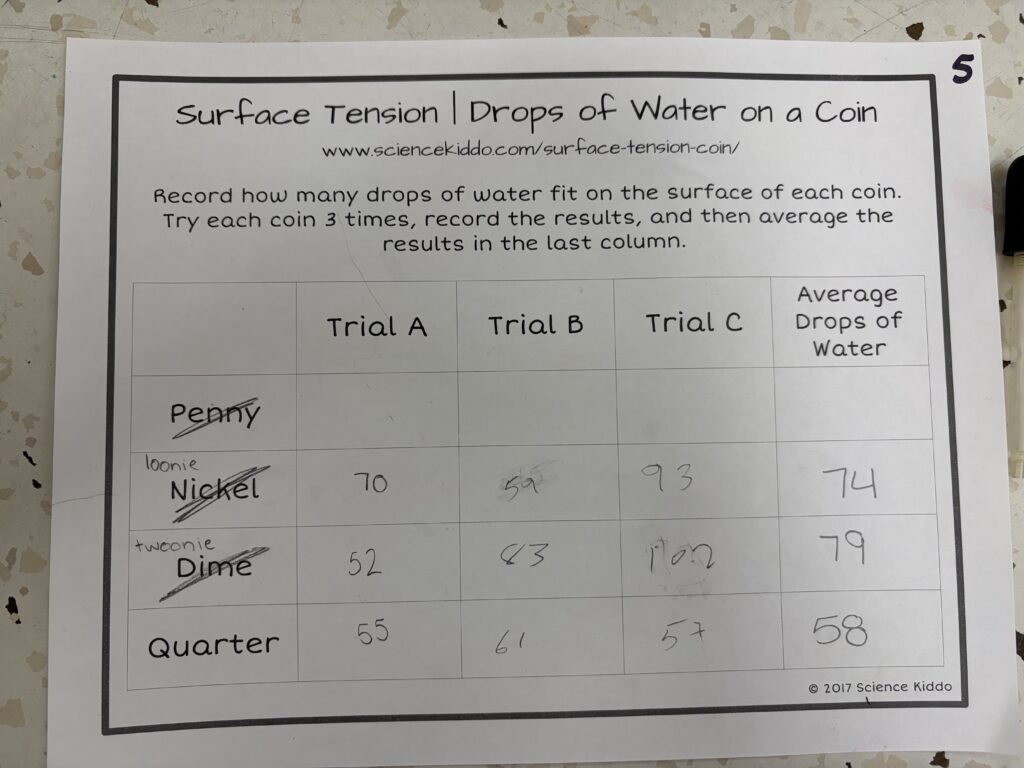
We recorded our answers on this sheet of paper:
As a class, we then wrote our answers in a table which looked like this:
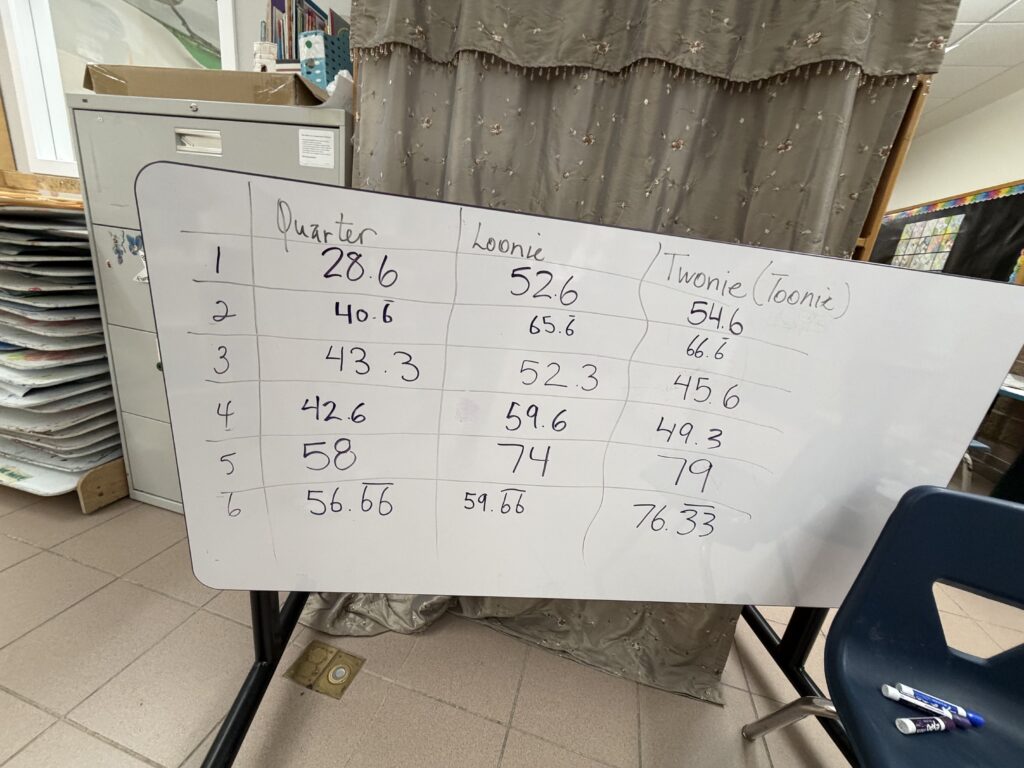
We then had a discussion about the variables that could have impacted each persons number. For example, the way someone was holding the dropper (far from the coin, close to the coin), etc.
BC Curriculum:
This activity connects to the BC Curriculums Science Curricular Competencies, Math Connections, and the Core Competencies.
This connects to the Big Ideas because students explore properties of water (surface tension). They are able to see how water behaves with different variables (parchment paper). By seeing how water striders use surface tension to walk on the water, students are also able to see how scientific concepts are connected to real world examples.
This activity is a hands on activity, but it can also be connected by students asking questions, observing what is happening, make predictions, and collect data.
This activity is connected to math by gathering data and counting how many drops each coin could hold before it spilling over the sides. It also connects to math by organizing the data into tables and comparing their findings to their peers data.
Students will develop critical thinking skills by examining why their results were different from others. They would strengthen communication skills to their group members as they may talk about strategy. Lastly, they will collaborate during the experiment.
Reflection/ AHA Moment:
My AHA moment during this activity was when we give space and time for free play and inquiry, curiosity naturally drives questioning and deeper thinking. I noticed this within my group because that is what happened to ourselves. Having hands on learning experiences makes concepts like surface tension visible and meaningful while helping students grasp the concept. Gathering and comparing data as a class turns the experiment into an engaging discussion about variables, fairness, and scientific reasoning. Therefore, I think creating space for inquiry and then going into the explanation is something that I would like to try in my future classroom for meaningful, engaging learning.