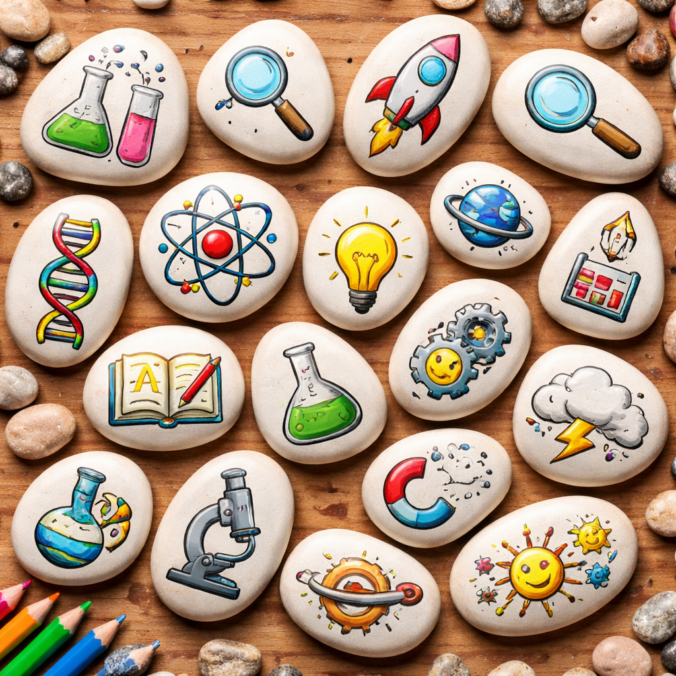
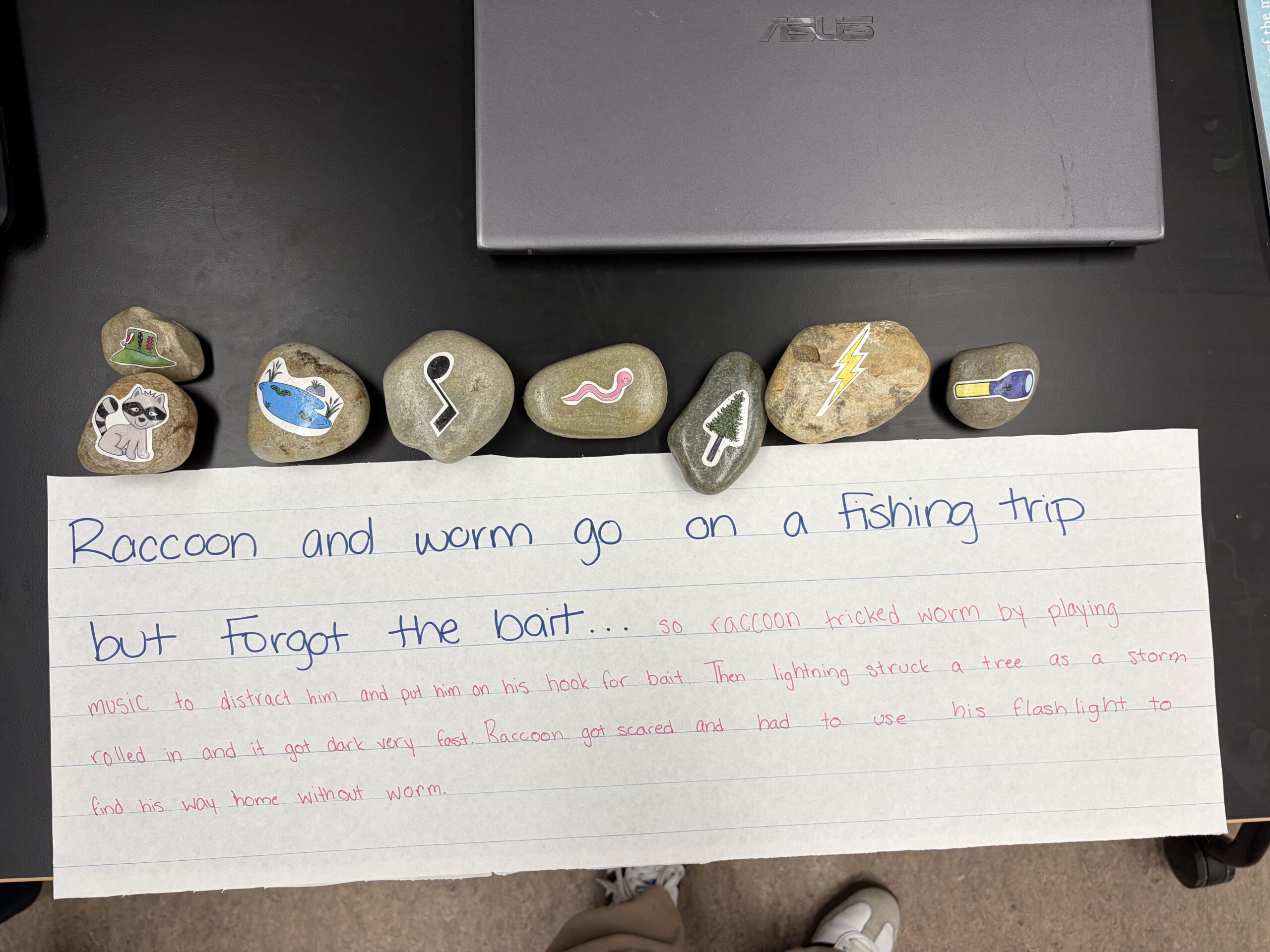
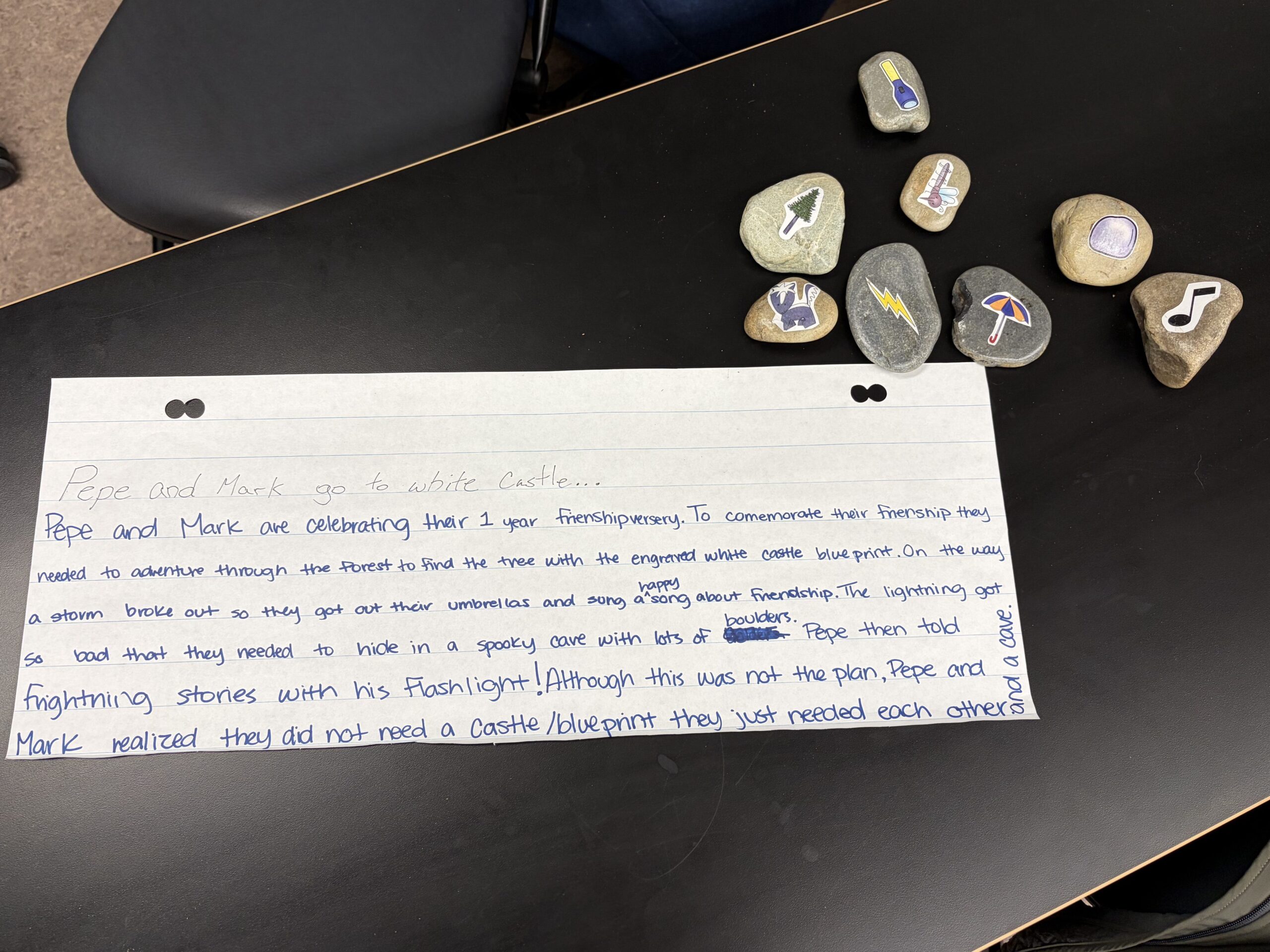
Story rocks are created by using stones and gluing images onto them, allowing students to retell stories and share information in a hands-on, visual way. In our class, we used instructor-provided story rocks to create and retell stories (these were not science-related), which helped demonstrate how effective this tool can be for communication and creativity.
Story rocks can also strongly support elementary science learning by encouraging students to make connections between storytelling and real-world concepts such as habitats, life cycles, and environmental relationships. By combining narrative with scientific ideas, students are able to deepen their understanding in a meaningful and engaging way.
BC Curriculum
In the BC Curriculum, there is an importance for observation, and connecting learning to the natural world. Just like what one of our text books Braiding Sweetgrass, which highlights the importance of learning through relationships with the environment. By using story rocks with images like animals, plants, weather symbols, and landforms students are able to explain/narrate their understandings of these concepts in a creative way. There are many different cross curricular connections that story rocks have, English Language Arts, Science, and Social Studies. Having story rocks supports the First Peoples perspective, which is the value of storytelling as a way of learning and understanding the world.
AHA Moment
I never thought to use story rocks for science until we completed our dioramas with the grade 2 class. I think this would be a great idea to take forward when doing dioramas again with a primary class. Integrating story rocks into learning especially about animals allows students to have visual hints about what the animal likes, eats, habitat, etc. but also allows students to create a story for the animal that they made out of clay. This allows students to demonstrate deeper thinking and apply their knowledge.
Creating connections throughout all of the courses I have taken helps me realize that all courses can be integrated with literacy in a way that is engaging and creative for all learners. This also reinforces the importance of hands-on learning that allows students to express their thinking in multiple ways. This is important in science because it supports diverse learners and encourages curiosity, imagination, and a stronger connection to the natural environment. I cannot wait to create story rocks in my future classroom that can be cross curricular.
Leave a Reply
You must be logged in to post a comment.