February 25th, 2026
What is RAFT?
RAFT is a writing strategy that helps students have a creative approach to writing that allows students to write from a different perspective. This strategy helps students identify their audience, select an appropriate format, and focus on a specific topic. This writing strategy works within the BC Curriculum in the subjects ELA, Social Studies, and Mathematics. This strategy can be implemented from Grade 1- Grade 12.
Role, Audience, Format, Topic:
Role – of the writer. This helps writers decide on what point of view and voice they will have. Who are you?
Audience – for the piece of writing. This will help the writer that they must communicate ideas to someone else. Additionally this will help the writer determine the content and the style of writing. Who are you writing to?
Format – of the material. Helps the writer organize ideas and how it will be displayed (newspaper, letters, interview, song, etc.) What is the structure of the writing?
Topic – of writing. This helps the writer focus on the main ideas. What will you write about?
How to use it:
Before the teacher introduces this writing strategy with their students, they should think about what you want your students to learn. Consider thinking about what may enhance their understanding of content. The teacher should also think about what the students need to learn so they can be successful (perspective, different formats of writing, etc).
Brainstorm with your class about what the possible roles are, who they could be writing to, how they would like to format/present their writing piece, and what are they going to be writing about.
Once you have finished brainstorming with your class, the teacher should get the students to pick one from the four categories (role, audience, format, topic). Students can either all have the same role, audience, format, and topic or they can all choose different things from the different categories. Students should start writing. Once they have finished, tell them to identify the role, audience, format, and topic.
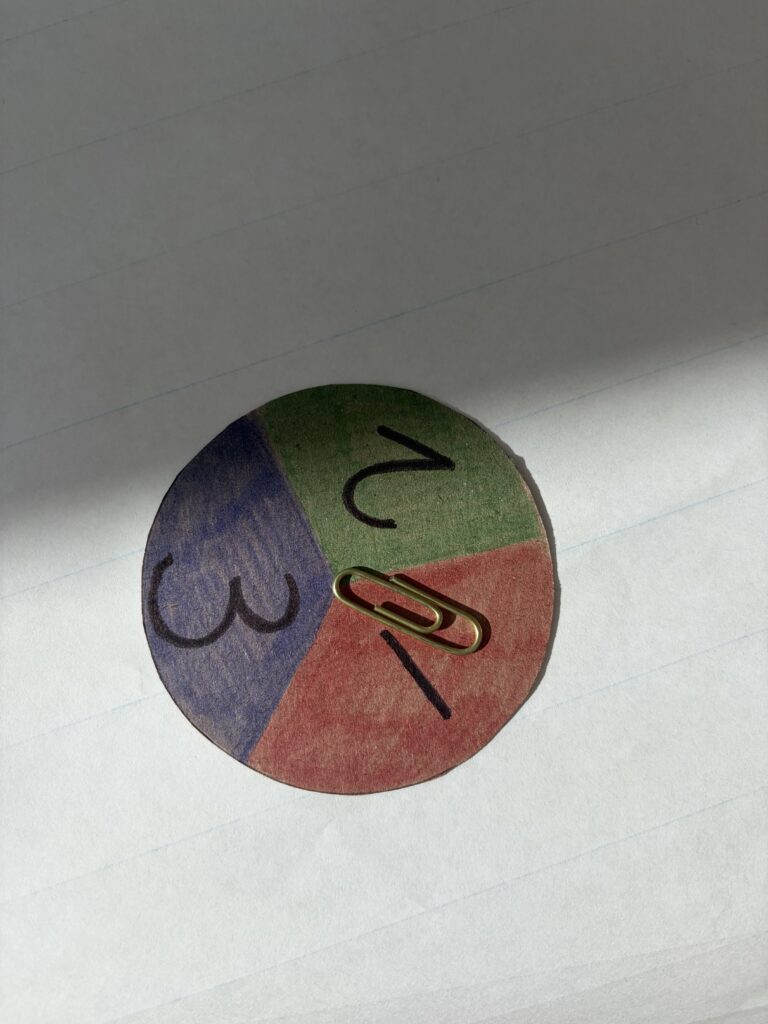
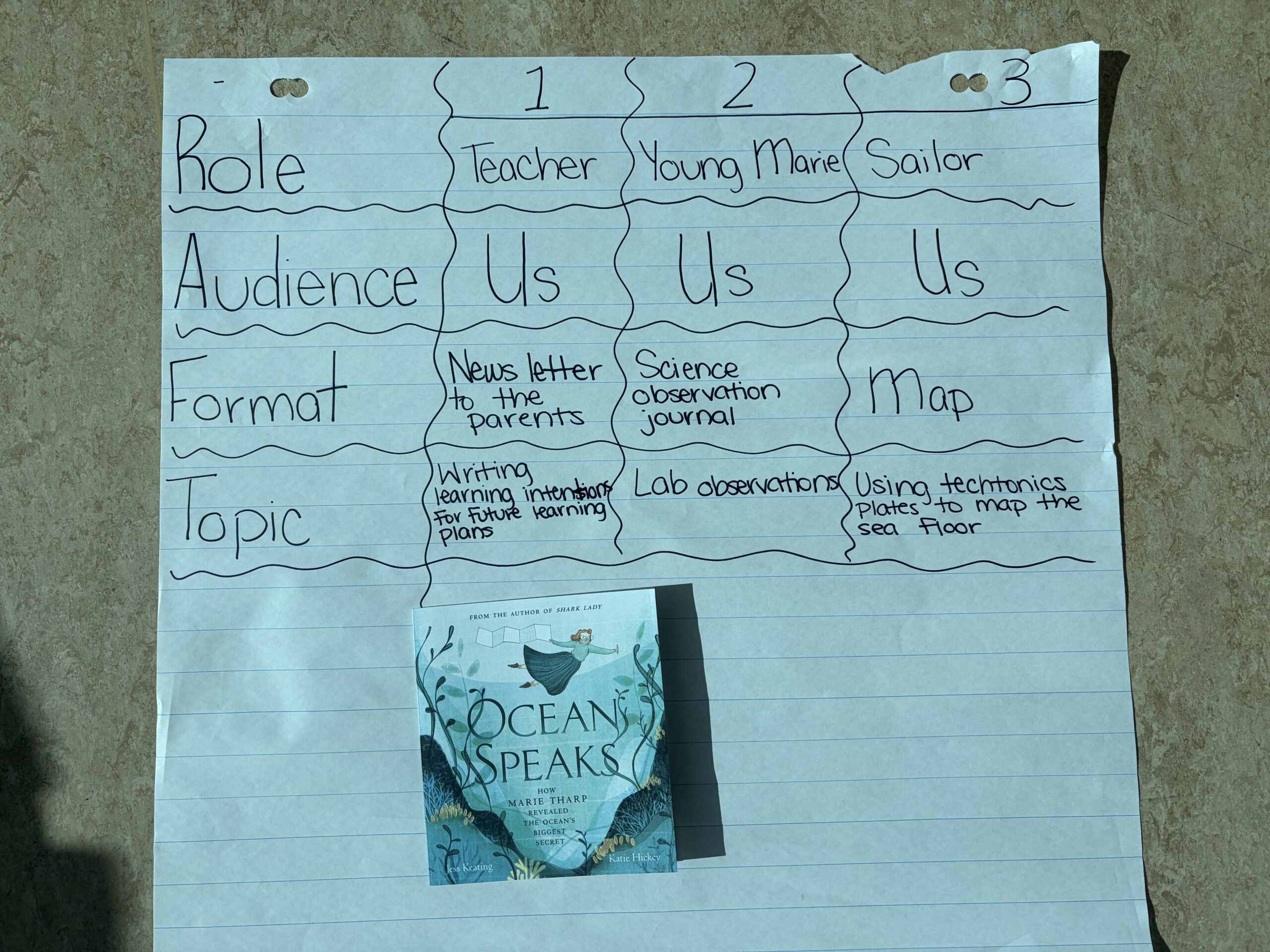
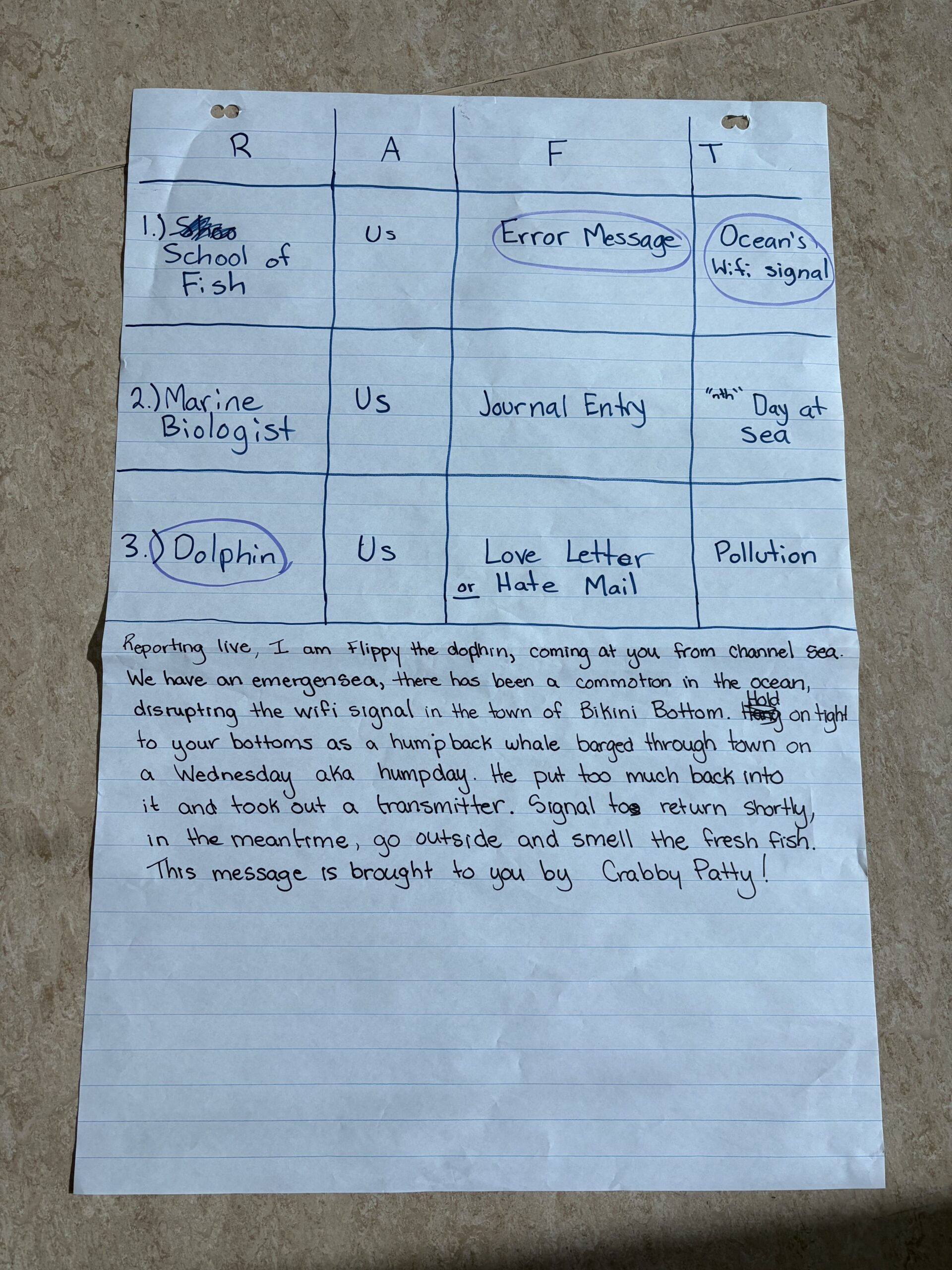
Or teachers could come prepared with the roles, audience, format, and content. This is what we did today in class, we made spinners, created our chart, switched our chart with a different group and then we spun our spinner to see what we were going to get for what we had to tell a story on.
Strategies:
- You can provide students spinners with four choice or however many choices you have with numbers (you also have to number the choices), this helps your diverse learners choose a topic if they are feeling overwhelmed.
- The teacher can create a chart for students and then the students choose which role, audience, format, and topic they like best.
UVIC Teacher Competency:
The RAFT writing strategy relates to the UVIC Teacher Competency number 5, practice effective communication appropriate to the context and audience, enabling responsiveness to diversities of learners. This UVIC Teacher Competency allows participants to adjust their voice and tone based on their role, consider their audience, choose a format that best communicates their or their peers ideas, and lastly, it can clearly express their understanding of a topic.
Reflection:
Thinking about teaching the RAFT literacy strategy has pushed me to reflect more on perspectives and intentional design within assignments or projects. Meaningful change requires someone to step into someone else’s mindset which allows you to take on the role you are writing from. If a student is writing about elephants, they must be the elephant, understanding and incorporating the elephants world from the elephants perspective.
This strategy helped deepen my understanding of inclusion and how we can support these learners with this activity. We watched a video a couple classes ago about how students notices differences between themselves and another child. I noticed that they were focusing more on their strengths, interests, than on physical traits. This video reminded me how students see themselves and others as well as valuing differences within the learning envrionment. Moving from equity requires removing barriers so each student has what they need to succeed. Through different approaches (Universal Design for Learning, Scaffolding, Grouping, etc.) we are able to design a classroom where everyone feels supported and everyone feels like they are able to complete the tasks.
This quote was in our instructors presentation and it stuck with me.
“When a flower doesn’t bloom, you fix the environment in which it grows, not the flower” – Alexander den Heijer
Lastly, I really enjoyed this activity and I am going to plan to use it in my Grade 1 practicum class. Here is what I would adjust:
- Students use objects to tell the story then present it in front of the class (felt story, rock story, puppets, act it out)
- I would start by including the role and topic first
- Relate it to animals
Lauren,
How nice to hear that you will use this strategy with the younger learners! RAFT is such a flexible strategy and allows multiple entry points for students all while seeing writing through a different lens! I remember watching Margaret Atwood talking about how to hook an audience and imagine Little Red Riding Hood’s starting off the story as she declares, “My it is dark in here!” as she is inside to wolf’s tummy! Not that you would do this with Gr.1, but it makes one think how one could ‘fracture’ a story! Have you heard of ‘fractured’ fairy tales? They are also another fun way to hook’ the reader!
Happy writing!
Judi